
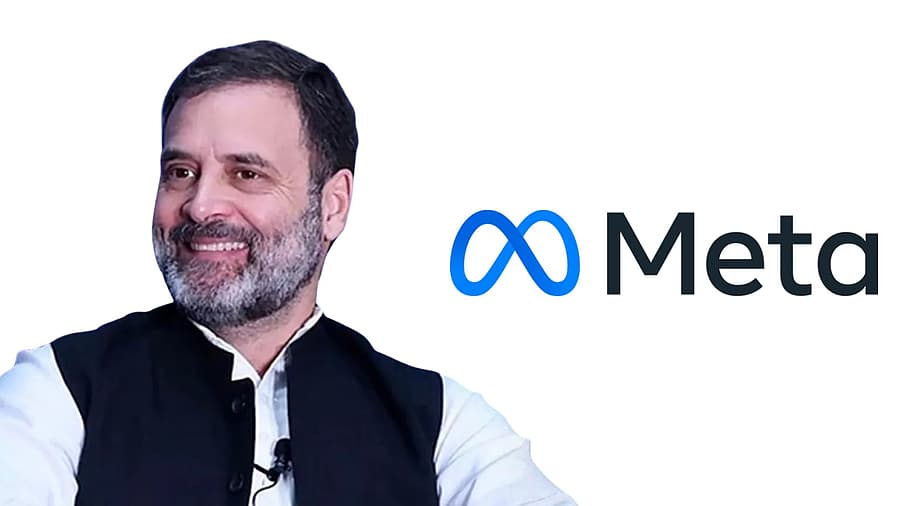
Youth Congress Meta Delhi HC: Challenges Rahul Gandhi Content Blocking
Summary
- The Indian Youth Congress (IYC) has petitioned the Delhi High Court against Meta Platforms.
- IYC National Secretary Manu Jain alleges Meta uses Rahul Gandhi's name and photos as keywords to automatically block political content on Instagram and Facebook.
- Ordinary political and personal posts by Congress workers were made "unavailable in India" due to these automated restrictions.
- The petition challenges the implementation of a legal mandate requiring social media platforms to use automated tools for content blocking under India's IT Intermediary Guidelines.
- This case questions the permissible scope of automated content moderation, particularly concerning political speech on digital platforms.
The Allegation Against Meta
The Delhi High Court's decision will be crucial in defining the boundaries for such automated content restrictions and could set a precedent for how political content is managed on digital platforms in India.
The Indian Youth Congress (IYC) has initiated legal action in the Delhi High Court, challenging the practices of Meta Platforms concerning content moderation. Manu Jain, the National Secretary of the IYC, who also oversees the organization's social media department and manages its official Instagram account, has brought forth a petition alleging that Meta is improperly utilizing the name and photographic likeness of Rahul Gandhi, the Leader of the Opposition, as keywords. This alleged practice, according to Jain, leads to the automatic restriction of political content disseminated by Congress party members and office-bearers across Meta's platforms, specifically Instagram and Facebook.
The petition contends that these automated restrictions are impacting the ability of party workers to share their views and activities. The IYC's legal challenge highlights a concern that the mechanisms intended for content regulation are being applied in a manner that stifles legitimate political discourse. This legal move underscores a broader debate about the balance between platform responsibility and the freedom of expression, particularly in a political context.
Content Under Scrutiny
As part of his submission to the court, Manu Jain has provided concrete examples of the content that has been subjected to these restrictions. He presented several notices received by party members between September 29 and November 23, indicating that their posts had been rendered "unavailable in India." Jain characterized these blocked posts as comprising "ordinary political and personal content," suggesting they did not contain material that would typically warrant such intervention.
The examples cited in the petition illustrate the diverse nature of the restricted content. These included a wedding invitation extended to Rahul Gandhi, personal birthday greetings exchanged between party colleagues, tributes honoring a former Prime Minister, photographs depicting workers alongside Gandhi, and material related to a lecture he delivered at the University of Chicago. A consistent element across all these restricted posts, as highlighted in the plea, was the presence of either Rahul Gandhi's name or his photograph.
Legal Framework and the Challenge
The core of the IYC's petition lies in its challenge to the implementation of a specific legal requirement. Indian law mandates that social media platforms deploy automated tools to identify and subsequently block content that has previously been subject to legal restriction orders. The notices received by the Congress workers explicitly stated that the content was restricted by an automated system, implemented in compliance with "legal requirements under the Information Technology (Intermediary Guidelines and Digital Media Ethics Code)." This framework, designed to ensure compliance with legal directives, is now at the center of a dispute regarding its practical application.
The IYC's legal action, filed through advocate Rishav Ranjan, scrutinizes the scope and application of these automated systems. It questions whether the broad use of keywords like a political leader's name or image, leading to the blocking of diverse content, aligns with the intent of the regulations or if it constitutes an overreach that impacts legitimate political expression. This case therefore presents a significant test for how social media platforms interpret and apply India's IT Intermediary Guidelines, particularly concerning the balance between automated content moderation and the protection of political speech. The Delhi High Court's decision will be crucial in defining the boundaries for such automated content restrictions and could set a precedent for how political content is managed on digital platforms in India.
Practical Implications
This case challenges the scope and implementation of automated content blocking by social media platforms under India's IT Intermediary Guidelines. Lawyers advising social media companies or political organizations should monitor the Delhi High Court's decision for precedents on content moderation, political speech, and the permissible use of automated tools to restrict user-generated content.
Source
How does this affect you?
Get an AI analysis of this article grounded in your jurisdictions, practice areas, and any policy documents you've uploaded to Wansom.
Finish Reading the Full Story and the Expert Analysis.
Get the latest legal & regulatory intelligence in India
Wansom is AI and can make mistakes.