
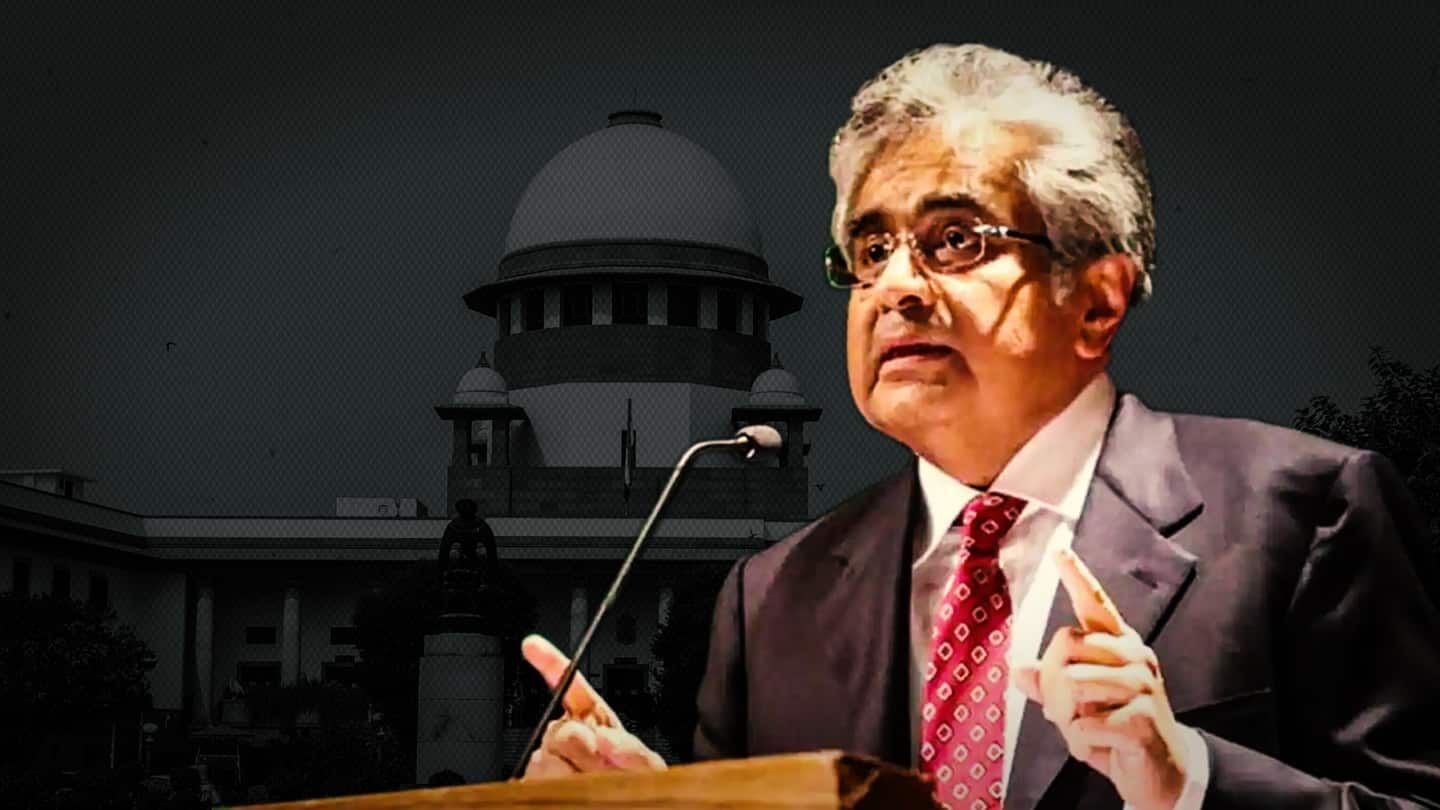
"You Are Criticising Yourself": Harish Salve Asks Judges To Stop Attacking Supreme Court Judgments In Public
Summary
- Senior Advocate Harish Salve stated that sitting judges should only communicate through their judgments.
- He warned that public criticism of Supreme Court verdicts by judges causes permanent damage to the institution.
- Salve contended that judges publicly criticizing the Supreme Court are, in effect, criticizing the institution itself.
- He noted that threats of street unrest from the Bar have already eroded public faith in the Court.
- Salve emphasized that public criticism by judiciary members undermines people's faith in the institution.
Judicial Conduct Under Scrutiny
The cumulative effect, he warned, is a weakening of the foundational pillars of public trust upon which the judicial system relies.
Senior Advocate Harish Salve recently articulated a significant concern regarding the public discourse engaged in by members of the judiciary, particularly sitting judges of the Supreme Court. His remarks underscored a fundamental principle: that judges should communicate their legal perspectives and decisions exclusively through their official judgments. Salve's contention is that the judicial role inherently demands that pronouncements on legal matters be confined to the formal, reasoned opinions delivered from the bench, rather than through public statements or critiques outside this established framework.
He specifically cautioned that when judges openly criticize verdicts handed down by the Supreme Court, they are, in effect, directing criticism towards the very institution they serve. This act, Salve argued, amounts to a form of institutional self-criticism that carries the potential for profound and lasting damage to the judiciary's standing and authority. His commentary serves as a pointed call for judicial restraint, emphasizing the importance of maintaining a unified institutional voice and adhering to the decorum expected of those entrusted with upholding the rule of law. The implication is that such public dissent can inadvertently weaken the collective strength and perceived impartiality of the judicial branch.
Erosion of Public Trust and Institutional Harm
Salve further elaborated on the severe repercussions of judges publicly criticizing Supreme Court judgments, asserting that such actions would inflict permanent damage upon the institution itself. He posited that this internal critique, emanating from within the judiciary, inevitably contributes to a significant erosion of public confidence in the entire judicial system. When the very individuals tasked with interpreting and applying the law express public disagreement with the highest court's rulings, it can foster a perception of disunity or fallibility that undermines the public's trust in the finality and authority of judicial decisions.
Moreover, Salve highlighted that the judiciary's public standing has already faced considerable challenges from external factors. He specifically noted that threats of street unrest, which have been voiced by members of the Bar, have played a role in diminishing the public's faith in the Court. This confluence of internal judicial criticism and external pressures from the legal fraternity creates a precarious environment for the judiciary, potentially compromising its ability to function effectively and maintain its revered position as an impartial arbiter of justice. The cumulative effect, he warned, is a weakening of the foundational pillars of public trust upon which the judicial system relies.
Preserving the Judiciary's Integrity and Authority
The Senior Advocate's admonition was directed broadly at judges, with a particular emphasis on sitting judges of the Supreme Court, reiterating that their official pronouncements should be the sole vehicle for their legal opinions. He issued a clear warning that any public criticism of the Court's verdicts by members of the judiciary would inevitably undermine the populace's belief in the institution's fundamental integrity and its capacity for impartial judgment. This stance underscores the critical importance of maintaining a cohesive and consistent institutional voice, arguing that such unity is paramount for the judiciary to command respect and uphold its constitutional role.
Salve's remarks thus serve as a potent reminder of the delicate balance required to safeguard the judiciary's independence and its standing in society. By advocating for judges to speak exclusively through their judgments, he aims to reinforce the principle that the strength and legitimacy of the institution are derived from its formal, reasoned decisions, rather than through individual public critiques that could be misinterpreted or exploited. The overarching message is that preserving the judiciary's reputation and its vital function within a democratic framework necessitates a disciplined approach to public discourse from all its members, ensuring that internal disagreements are handled through established judicial processes rather than public platforms.
Source
How does this affect you?
Get an AI analysis of this article grounded in your jurisdictions, practice areas, and any policy documents you've uploaded to Wansom.
Finish Reading the Full Story and the Expert Analysis.
Get the latest legal & regulatory intelligence in India
Wansom is AI and can make mistakes.