
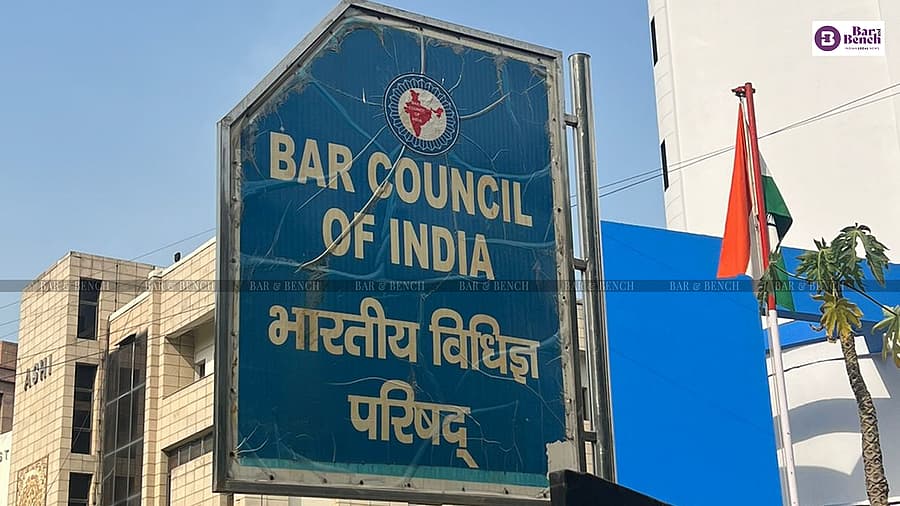
Supreme Court: Yogamaya MG vs Union of India BCI Mandates AG/SG Oversight
Summary
- The Supreme Court has ordered the Attorney General and Solicitor General to actively participate in every policy decision of the Bar Council of India.
- This directive arose from petitions alleging gross illegality in Senior Advocate Manan Kumar Mishra's continuation as BCI chairperson and issues with the PEARL Trust.
- A bench including CJI Surya Kant issued the order in the case of Yogamaya MG vs. Union of India.
- The Court will consider the reconstitution of the BCI only after all State Bar Council elections are complete and representatives are chosen.
- Newly constituted State Bar Councils are directed to elect their office-bearers and BCI representatives.
Judicial Oversight Intensifies Over BCI Policy
The explicit instruction for the Attorney General and Solicitor General to be 'actively associated with every policy decision' signifies a heightened level of accountability and transparency expected from the Bar Council.
The Supreme Court has mandated unprecedented judicial oversight into the operational decisions of the Bar Council of India (BCI), directing that both the Attorney General for India, R Venkataramani, and the Solicitor General for India, Tushar Mehta, must actively participate in every policy decision undertaken by the regulatory body. This significant directive, issued on Wednesday by a bench comprising Chief Justice of India Surya Kant and Justices Joymalya Bagchi and V Mohana, stems from the case of Yogamaya MG vs. Union of India. The ruling underscores a new era of scrutiny for the Bar Council of India's policy decisions, ensuring high-level legal counsel is integrated into its governance.
This move by the apex court effectively places the BCI's future policy formulations under the direct purview of the nation's top legal officers. The explicit instruction for the Attorney General and Solicitor General to be 'actively associated with every policy decision' signifies a heightened level of accountability and transparency expected from the Bar Council. This development is poised to reshape how the BCI operates, potentially leading to substantial reforms in the regulation of legal practice across the country.
Allegations Prompting Court's Intervention
The Supreme Court's intervention was prompted by a series of petitions that raised serious concerns regarding the functioning and leadership of the Bar Council of India. Among the allegations brought before the bench were claims of gross illegality concerning Senior Advocate Manan Kumar Mishra's continued tenure as the BCI chairperson, asserting that he held the position without proper authority. These petitions highlighted a perceived breakdown in the lawful governance of the BCI, necessitating judicial review.
Further compounding the issues, some of the petitions also detailed alleged gross illegalities in the establishment of a new trust, known as the PEARL Trust, which was reportedly headed by Mr. Mishra. While the Court heard these various grievances, it refrained from issuing any immediate adverse directives specifically against Mr. Mishra on Wednesday. Instead, the bench indicated a broader approach, choosing to address the systemic issues after certain prerequisites are met.
Path Towards BCI Reconstitution
Looking ahead, the Supreme Court has outlined a clear pathway for the potential reconstitution of the Bar Council of India, linking it directly to the completion of electoral processes at the state level. The issue of Supreme Court BCI reconstitution will only be taken up for consideration once elections for all State Bar Councils have concluded and these newly formed councils have elected their respective representatives to the BCI. This phased approach suggests a deliberate strategy to ensure that any future restructuring of the national body is based on a fully legitimate and representative foundation.
In line with this, the Court has directed the newly constituted State Bar Councils to proceed with electing their statutorily prescribed office-bearers, including those who will serve as their representatives to the Bar Council of India. This directive emphasizes the importance of completing the foundational electoral steps before the apex court revisits the broader question of the BCI's composition. This development, particularly the Supreme Court BCI AG SG consultation, signals a period of significant transition and potential reform for the legal regulatory landscape.
Practical Implications
This ruling signifies increased judicial oversight over the Bar Council of India's policy decisions, with the Attorney General and Solicitor General now actively involved. Lawyers and compliance officers should monitor future BCI policy changes, as this development could lead to significant reforms in legal practice regulation and the eventual reconstitution of the BCI after State Bar elections.
Source
How does this affect you?
Get an AI analysis of this article grounded in your jurisdictions, practice areas, and any policy documents you've uploaded to Wansom.
Finish Reading the Full Story and the Expert Analysis.
Wansom is AI and can make mistakes.