
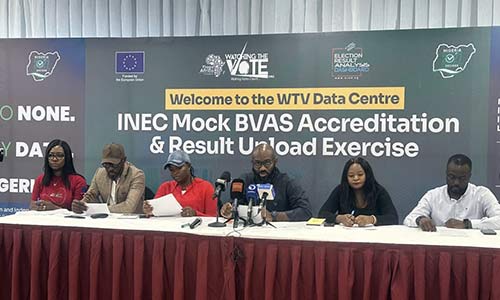
Yiaga Africa: INEC Mock Election BVAS Issues Highlighted for 2027
Summary
- Yiaga Africa identified technical failures during INEC's mock election exercise for 2027.
- Challenges included difficulties in uploading election results and delayed voting activities.
- A discrepancy was noted across 47 registration areas during the exercise.
- Despite these issues, the Bimodal Voter Accreditation System (BVAS) itself functioned optimally for accreditation.
- These findings are crucial for assessing INEC's preparedness for the 2027 general elections.
What Happened
Lawyers advising political parties or those involved in election litigation should pay close attention to the identified BVAS result upload failures and the discrepancies noted across 47 registration areas.
Yiaga Africa, a prominent election observation group, recently highlighted several critical issues following the Independent National Electoral Commission's (INEC) nationwide mock accreditation and results upload exercise. This preparatory drill, conducted in anticipation of the 2027 general elections, aimed to test the efficacy of the electoral processes and technology. While the Bimodal Voter Accreditation System (BVAS) itself was noted to have functioned optimally in its primary role of voter accreditation, the broader exercise revealed significant operational challenges that warrant immediate attention.
Technological Readiness for 2027
A key finding from Yiaga Africa's assessment pertained to the reliability of the electronic result transmission system, a crucial component for transparent elections. The reported difficulties in uploading election results, despite the BVAS performing well for accreditation, underscore a critical area for improvement for INEC as it gears up for the 2027 general elections. These BVAS result upload failures suggest that while the accreditation component of the technology may be robust, the subsequent steps in the electoral process, particularly result collation and transmission, still face significant hurdles that could undermine public confidence.
Furthermore, the election observation report from Yiaga Africa pointed to a notable discrepancy involving 47 distinct registration areas. Such an inconsistency raises serious questions about data accuracy and the potential for errors in the aggregation of results, which could have far-reaching implications for the credibility of future elections. Addressing these Nigeria election technology challenges, especially the Bimodal Voter Accreditation System problems related to data integrity and transmission, will be crucial for building public trust and ensuring transparent electoral outcomes.
Legal and Electoral Implications
The findings from Yiaga Africa's observation report carry substantial weight for legal practitioners and political stakeholders alike, offering a preview of potential flashpoints in future electoral disputes. Lawyers advising political parties or those involved in election litigation should pay close attention to the identified BVAS result upload failures and the discrepancies noted across 47 registration areas. These specific issues could potentially serve as robust grounds for challenging future election results, providing concrete evidence of systemic flaws in the electoral process if not adequately addressed by INEC.
The report necessitates a closer and more rigorous monitoring of INEC's technological preparedness for the upcoming 2027 general elections. The reliability of electronic result transmission, in particular, emerges as a critical area requiring urgent attention and verification to prevent a recurrence of these issues. Ensuring that these technological components function flawlessly is paramount not only for the smooth conduct of elections but also for upholding the integrity of the democratic process and minimizing post-election disputes, which are often fueled by perceived technological shortcomings.
Practical Implications
Lawyers advising political parties or involved in election litigation should note Yiaga Africa's identified BVAS result upload failures and registration area discrepancies. These findings could form grounds for challenging future election results or necessitate closer monitoring of INEC's technological preparedness for the 2027 general elections, particularly regarding the reliability of electronic result transmission.
Source
How does this affect you?
Get an AI analysis of this article grounded in your jurisdictions, practice areas, and any policy documents you've uploaded to Wansom.
Finish Reading the Full Story and the Expert Analysis.
Get the latest legal & regulatory intelligence in Nigeria
Wansom is AI and can make mistakes.