
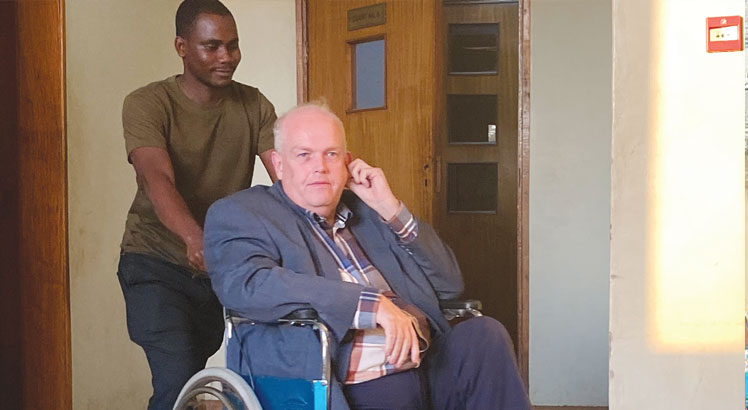
Wim Akster Malawi Conviction: Bail Revoked After Blantyre Court Ruling
Summary
- Dutch national Wim Akster was found guilty on five counts by the Blantyre Magistrate's Court after a six-year legal battle.
- Chief Resident Magistrate Paul Chiotcha delivered the ruling, convicting Akster on three counts.
- Following the conviction, Wim Akster's bail was immediately revoked.
- Akster was transferred to prison to await sentencing.
What Happened
This case serves as a poignant illustration of how a conviction, even prior to the final sentencing phase, can result in immediate incarceration.
A six-year legal battle involving Dutch national Wim Akster reached its conclusion yesterday with a conviction delivered by the Magistrate's Court in Blantyre. The court found Akster guilty on a total of five counts, marking a significant development in the prolonged proceedings that have spanned over half a decade. Chief Resident Magistrate Paul Chiotcha delivered the ruling, specifically convicting Akster on three of those counts, bringing the extensive judicial process to a decisive point.
Immediately following the verdict, Akster's bail was revoked. This procedural step led directly to his transfer to prison, where he will now remain in custody while awaiting his formal sentencing. The swift transition from being out on bail to immediate incarceration underscores the gravity of the court's decision and the direct consequences of a guilty finding within the Malawian legal system, even before the final penalty is determined.
Legal Context in Malawi
The Blantyre Magistrate's Court conviction of Wim Akster provides a clear example of the immediate legal ramifications following a guilty verdict in Malawi. Under the established Malawi criminal conviction procedure, the finding of guilt often triggers an automatic review of an accused's bail status. In many cases, particularly those involving serious charges, bail is promptly withdrawn, ensuring that the convicted individual is held in custody pending the final determination of their penalty. This mechanism is a standard component of the country's criminal justice framework.
The decision to revoke Wim Akster's bail, as part of the Paul Chiotcha Akster ruling, highlights a fundamental principle of criminal justice in the nation: a conviction, even before the formal pronouncement of a sentence, can lead to immediate detention. This procedural reality serves as a critical reminder for all parties involved in legal proceedings about the severe and immediate consequences that can follow a judicial finding of guilt, effectively changing a person's status from accused to convicted and incarcerated without delay.
Why It Matters
The outcome of the Wim Akster Malawi conviction carries significant implications, particularly for understanding the immediate and severe consequences of judicial rulings in the country. The lengthy six-year duration of the legal battle itself suggests a thorough and exhaustive process leading up to the court's final determination. The fact that Chief Resident Magistrate Paul Chiotcha's ruling found Akster guilty on five counts, and specifically convicted him on three, brings closure to this extensive period of litigation, emphasizing the court's definitive stance.
This case serves as a poignant illustration of how a conviction, even prior to the final sentencing phase, can result in immediate incarceration. The swift revocation of Wim Akster's bail and his subsequent transfer to prison custody emphasize the stringent nature of Malawi's legal framework. For legal professionals, this scenario reinforces the critical importance of advising clients about the potential for immediate detention upon a guilty verdict from the Blantyre Magistrate's Court, regardless of the pending sentencing. Lawyers should clearly communicate that conviction, even before the final penalty is decided, can lead to immediate incarceration, making this a crucial aspect of Malawi criminal conviction procedure.
Practical Implications
This case serves as a reminder of the immediate and severe consequences of a guilty verdict in Malawi's Magistrate's Court, specifically the automatic revocation of bail pending sentencing. Lawyers should advise clients that conviction, even before final sentencing, can lead to immediate incarceration.
Source
How does this affect you?
Get an AI analysis of this article grounded in your jurisdictions, practice areas, and any policy documents you've uploaded to Wansom.
Finish Reading the Full Story and the Expert Analysis.
Get the latest legal & regulatory intelligence in Malawi
Wansom is AI and can make mistakes.