
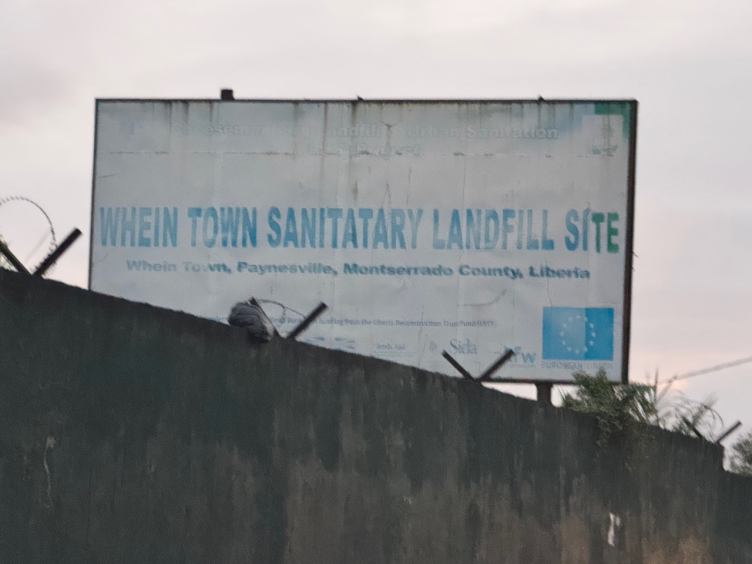
Whein Town Residents Demand Landfill Closure Over Health, Water Risks
Residents in Whein Town, Paynesville, Liberia, are currently demanding the closure of the Whein Town Landfill, citing severe health and environmental hazards from its continued operation, which they allege has exceeded its intended lifespan.
This development highlights a critical environmental justice issue with significant legal implications for public health, environmental regulation, and municipal governance in Liberia. The residents' complaints, including increasing mosquito and fly infestations, foul-smelling and potentially contaminated water, and the presence of rodents and snakes due to collapsed perimeter walls, suggest potential breaches of environmental protection and public health standards. The historical context of protests and the failure of a community monitoring initiative due to financial constraints underscore a long-standing dispute and a breakdown in effective oversight and community engagement. Should these demands escalate into formal legal action, it could set precedents for community-led environmental litigation and accountability for public infrastructure projects.
The legal context for this situation primarily involves Liberia's Environmental Protection and Management Law of 2003, which established the Environmental Protection Agency (EPA) and outlines frameworks for waste management, pollution control, and environmental impact assessments. The Public Health Law of Liberia would also be relevant, addressing issues of sanitation, disease prevention, and public nuisances. Furthermore, the Local Government Act defines the responsibilities of municipal authorities, such as the Paynesville City Corporation, in managing urban services, including waste disposal. While the Liberian Constitution does not explicitly enumerate a right to a clean environment, principles of human rights, including the right to life and health, could be invoked in any legal challenge. Any litigation would likely commence in the Circuit Courts, with potential for appeal to the Supreme Court of Liberia.
Key parties involved in this unfolding situation include the residents of Whein Town, represented by figures like Samuel Kofi Jones III, Secretary General of the Whein Town Community Leadership, who are the primary complainants. The municipal authorities, likely the Paynesville City Corporation or the Ministry of Public Works, are the implied defendants responsible for the landfill's operation and maintenance. The Environmental Protection Agency (EPA) of Liberia is the crucial regulatory body tasked with enforcing environmental laws and could be called upon to investigate or intervene. The specific operator of the landfill, if distinct from the municipal authority, would also be a key party. The outcome of this matter, including whether the landfill will be closed or remedial actions taken, is not yet reported.
Practitioners in Liberia should closely monitor this situation, as it underscores the growing importance of environmental compliance and community engagement in infrastructure projects. Attorneys advising government entities or private waste management operators should review their clients' adherence to environmental impact assessment requirements, waste management regulations, and public health standards, particularly concerning landfill operations and closure plans. Proactive measures, such as conducting environmental audits, implementing robust community consultation processes, and addressing legitimate grievances, are essential to mitigate legal risks and reputational damage. For attorneys representing community groups or engaged in public interest litigation, this case highlights potential avenues for legal recourse, including administrative complaints to the EPA, civil actions for nuisance or negligence, and advocating for stronger enforcement of environmental laws. Documenting evidence of environmental harm and health impacts will be critical in any future legal proceedings.
How does this affect you?
Get an AI analysis of this article grounded in your jurisdictions, practice areas, and any policy documents you've uploaded to Wansom.
Finish Reading the Full Story and the Expert Analysis.
Get the latest legal & regulatory intelligence in Liberia
Wansom is AI and can make mistakes.