
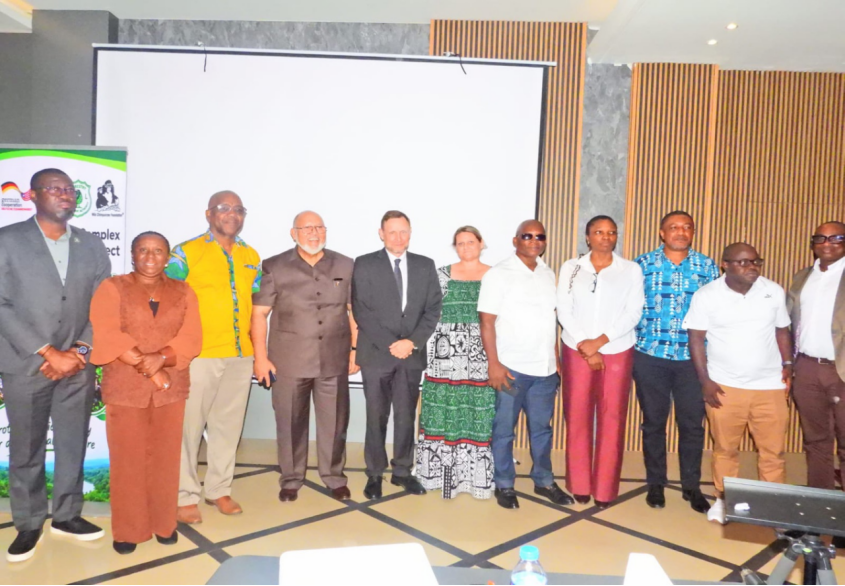
Liberia: Grebo-Krahn Conservation Project Relaunched After 7-Year Hiatus
Summary
- Liberia has relaunched the Taï-Grebo-Krahn Complex Biodiversity Protection Project, a €4.7 million initiative focused on the Grebo-Krahn National Park, after a nearly seven-year suspension.
- The project, funded by Germany through KfW Development Bank and implemented by the FDA and Wild Chimpanzee Foundation, will run for three years from July 2026 to June 2029.
- Its scope was narrowed to exclusively cover Grebo-Krahn National Park, removing the Sapo National Park component due to a reduced budget.
- Key objectives include improving park infrastructure, providing equipment for surveillance, employing 33 rangers, and supporting community livelihoods and engagement.
- FDA Managing Director Rudolph J. Merab emphasized that conservation success depends on providing tangible benefits and economic opportunities for local communities.
Major Conservation Initiative Relaunched in Liberia
The substantial investment and renewed commitment to Grebo-Krahn National Park protection, coupled with explicit goals for increased surveillance and law enforcement, suggest that environmental law Liberia will be applied with renewed vigor.
A significant conservation effort, the Taï-Grebo-Krahn Complex Biodiversity Protection Project, has been officially relaunched in Liberia after a suspension of nearly seven years. This initiative, aimed at bolstering Grebo-Krahn National Park protection, was initially launched in 2017 with a budget of €6 million but faced suspension in July 2019 due to implementation delays and a failure to meet financial and administrative conditions set by KfW, its German funder.
The project's revival follows discussions between Liberia's Forestry Development Authority (FDA) and KfW, particularly after Hon. Rudolph J. Merab, Sr. assumed the role of FDA Managing Director in February 2024. The restructured Liberia Grebo-Krahn conservation project now operates with a revised budget of €4,718,065.74, a reduction from its original allocation. The relaunch event took place recently at the Royal Grand Hotel in Sinkor, Monrovia, marking a renewed commitment to environmental stewardship in the region.
Under the new arrangement, the project's scope has been narrowed to focus exclusively on the Grebo-Krahn National Park. An earlier plan to incorporate Sapo National Park and establish an ecological corridor between the two protected areas was removed from the project design due to the reduced funding. This three-year initiative is slated to commence in July 2026 and conclude in June 2029, with funding provided by Germany through KfW Development Bank and implementation led by the FDA in collaboration with the Wild Chimpanzee Foundation (WCF) and local communities.
Enhanced Protection and Community Engagement
The relaunched Liberia Grebo-Krahn conservation project outlines comprehensive plans to enhance the operational capacity and infrastructure within the Grebo-Krahn National Park. Key objectives include the construction or rehabilitation of essential facilities such as ranger posts, headquarters, and park warden offices, alongside upgrades to water and solar power systems. These infrastructure improvements are planned for strategic locations including Ziah Town, Tempo, Freetown, Glayway, and Youbor.
To bolster surveillance and law enforcement, the project will also provide critical equipment, including motorbikes, boats, and high-beam lights. A new dock post will be constructed to facilitate boat-based monitoring along the Cavalla River, supporting cross-border conservation efforts. By May 2029, the initiative aims to support the employment of 33 regularly engaged rangers dedicated to the protection of the Grebo-Krahn National Park. Beyond direct protection, the project encompasses ranger training, community forestry programs, livelihood support, small-scale community infrastructure development, road maintenance, community engagement, research, and buffer-zone activities. Projections indicate that wildlife populations of selected indicator species are expected to either increase or remain stable by early 2029.
Leadership Emphasizes Local Benefits
Rudolph J. Merab, the Managing Director of the FDA, underscored the critical importance of ensuring that conservation initiatives directly benefit local communities. Speaking at the relaunch event, Merab articulated that the long-term success of conservation efforts hinges on residents experiencing tangible advantages from the protection of forest resources. He stressed the need for Liberia to re-evaluate its approach to forest management, advocating for a model where conservation seamlessly integrates with sustainable economic opportunities for those living near protected areas.
Merab's central message highlighted that conservation should not be detached from the needs of the local populace, stating, “What I am going to bring, whether conservation or commercial, must impact the lives of our people. And if it doesn’t, then we have a problem.” He urged stakeholders to ensure the project generates meaningful benefits for communities while simultaneously safeguarding Liberia’s forests. Merab further noted that activities surrounding protected forests can stimulate job creation, generate income, and contribute to rural economic development, with resources derived from responsible forest utilization also serving to support conservation. Dr. Annika Hillers, Country Director for the Wild Chimpanzee Foundation Liberia, welcomed the project's revival, recognizing the Grebo-Krahn National Park as a vital component of the broader Taï-Grebo-Krahn region.
Implications for Environmental Oversight
The relaunch of this significant Liberia FDA KfW conservation project signals a heightened era of environmental enforcement and regulatory oversight, particularly within the Grebo-Krahn National Park region. The substantial investment and renewed commitment to Grebo-Krahn National Park protection, coupled with explicit goals for increased surveillance and law enforcement, suggest that environmental law Liberia will be applied with renewed vigor. This development holds significant implications for any entities operating or considering operations in the area, including those involved in forestry, land use, or resource extraction.
Companies and individuals with interests in the region should anticipate stricter adherence to environmental regulations and potentially increased scrutiny of their activities. The project's focus on infrastructure for rangers, equipment for monitoring, and the employment of additional personnel underscores a proactive approach to safeguarding the park's biodiversity. This necessitates a thorough review of existing compliance frameworks to mitigate legal risks and ensure full alignment with the strengthened protection measures now in effect. The emphasis on community engagement and sustainable resource management also indicates a shift towards more integrated and socially responsible environmental governance.
Practical Implications
Lawyers advising clients with operations or interests in Liberia's Grebo-Krahn National Park region should anticipate heightened environmental enforcement and regulatory oversight due to this relaunched conservation project. This necessitates reviewing compliance frameworks for forestry, land use, and resource extraction activities to mitigate legal risks and ensure adherence to strengthened protection measures.
Source
How does this affect you?
Get an AI analysis of this article grounded in your jurisdictions, practice areas, and any policy documents you've uploaded to Wansom.
Finish Reading the Full Story and the Expert Analysis.
Get the latest legal & regulatory intelligence in Liberia
Wansom is AI and can make mistakes.