
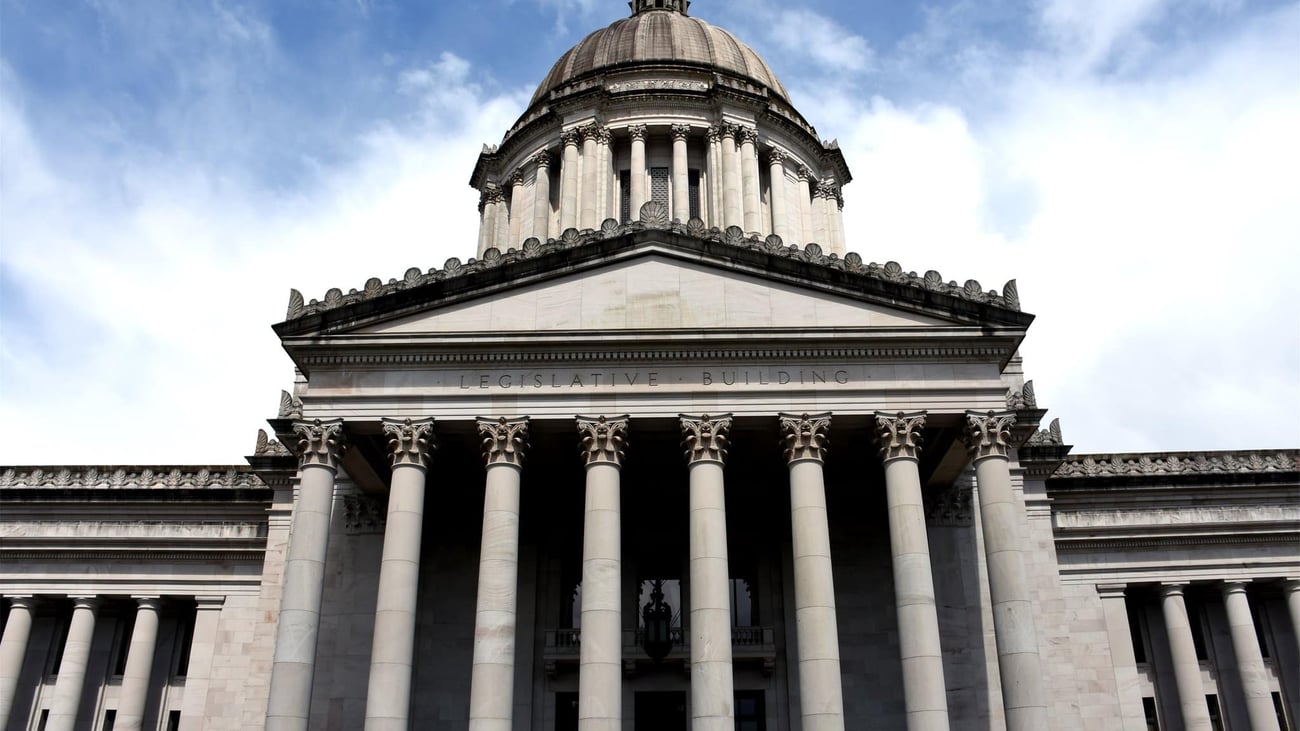
Washington Supreme Court: Washington I-2066 Single-Subject Rule Voided
Summary
- The Washington Supreme Court, in a 6-3 decision, invalidated Initiative 2066, a 2024 voter-approved measure.
- The court found Initiative 2066 unconstitutional for violating the state's single-subject rule by combining four distinct policy areas.
- Chief Justice Debra Stephens' majority opinion cited the impossibility of discerning voter intent for individual subjects within the bundled initiative.
- The ruling upholds a previous invalidation by the King County Superior Court, though on narrower grounds.
- This decision restores certainty to Washington's energy efficiency, building decarbonization, and broader climate policies.
Supreme Court Voids I-2066
This definitive ruling ensures that the state's ambitious energy efficiency, building decarbonization, and broader climate policies, which had faced uncertainty due to the initiative, can now proceed without legal impediment.
The Washington Supreme Court has invalidated a voter-approved measure from 2024, Initiative 2066, which aimed to protect natural gas usage and restrict the state's progress toward its climate objectives. In a 6-3 en banc decision issued on Thursday, the high court determined that the initiative violated the state's constitutional single-subject requirement, rendering it unconstitutional in its entirety.
This significant ruling means that the effort to roll back various environmental and energy policies, which had been narrowly approved by 51.7% of voters, will not take effect. The court's decision affirms that measures presented to the electorate must adhere to strict guidelines regarding the scope of their content, preventing the bundling of disparate policy changes into a single vote.
Violation of the Single-Subject Rule
Chief Justice Debra Stephens authored the majority opinion, which meticulously outlined why Initiative 2066 failed to meet the single-subject standard. The court identified four distinct policy areas combined within the initiative: provisions related to natural gas access and supply, limitations on air quality regulatory authority, modifications to state building codes, and amendments to the Washington Decarbonization Act for Large Combination Utilities. These subjects, the court concluded, lacked the necessary rational unity, as they enacted markedly different policies.
Chief Justice Stephens emphasized the difficulty in discerning voter intent when multiple, unrelated issues are presented together. She noted that it would be impossible to determine which of these four subjects, if any, would have garnered majority support had they been presented individually to voters in the November 2024 general election. The court further determined that the initiative's provisions could not be judicially severed, leading to its complete invalidation due to its embrace of several discrete subjects with substantially distinct regulatory effects.
The Initiative's Legal Journey
Initiative 2066 had been embroiled in legal challenges since its passage. A lawsuit contesting its constitutionality was initiated by the clean energy nonprofit Climate Solutions. Last year, the King County Superior Court had already invalidated the initiative, finding that it encompassed more than one subject, failed to adequately include its subjects in the title, and did not clearly set forth the laws it sought to amend. The Washington Supreme Court's recent affirmation of this earlier ruling focused specifically on the violation of the single-subject rule.
This legal battle underscores the ongoing tension between voter initiatives and constitutional requirements designed to ensure clarity and prevent voter confusion. The court's decision reinforces the principle that even voter-approved measures must conform to fundamental legal frameworks, particularly when they touch upon complex and varied aspects of state governance, including the Washington Decarbonization Act status.
Implications for Washington's Climate Agenda
The Supreme Court's ruling brings renewed clarity and certainty to Washington's extensive efforts in energy efficiency and building decarbonization, which had been in a state of limbo since the initiative's passage. Dylan Plummer, an advisor for the Clean Heat Campaign at the Sierra Club and a plaintiff in the lawsuit, characterized Initiative 2066 as a tactic to confuse voters by packaging diverse issues, aiming to push through reforms that might not otherwise gain public support. He described the court's decision as a clear rejection of such strategies by the fossil fuel industry to undermine clean air, energy efficiency, and climate policies.
Attorneys Paul Lawrence and Kai Smith of Pacifica Law Group, representing the plaintiffs, highlighted that the ruling reaffirms a basic constitutional requirement: that any law, whether enacted by the legislature or through an initiative, cannot combine distinct and unrelated policy changes into a single measure. This definitive ruling ensures that the state's ambitious energy efficiency, building decarbonization, and broader climate policies, which had faced uncertainty due to the initiative, can now proceed without legal impediment, providing Washington climate goals legal certainty.
Practical Implications
This ruling confirms that Washington's energy efficiency, building decarbonization, and climate policies, previously challenged by Initiative 2066, remain in full effect. Lawyers should advise clients in the energy, real estate, and environmental sectors in Washington that the state's transition away from fossil fuels and related regulatory frameworks are not hindered by this initiative, and compliance strategies should reflect the continued enforcement of these climate goals.
Source
How does this affect you?
Get an AI analysis of this article grounded in your jurisdictions, practice areas, and any policy documents you've uploaded to Wansom.
Finish Reading the Full Story and the Expert Analysis.
Get the latest legal & regulatory intelligence in United States
Wansom is AI and can make mistakes.