
Haute Autorité du Waqf: Convention Financement Villes Religieuses for SN Cities
Summary
- A convention has been signed between the Haute Autorité du Waqf and the Programme national d’aménagement et de modernisation des villes religieuses for a renewable three-year term.
- The agreement aims to mobilize waqf as a financing lever for the development and modernization of Senegal's religious cities, including Touba and Médina Baye.
- A Joint Technical Committee will be established to select, monitor, and evaluate projects, promoting waqf-based financing and stakeholder coordination.
- The initiative seeks to implement a modern, coherent approach to urban planning, preserve religious heritage, and adapt infrastructure to current needs.
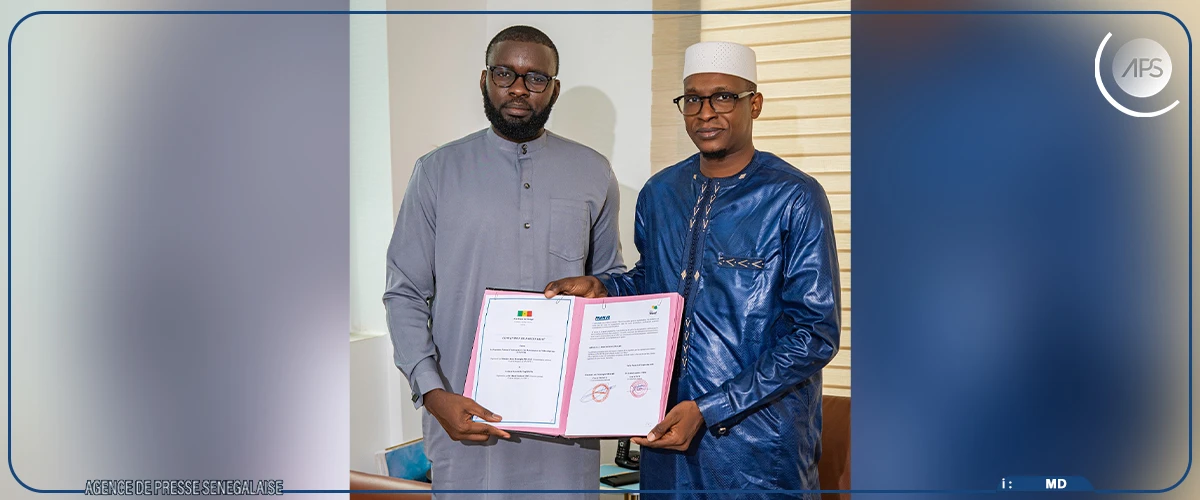
- Dr. Ahmed Lamine Athie and Amdy Moustapha Mbacké signed the convention, highlighting a commitment to structured growth and social impact investments.
New Framework for Urban Development
This groundbreaking convention represents a pivotal shift in how urban development and infrastructure projects will be conceived, managed, and financed within Senegal's religious cities.
A significant convention has been formally established between the Haute Autorité du Waqf and the Programme national d’aménagement et de modernisation des villes religieuses, setting a new course for urban development in Senegal's sacred cities. This agreement, valid for an initial period of three years with the possibility of renewal, is designed to harness the potential of waqf as a primary financial instrument for advancing the growth and modernization of these vital religious centers. The initiative directly addresses the evolving administrative and infrastructural needs of localities such as Touba, Médina Baye, Ndiassane, and Popenguine, which can no longer rely on outdated governance models.
The core objective of this Haute Autorité du Waqf convention financement villes religieuses is to foster a more cohesive and contemporary approach to urban planning across Senegal's major religious cities. This strategic partnership aims to integrate Islamic financing principles into sustainable development, ensuring that these historically significant areas are equipped to meet current and future challenges. The collaboration underscores a commitment to structured growth and efficient resource allocation, moving beyond ad-hoc solutions to embrace a comprehensive development strategy.
Governance and Funding Mechanisms
To operationalize this ambitious undertaking, the convention mandates the creation of a Joint Technical Committee. This newly formed body will play a crucial role in the governance projets villes religieuses, tasked with the rigorous selection of development projects, ensuring their technical and financial oversight throughout their lifecycle, and ultimately evaluating their impact and effectiveness. This structured approach is intended to guarantee transparency and accountability in all initiatives undertaken.
Beyond project management, the partnership is designed to actively promote innovative financement islamique villes religieuses Sénégal, leveraging waqf-based mechanisms to attract and deploy capital. A key aspect of this collaboration involves enhancing coordination among diverse stakeholders, including public entities, religious authorities, and financial institutions. Furthermore, the convention prioritizes investments that yield significant social impact within these religious cities, focusing on adapting existing infrastructure and services to better align with the contemporary needs of their populations and visitors.
Strategic Imperatives and Key Players
The impetus for this convention stems from a broader strategic vision for the coherent development of Senegal's religious urban centers. During a pivotal strategic workshop held in Dakar, Minister Balla Moussa Fofana emphasized the necessity of adopting a "modern and coherent approach" to guide the evolution of these cities. This perspective acknowledges the unique cultural and spiritual significance of these sites while advocating for their integration into a national development framework.
Central to the convention's mandate is not only the modernization of these areas but also the steadfast preservation of their rich religious heritage. The agreement seeks to manage this heritage within a framework that embraces contemporary practices, ensuring its longevity and accessibility. The convention was formally signed by Dr. Ahmed Lamine Athie, the Director General of the Haute Autorité du Waqf, and Amdy Moustapha Mbacké, who serves as the Coordinator for the Programme national aménagement villes religieuses, signifying a high-level commitment to its successful implementation.
Impact on Urban Development
This groundbreaking convention represents a pivotal shift in how urban development and infrastructure projects will be conceived, managed, and financed within Senegal's religious cities. By establishing a dedicated Joint Technical Committee and emphasizing waqf Sénégal développement urbain, the agreement introduces a new, formalized framework that promises greater efficiency and strategic alignment. It signals a move towards more integrated and sustainable development models, particularly for areas with unique cultural and religious significance.
For stakeholders involved in public-private partnerships, project finance, or real estate development in these regions, understanding the new technical committee's role and the waqf-based funding mechanisms is crucial. This initiative is set to redefine the landscape of urban planning and investment in these sacred locales, ensuring that their growth is both modern and respectful of their heritage.
Practical Implications
This convention establishes a new framework for leveraging waqf for urban development in Senegal's religious cities. Lawyers advising on public-private partnerships, project finance, or real estate development in these areas should understand the new technical committee's role and the waqf-based funding mechanisms, as it signals a shift in how such projects will be managed and financed.
Source
Source: Original reporting via APS
How does this affect you?
Get an AI analysis of this article grounded in your jurisdictions, practice areas, and any policy documents you've uploaded to Wansom.
Finish Reading the Full Story and the Expert Analysis.
Get the latest legal & regulatory intelligence in Senegal
Wansom is AI and can make mistakes.