
Waly Diouf Bodiang: Sénégal National Assembly's LFI Rejet
Summary
- Waly Diouf Bodiang commented on the rejection of Senegal's initial finance law (LFI).
- The National Assembly rejected the Loi de finances initiale (LFI) for Senegal.
- Bodiang drew a parallel with France, where its LFI was also rejected by its legislative body.
- He stated that the French assembly was "just as responsible" as Senegal's National Assembly.
- The adoption of a budget is a critical process for national governance, according to Bodiang.
Senegal's Initial Finance Law Rejected
The rejection of such a foundational document by the parliamentary body indicates a potential divergence between the executive and legislative branches regarding the country's economic direction or spending priorities.
Waly Diouf Bodiang recently issued a statement regarding the significant legislative action taken by Senegal's National Assembly. The parliamentary body opted to reject the nation's initial finance law, commonly referred to as the Loi de finances initiale (LFI). This decision represents a pivotal moment in the country's fiscal governance, as the LFI serves as the proposed state budget, detailing anticipated government revenues and planned expenditures for the upcoming financial year.
Bodiang's commentary highlights the critical role of the National Assembly in the budgetary process. The rejection of such a foundational document by the parliamentary body indicates a potential divergence between the executive and legislative branches regarding the country's economic direction or spending priorities. This outcome necessitates a re-evaluation of the proposed budget, which could lead to further negotiations and revisions before a definitive financial framework for the state can be established.
Drawing International Parallels
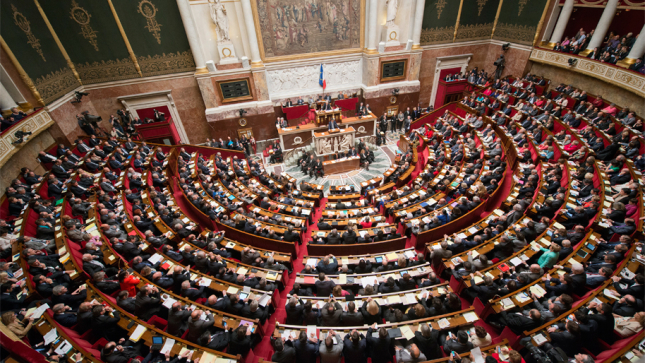
In his remarks, Waly Diouf Bodiang extended his analysis beyond Senegal's domestic situation, drawing a direct comparison to a similar event in France. He noted that France's initial finance law had also been rejected by its legislative body, providing an international context for the Senegalese National Assembly's decision. This parallel suggests that such legislative actions, while impactful, are not isolated incidents unique to Senegal but can occur within established democratic parliamentary systems.
Bodiang specifically characterized the French assembly as "tout aussi responsable"—meaning just as responsible—as Senegal's National Assembly. This phrasing implicitly defends the Senegalese legislative body's autonomy and its prerogative to exercise oversight, even when it results in the rejection of key government proposals like the budget. By equating the responsibility of both assemblies, Bodiang suggests that the Senegalese National Assembly's decision is a legitimate exercise of its constitutional mandate, reflecting a similar level of legislative diligence and accountability observed in other democratic nations. The comparison frames the rejection not as an anomaly, but as a potential manifestation of robust parliamentary scrutiny.
Significance of Budget Adoption
The process of adopting a state budget is a fundamental pillar of national governance, determining how public funds are allocated across various essential sectors, including infrastructure, education, healthcare, and defense. Waly Diouf Bodiang's statement, though concise, underscored the profound importance of this adoption process. While the complete details of his perspective on what budget adoption "depends on" were not fully elaborated, his emphasis on this dependency highlights the intricate interplay of political will, economic realities, and legislative consensus required to finalize the nation's financial plan.
The rejection of the Loi de finances initiale (LFI) in Senegal by the National Assembly therefore ushers in a period of fiscal uncertainty. Without an approved budget, government ministries and agencies may encounter significant constraints in planning and executing their programs, which could potentially impact public services and overall economic stability. This situation underscores the critical necessity for both the legislative and executive branches to reach a swift agreement to ensure the continuity of state functions and to provide a clear financial roadmap for the country. The resolution of this budgetary impasse will be crucial for Senegal's immediate operational capacity and its longer-term economic outlook.
Practical Implications
The rejection of Senegal's initial finance law by the National Assembly signals potential legislative gridlock and uncertainty regarding the state budget. Lawyers should advise clients on possible delays in government-funded projects or shifts in fiscal policy that could impact their operations and financial planning.
Source
How does this affect you?
Get an AI analysis of this article grounded in your jurisdictions, practice areas, and any policy documents you've uploaded to Wansom.
Wansom is AI and can make mistakes.