
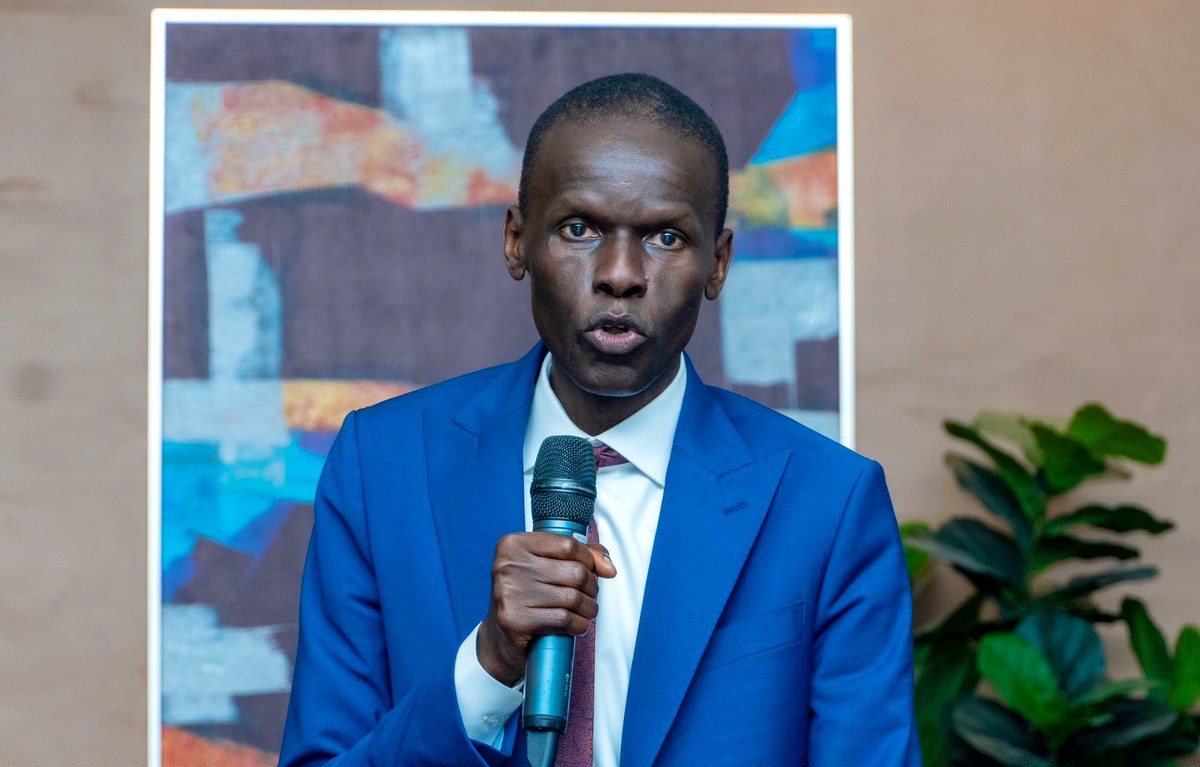
Waly Diouf Bodiang: Contestation des Commissions d'Enquête Parlementaires
Summary
- Waly Diouf Bodiang commented on parliamentary inquiry commissions and their potential challenge before the Constitutional Council.
- His remarks, delivered with irony, praised the National Assembly while criticizing political figures like Mary Teuw Niane.
- Bodiang's statement highlighted the legal avenues for contesting the legitimacy of these commissions in Senegal.
- The discussion underscores the role of the Senegalese Constitutional Council in reviewing legislative actions.
Recent Commentary on Parliamentary Inquiries
Any definitive ruling or clarification from the Conseil constitutionnel regarding the contestation légalité commissions d'enquête could establish important precedents, shaping the interpretation of droit parlementaire sénégalais.
Waly Diouf Bodiang recently offered his perspective on the contentious issue of commissions d'enquête parlementaires in Senegal, specifically addressing the mechanisms for their contestation before the Conseil constitutionnel. His commentary, delivered in a notably ironic tone, touched upon the legislative body's work while simultaneously directing pointed criticism towards certain political figures. This intervention highlights a recurring theme in Senegalese political discourse concerning the powers and limitations of parliamentary investigative bodies.
In his remarks, Bodiang acknowledged the efforts of the National Assembly, seemingly praising its role in the democratic process. However, this commendation was juxtaposed with a clear jab aimed at specific political actors, including Professor Mary Teuw Niane, indicating a deeper political undercurrent to his statements. The core of his public statement revolved around the legal avenues available for challenging the legitimacy of these parliamentary investigative bodies, hinting at potential limitations or specific interpretations concerning the Conseil constitutionnel's jurisdiction in such matters, a point of significant legal interest.
Legal Framework and Constitutional Review in Senegal
The discussion initiated by Waly Diouf Bodiang brings to light a critical aspect of droit parlementaire sénégalais: the scope and limits of commissions d'enquête parlementaires and the potential for their judicial review. These commissions are powerful tools for legislative oversight, designed to investigate matters of public interest and hold the executive accountable. However, their establishment and functioning must strictly adhere to constitutional and legal norms, making them inherently subject to scrutiny and potential challenge.
The Conseil constitutionnel in Sénégal serves as the ultimate arbiter of constitutional legality, possessing the authority to review the constitutionality of laws and, by extension, certain acts emanating from the National Assembly. Bodiang's specific mention of the Conseil constitutionnel in the context of contestation légalité commissions d'enquête underscores the ongoing debate about the precise boundaries of its power to intervene in parliamentary procedures. The incomplete quote from Bodiang, "Le Conseil constitutionnel ne [...]", suggests a nuanced argument about the institution's role, possibly implying a specific interpretation of its jurisdiction over the procedural or substantive aspects of these investigative bodies, a point that could have far-reaching implications for legislative autonomy.
Broader Implications for Governance and Accountability
The critique parlementaire articulated by Waly Diouf Bodiang, particularly his focus on Professor Mary Teuw Niane, extends beyond mere political banter; it brings to the forefront fundamental questions about accountability and the balance of power within the Senegalese political system. The ability to challenge the legality of commissions d'enquête parlementaires before the Conseil constitutionnel is a crucial safeguard, ensuring that legislative power is exercised within constitutional bounds and preventing potential abuses.
This ongoing discourse, fueled by figures like Waly Diouf Bodiang, carries significant weight for the future of legislative oversight and judicial review in Senegal. Any definitive ruling or clarification from the Conseil constitutionnel regarding the contestation légalité commissions d'enquête could establish important precedents, shaping the interpretation of droit parlementaire sénégalais. Such developments would not only define the operational parameters for future parliamentary inquiries but also clarify the extent to which the judiciary can intervene in legislative affairs, thereby impacting the broader legal and political landscape and influencing how lawyers and compliance officers in Senegal approach these matters.
Practical Implications
Lawyers and compliance officers in Senegal should monitor developments regarding the legal challenge of parliamentary inquiry commissions before the Constitutional Council, as this could establish important precedents for the scope and limits of legislative oversight and judicial review.
Source
How does this affect you?
Get an AI analysis of this article grounded in your jurisdictions, practice areas, and any policy documents you've uploaded to Wansom.
Finish Reading the Full Story and the Expert Analysis.
Get the latest legal & regulatory intelligence in Senegal
Wansom is AI and can make mistakes.