
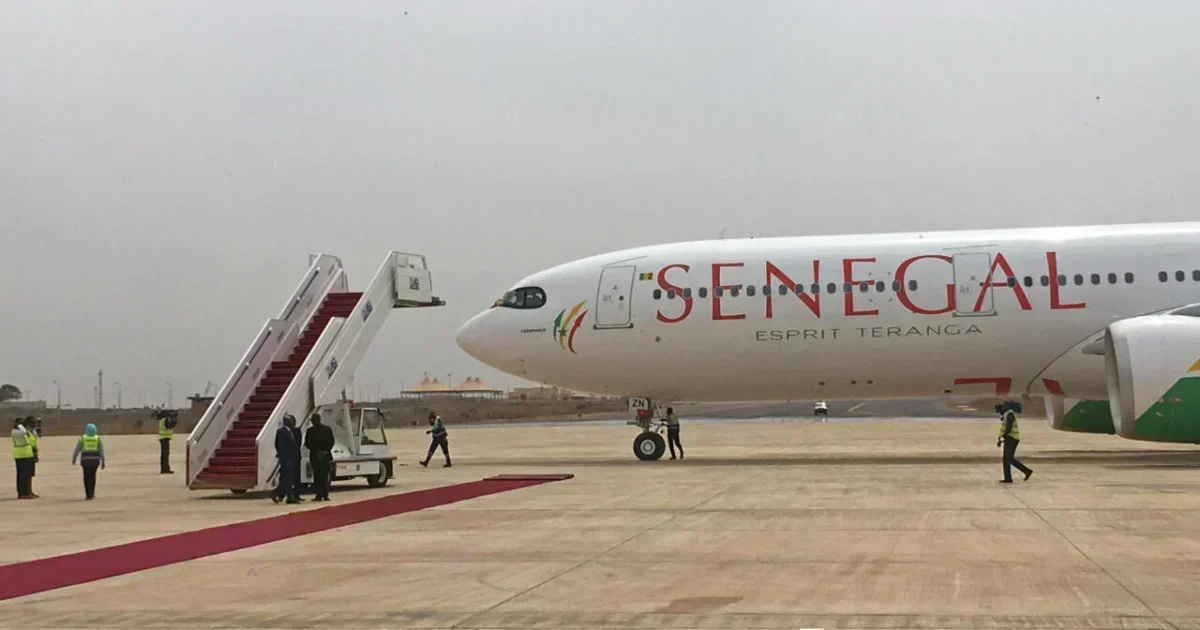
SYNPAAS: Air Sénégal Faces Strike Over 31 Milliards LAS Debt
Summary
- SYNPAAS demands Air Sénégal pay over 31 billion FCFA owed to LAS, threatening a strike and service disruptions.
- Mara Gaye, SYNPAAS Secretary General, denies claims of collusion with LAS, asserting the debt threatens LAS's sustainability and jobs.
- The union plans to block Air Sénégal services at Blaise-Diagne International Airport (AIBD) if the debt is not settled.
- This dispute is part of broader, long-standing tensions within Senegal's civil aviation sector, including unaddressed ultimatums and other union support for strike actions.
- SYNPAAS has not received meeting minutes from discussions with the supervising minister regarding the debt, despite follow-ups.
What Happened
The unresolved SYNPAAS Air Sénégal LAS 31 milliards dispute carries significant implications for the stability and operational continuity of Senegal's aviation industry.
The Syndicat des personnels des activités aéronautiques du Sénégal (SYNPAAS) is demanding that Air Sénégal settle a debt exceeding 31 billion FCFA owed to LAS, the Turkish company responsible for operating the airport. Mara Gaye, the Secretary General of SYNPAAS, has explicitly stated that the ongoing worker strike is directly aimed at securing the payment of this substantial sum. This industrial action has been met with public speculation, particularly on social media, where videos have suggested the movement is a collusive effort benefiting LAS and undermining Air Sénégal's strategic goal of establishing Dakar as a prominent regional aviation hub.
Mr. Gaye has firmly refuted these allegations, clarifying that the union's primary concern is the financial stability of LAS and the job security of its employees, which he asserts are jeopardized by the outstanding debt. The claim for 31 billion FCFA forms the central plank of SYNPAAS's demands. In a significant escalation of their protest, the union has also issued a threat to disrupt Air Sénégal's operations at the Aéroport international Blaise-Diagne (AIBD), indicating a readiness to block services if their demands are not met. This specific threat to block services at AIBD was previously announced for August 18, 2026, with further flight disruptions anticipated from October 15, 2026.
Legal and Regulatory Context
The current dispute involving SYNPAAS, Air Sénégal, and the 31 billion FCFA debt to LAS unfolds within an already volatile industrial relations landscape across the Senegalese civil aviation sector. This broader tension was evident on May 18, 2026, when an inter-union body representing various entities within the sector presented eight specific demands, warning of a general strike if these issues remained unaddressed. This ultimatum, however, reportedly received no official response, contributing to the prevailing atmosphere of discontent.
Further underscoring the widespread labor unrest, the Alliance inter-union des travailleurs de l’aviation civile et du transport aérien, a coalition comprising 13 distinct unions, has publicly endorsed a separate strike notice initiated by workers from ASECNA. This demonstrates that the challenges extend beyond the specific financial disagreement between Air Sénégal and LAS. SYNPAAS itself had formally submitted a strike notice more than 40 days prior to the commencement of its current industrial action. Additionally, union representatives engaged with the supervising minister to highlight the potential ramifications of the outstanding debt, yet Mara Gaye reports that SYNPAAS has not received the official minutes from this crucial meeting, despite repeated requests for their issuance.
Why It Matters
The unresolved SYNPAAS Air Sénégal LAS 31 milliards dispute carries significant implications for the stability and operational continuity of Senegal's aviation industry. The financial burden of this debt, as articulated by SYNPAAS, not only poses a direct threat to the long-term viability of LAS but also places the livelihoods of its workforce at risk. For Air Sénégal, the failure to address this claim could severely impede its strategic vision of transforming Dakar into a key regional aviation hub, a goal that requires robust financial health and uninterrupted operations.
The potential for widespread service disruptions at the Aéroport international Blaise-Diagne (AIBD), as threatened by SYNPAAS, would have cascading economic effects, impacting air travel, cargo logistics, and international connectivity. Beyond the immediate financial and operational concerns, the ongoing tensions, exacerbated by issues such as inadequate working conditions and the lack of official communication following ministerial meetings, highlight deeper systemic challenges within the sector. While Air Sénégal and staff representatives have met in Saly to reaffirm a commitment to social dialogue for company restructuring, the persistence of these disputes underscores the urgent need for definitive resolutions to prevent further destabilization of the nation's critical aviation infrastructure.
Practical Implications
Lawyers advising Air Sénégal, LAS, or other entities in the Senegalese civil aviation sector should closely monitor the SYNPAAS debt claim and strike threats, assessing potential litigation risks, labor law compliance issues, and the financial implications of the 31 billion FCFA dispute.
Source
Source: Original reporting via Senenews.
How does this affect you?
Get an AI analysis of this article grounded in your jurisdictions, practice areas, and any policy documents you've uploaded to Wansom.
Finish Reading the Full Story and the Expert Analysis.
Get the latest legal & regulatory intelligence in Senegal
Wansom is AI and can make mistakes.