
Venâncio Mondlane Supreme Court Trial Begins in Mozambique
Summary
- Venâncio Mondlane's trial for five charges, including incitement to collective disobedience and instigation of terrorism, began today before Mozambique's Supreme Court.
- The charges relate to protests that followed the October 2024 elections, with the prosecution alleging Mondlane's public statements led to violence and infrastructure destruction.
- Mondlane is being tried by the Supreme Court due to his position on the Council of State, which lifted his immunity.
- State-owned company Revimo joined the case, claiming eight of its toll plazas were destroyed after Mondlane called for motorists to stop paying tolls.
- The defense's late submission of a 223-page reply led to criticism from the presiding judge and an adjournment of the session.
The Trial Commences
This high-profile trial of Venâncio Mondlane carries significant weight for Mozambique's political and legal landscape.
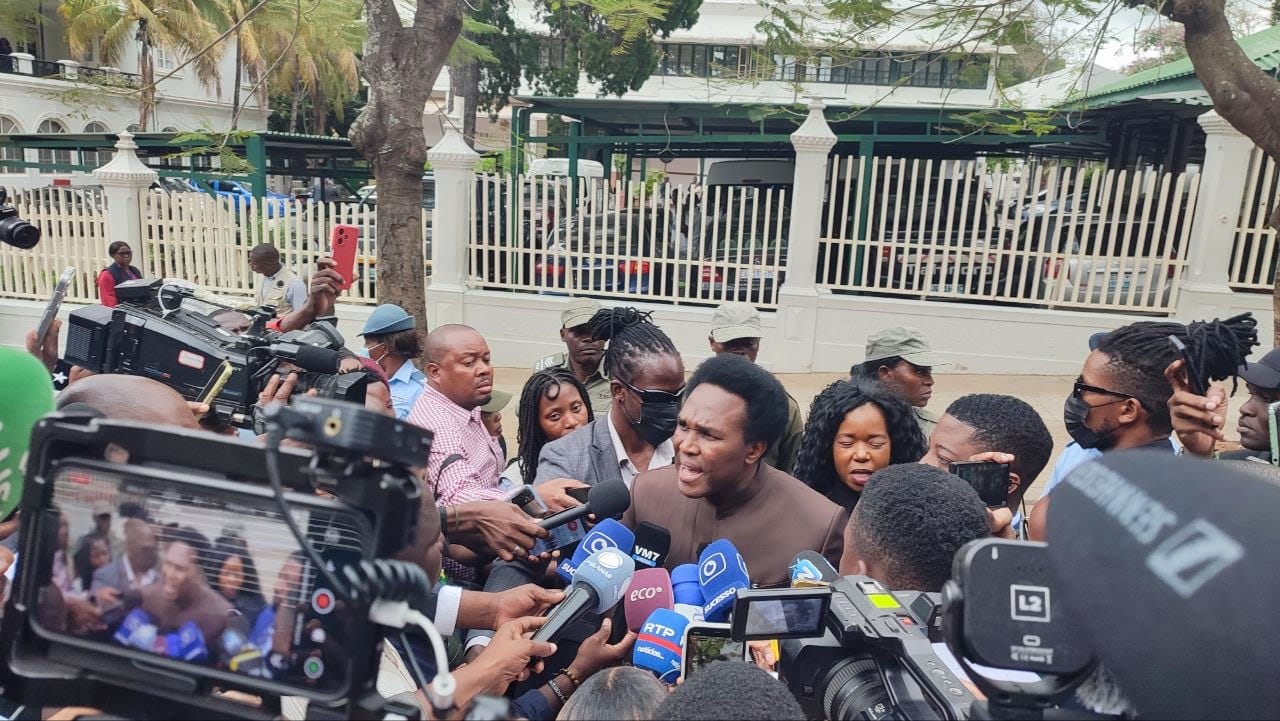
The Supreme Court in Mozambique today began the trial of Venâncio Mondlane, a prominent political figure. The proceedings unfolded in an unusually subdued Maputo, where traffic was notably light and many residents opted to remain indoors, some reportedly out of concern for potential disturbances. Outside the courthouse, a modest assembly of Mondlane's supporters gathered, alongside journalists who had been unable to secure official accreditation for the event. Among the nation's primary television broadcasters, only the privately owned TV Sucesso provided coverage of the unfolding legal battle.
Mondlane is confronting a total of five charges stemming from the protests that erupted following the October 2024 elections. The prosecution initiated its case with Amabélia Chuquela, who was then Deputy Attorney-General, presenting a comprehensive 44-page indictment. This document asserts that Mondlane utilized various public statements, including video recordings made between October and December 2024, to advocate for strikes and demonstrations. These calls, according to the prosecution, subsequently led to acts of violence and the destruction of public infrastructure.
In response, Mondlane's defense team informed the court that they possessed a 223-page written reply to the indictment. However, they failed to provide copies of this extensive document to the other parties involved in the case. Presiding judge Luís Mondlane expressed strong criticism regarding this late submission, pointing out that the indictment itself had been delivered several months prior. Following this procedural issue, the session was adjourned, with proceedings scheduled to resume at 10 am the following day.
Legal Framework and Allegations
The decision to try Venâncio Mondlane before the Supreme Court is a direct consequence of his position as the runner-up in the presidential election, which grants him a seat on the Council of State. This body was required to lift his immunity to allow the legal proceedings to advance. The five charges leveled against him are serious, encompassing allegations of incitement to collective disobedience, instigation of terrorism, and incitement to terrorism. These accusations are directly linked to the unrest that followed the national elections in October 2024.
Further complicating the legal landscape, Revimo, a state-owned entity responsible for managing toll roads across five Mozambican provinces, has formally joined the case. Represented by lawyer Rodrigo Rocha, Revimo has taken on the role of an assistant to the Public Prosecutor’s Office. The company's involvement stems from significant damage sustained during the post-election protests, specifically the destruction of eight of its toll plazas. This damage reportedly occurred after Mondlane publicly urged motorists to cease paying tolls, an action the prosecution links to the subsequent acts of vandalism. The legal proceedings will therefore not only address the broader charges of incitement but also the specific claims of infrastructure damage brought by a state enterprise.
Broader Implications
This high-profile trial of Venâncio Mondlane carries significant weight for Mozambique's political and legal landscape. The charges of incitement to collective disobedience and instigation of terrorism against a prominent opposition figure, particularly one who holds a position on the Council of State, underscore the state's approach to post-election dissent and the boundaries of political expression. The prosecution's reliance on public statements and videos from late 2024 as evidence highlights the scrutiny applied to political rhetoric in times of unrest.
The involvement of Revimo, a state-owned company, as an assistant to the prosecution, introduces an additional dimension to the case. Their claim for damages related to the destruction of eight toll plazas, allegedly spurred by Mondlane's calls for motorists to stop paying tolls, demonstrates the potential for state entities to pursue financial redress for protest-related infrastructure damage. This aspect of the trial could set precedents for how public order offenses are prosecuted and how state assets are protected. The procedural hiccup of the defense's late submission of a 223-page reply, and the judge's subsequent admonishment, also offers a glimpse into the practical realities of court proceedings in Mozambique, emphasizing the importance of adherence to judicial timelines.
Practical Implications
Lawyers advising clients on political risk, freedom of expression, or public order in Mozambique should closely monitor this high-profile trial for precedents regarding the interpretation of incitement charges, the scope of immunity for Council of State members, and the potential for state-owned entities to pursue damages from protest-related infrastructure destruction. The procedural aspects, such as the late submission of defense documents, also highlight practical considerations in Mozambican court proceedings.
Source
How does this affect you?
Get an AI analysis of this article grounded in your jurisdictions, practice areas, and any policy documents you've uploaded to Wansom.
Finish Reading the Full Story and the Expert Analysis.
Get the latest legal & regulatory intelligence in Mozambique
Wansom is AI and can make mistakes.