
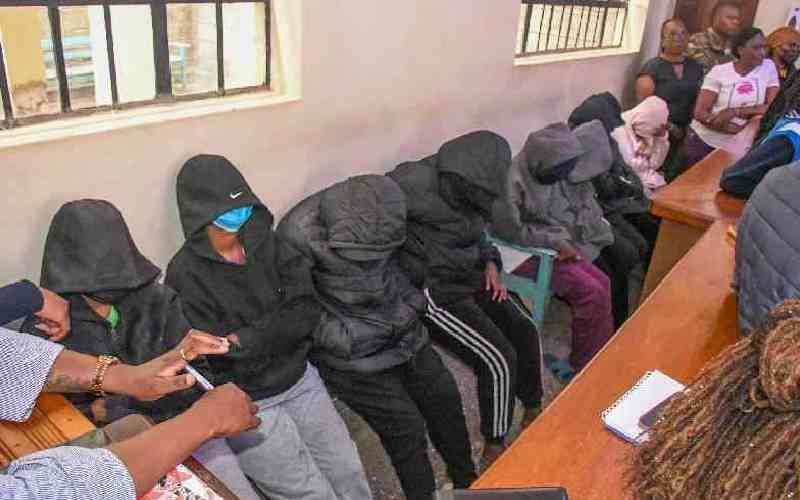
DPP Kenya: Two Minors Seek Utumishi Girls Murder Plea Bargain
Summary
- Two of eight minors accused in the Utumishi Girls Academy dormitory fire deaths have initiated plea bargain requests with the Director of Public Prosecutions.
- The requests were revealed in Kibera High Court before Judge Diana Kavedza, weeks after the minors were denied bail.
- One lawyer's request was formally received by the prosecution, while another's was not yet formally acknowledged.
- Judge Kavedza urged swift action on plea negotiations and allowed parents two enhanced monthly visits to facilitate discussions.
- The court declined to set a hearing date, encouraging other minors to also pursue plea bargaining.
Recent Developments in the Utumishi Girls Case
This case highlights the active and encouraged use of plea bargaining in high-profile criminal matters involving minors in Kenya.
The tragic Utumishi Girls Academy dormitory fire, which resulted in the deaths of sixteen students, has seen a significant legal development as two of the eight minors accused in the case have initiated plea bargain negotiations with the Director of Public Prosecutions (DPP). This turn of events was revealed during a recent session at the Kibera High Court, presided over by Judge Diana Kavedza, weeks after the minors were denied bail. The move signals a potential shift in the legal strategy for some of the young defendants involved in the high-profile Utumishi Girls murder plea bargain DPP Kenya proceedings.
Lawyers representing two of the minors formally informed the court of their clients' intent to pursue a plea deal. Odiero Osiemo, counsel for Subject Minor 3, confirmed that his office had submitted a request to the prosecution. State Counsel Linda Ndambiri acknowledged the formal receipt of this application, noting that the DPP's office had already engaged in preliminary discussions with Minor 3's lawyer and parents. However, further time was requested to secure comprehensive instructions directly from the child before proceeding with any formal agreement.
Separately, PK Nganga, representing Subject Minor 7, also communicated to the court that he had written to the Office of the Director of Public Prosecutions (ODPP) to request a plea bargain, a decision made after consultation with the minor's parents. Nganga sought the court's permission for two enhanced visits to the Kamae Borstal Institution, where his client is held, to facilitate discussions regarding the plea request and to convey the outcome of the prosecution's engagement. Despite this, State Counsel Ndambiri indicated that the prosecution had not yet formally received Nganga's specific request. The legal teams for the remaining six minors stated they had not yet received instructions from their clients or their parents regarding similar plea negotiations, with some lawyers, like Kipcoech for Subjects 1, 5, 6, and 8, urging the court to expedite the trial given the involvement of children.
Understanding Plea Bargaining in Kenya
Plea bargaining represents a critical component of criminal procedure in Kenya, particularly in complex cases such as the Utumishi Girls Academy fire case involving minors. This legal mechanism allows for negotiations between the prosecution and an accused individual to reach a mutually agreeable resolution for a criminal matter, which must ultimately receive judicial approval. For serious offenses like murder, a plea deal might involve an admission of guilt to a modified charge or other legally permissible conditions, aiming to streamline the judicial process and potentially offer a more predictable outcome for all parties.
It is crucial to understand that merely initiating a request for a plea bargain does not equate to an admission of guilt. Furthermore, the negotiation process itself does not guarantee that an agreement will be reached, nor does it predetermine the specific sentence that might be imposed. The framework for minor criminal plea negotiations Kenya emphasizes careful consideration, especially when dealing with young defendants, ensuring their rights are protected and their understanding of the process is clear. The Director of Public Prosecutions plea deal mechanism is designed to be a flexible tool, but one that requires diligent adherence to procedural requirements and ethical considerations.
This case highlights the active and encouraged use of plea bargaining in high-profile criminal matters involving minors in Kenya. Lawyers should advise clients on the procedural requirements for initiating plea negotiations with the DPP, including the need for formal requests and parental involvement, and be prepared for courts to push for swift resolution through this mechanism.
Judicial Directives and Future Path
In response to the plea bargain requests, Judge Diana Kavedza underscored the importance of swift action from the parties involved. She urged those pursuing plea negotiations to proceed expeditiously, emphasizing the court's need to ascertain whether these discussions would yield an agreement or if the case should proceed to a full trial. The judge declined to schedule a hearing date for the case, citing a full court diary for the remainder of the year, and advised the lawyers representing the other six minors to also explore plea bargaining if their clients chose to do so, indicating a preference for this resolution pathway.
To facilitate these critical discussions, the court granted permission for the parents of all eight minors to have two enhanced visits per month at the institution where the children are currently detained. These visits are intended to provide ample opportunity for the minors, their legal counsel, and their parents to confer effectively regarding the plea bargain proposals and other aspects of their defense. The parents were instructed to coordinate directly with the institution to arrange these visits, ensuring a structured approach to these important consultations. The court also directed Kamae Borstal children's officer Hilda Mbatha to provide relevant details, though the specifics of these details were not elaborated upon in the proceedings. This judicial guidance aims to ensure that the criminal procedure in this sensitive case involving minors progresses efficiently and fairly.
Source
How does this affect you?
Get an AI analysis of this article grounded in your jurisdictions, practice areas, and any policy documents you've uploaded to Wansom.
Finish Reading the Full Story and the Expert Analysis.
Wansom is AI and can make mistakes.