
US Trump Administration Seeks Supreme Court Stay on White House Ballroom Construction
Summary
- The administration is seeking a Supreme Court stay on a lower court ruling that blocked construction of a new White House ballroom.
- A federal appeals court upheld the initial ruling by Senior U.S. District Judge Richard Leon, giving the government 14 days to file a petition for review at the Supreme Court.
- The National Trust for Historic Preservation has opposed the project, citing concerns about its impact on the historic integrity of the White House.
- If granted, the stay could set a precedent allowing the government to bypass lower court rulings and push forward with large-scale construction projects without delay.
What Happened
The administration urged the justices to put the order by Senior U.S. District Judge Richard Leon on hold, calling it 'extraordinary and unlawful.'
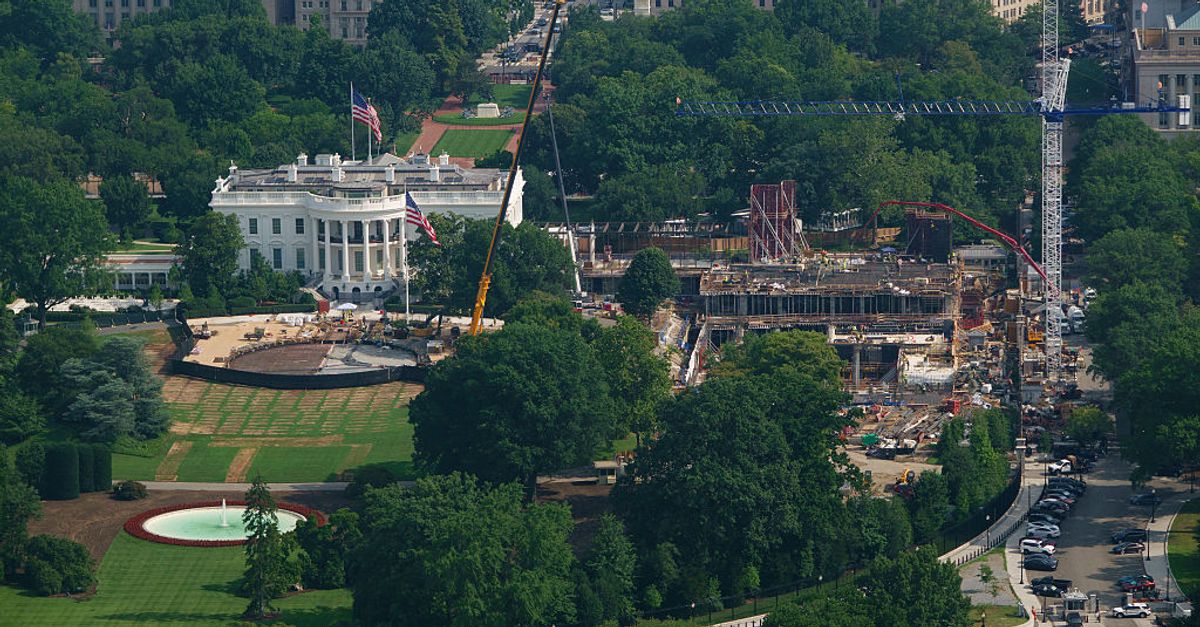
The administration has taken its dispute over the construction of a new White House ballroom to the Supreme Court. On Friday, the government asked the justices to allow the project to continue while a challenge to it is pending in lower courts. This move comes after a federal appeals court upheld a ruling by Senior U.S. District Judge Richard Leon that temporarily blocked construction. The administration has argued that this order is 'extraordinary and unlawful' and would halt the ongoing construction of the integrated military complex, including a secure ballroom space at the East Wing of the White House.
Legal Context
The dispute over the White House ballroom began in October 2025 when the administration tore down the East Wing to build a 90,000-square-foot ballroom. The National Trust for Historic Preservation had opposed the project, citing concerns about its impact on the historic integrity of the White House. A federal district court initially blocked construction, and this ruling was upheld by a federal appeals court last week. Now, the administration is seeking to have this order put on hold while it files a petition for review at the Supreme Court.
Why It Matters
The case has significant implications for government projects and construction timelines in the future. If the Supreme Court grants the stay, it could set a precedent that allows the government to bypass lower court rulings and push forward with large-scale construction projects without delay. This would be a major victory for the administration, which has been pushing to complete the ballroom project despite opposition from preservation groups. However, if the court denies the stay, it could have far-reaching consequences for future government construction projects.
Practical Implications
Lawyers should watch for the potential precedent set by this case, which could impact government projects and construction timelines in the future.
Source
How does this affect you?
Get an AI analysis of this article grounded in your jurisdictions, practice areas, and any policy documents you've uploaded to Wansom.
Wansom is AI and can make mistakes.