
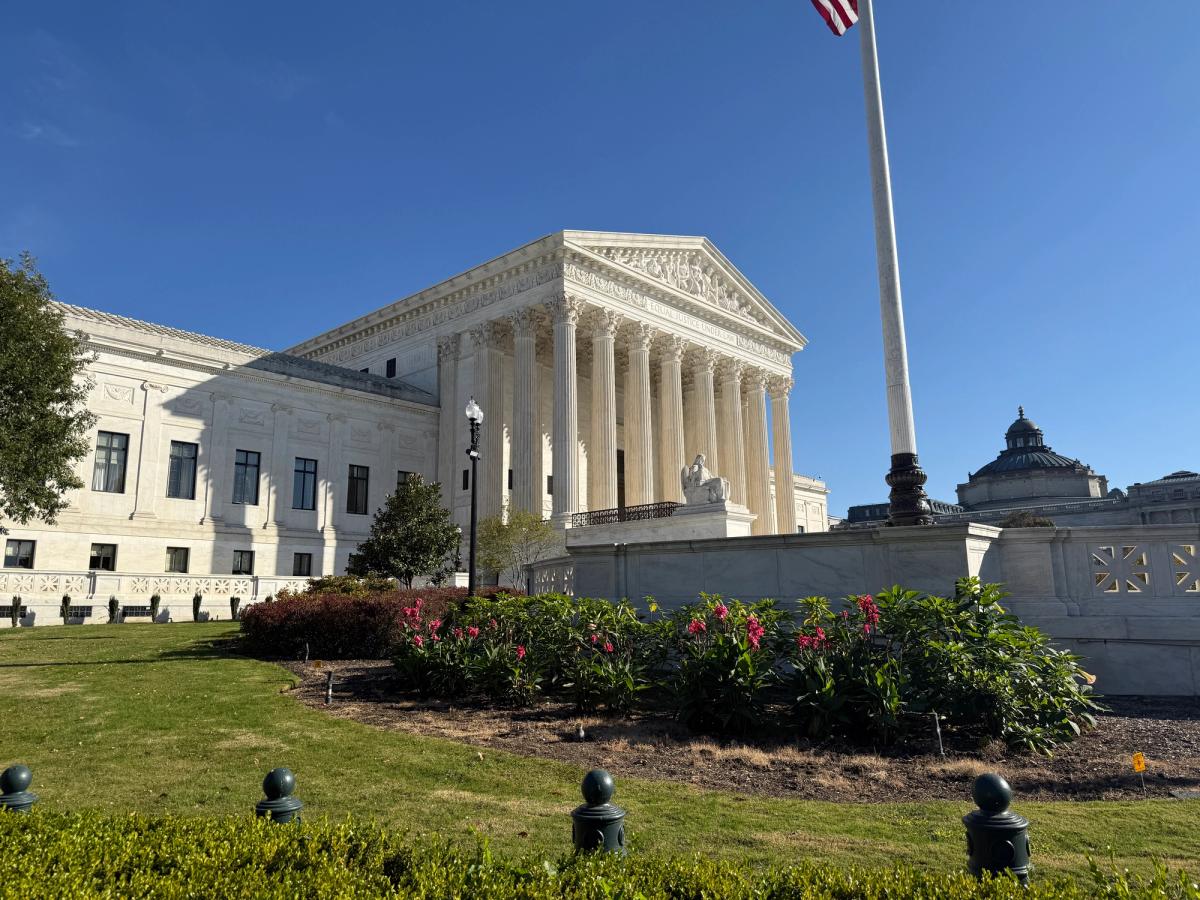
SCOTUS: Article III Immigration Contract Dispute Challenges DOL H-2A Adjudication
Summary
- The Supreme Court will hear arguments on November 10 in the case of Department of Labor v. Sun Valley Orchards.
- The central question is whether Congress can constitutionally delegate to the executive branch the power to adjudicate employer compliance with H-2A worker agreements.
- The Department of Labor alleges Sun Valley Orchards failed to compensate temporary foreign agricultural workers as promised, a claim largely upheld through internal administrative processes.
- Federal district courts are statutorily required to give great deference to the DOL's administrative adjudication when reviewing these cases.
- The U.S. Court of Appeals for the 3rd Circuit's ruling against the DOL's administrative adjudication prompted the Supreme Court's review.
The Core Dispute
The Supreme Court's ruling will determine the permissible scope of administrative adjudication by the Department of Labor in H-2A contract disputes, potentially redefining the level of deference Article III courts must afford to agency findings.
The Supreme Court is poised to address a significant constitutional question concerning the division of power between the executive and judicial branches in the case of Department of Labor v. Sun Valley Orchards. This complex dispute, scheduled for argument on November 10, centers on whether Congress can constitutionally grant an executive agency the authority to adjudicate an employer's compliance with employment agreements made with temporary immigrant workers, rather than reserving such power for the courts.
At the heart of the matter are allegations brought by the Department of Labor against Sun Valley Orchards. The DOL contends that the agricultural employer failed to uphold its commitments regarding the compensation of temporary foreign agricultural workers hired under the H-2A visa program. These commitments are a prerequisite for employers to qualify for participation in the H-2A program, which facilitates the hiring of non-immigrant workers for seasonal or temporary agricultural labor.
The administrative process within the Department of Labor saw its Wage and Hour Division initiate charges against Sun Valley Orchards, asserting that the company had not met its contractual obligations. Subsequently, an administrative law judge (ALJ) largely sided with the DOL's position. Following this initial determination, the matter proceeded to the DOL's Administrative Review Board, a separate internal body, which affirmed the findings of the ALJ.
Constitutional Questions and Legal Framework
For decades, the Department of Labor has utilized administrative law judges to resolve disputes arising under the H-2A visa program adjudication. This program is crucial for agricultural employers seeking to fill labor gaps with temporary foreign workers. The constitutional challenge in Department of Labor v. Sun Valley Orchards directly questions the legitimacy of this long-standing practice, specifically the delegation of what might be considered judicial power to an executive branch agency.
The central issue before the justices is whether the Constitution permits Congress to empower the executive branch to adjudicate an employer's contractual obligations to H-2A workers, thereby bypassing the traditional role of Article III courts. This involves a fundamental question about the separation of powers and the appropriate scope of administrative adjudication. The Department of Labor maintains that its current system is a valid exercise of delegated authority.
A critical aspect of the current statutory framework is the limited nature of judicial review available to employers. After exhausting the DOL's internal administrative appeals, Sun Valley Orchards gained its first opportunity to present its case before Article III judges in a federal district court. However, under the existing statute, these federal courts are mandated to afford substantial deference to the Department of Labor's administrative findings and conclusions, significantly constraining the scope of independent judicial scrutiny.
Path to the Supreme Court and Broader Implications
The Supreme Court's involvement stems from a decision by the U.S. Court of Appeals for the 3rd Circuit, which issued a ruling that challenged the Department of Labor's administrative adjudication process in this context. The 3rd Circuit's reasoning effectively brought the constitutional question of the executive branch's authority to adjudicate such disputes to the nation's highest court. This case represents a pivotal moment for understanding the boundaries of administrative power.
The outcome of this SCOTUS Article III immigration contract dispute will have far-reaching implications for the H-2A visa program and the broader landscape of administrative law. It will clarify the constitutional limits on the delegation executive branch judicial power, particularly concerning contract disputes that have traditionally fallen within the purview of courts. The decision will define the extent to which administrative agencies can act as adjudicators without infringing upon the role of Article III courts.
This case is not merely about a single employer's alleged non-compliance; it delves into the fundamental structure of government and the checks and balances intended to preserve the separation of powers. The Supreme Court's ruling will determine the permissible scope of administrative adjudication by the Department of Labor in H-2A contract disputes, potentially redefining the level of deference Article III courts must afford to agency findings. This will undoubtedly influence litigation strategies and compliance risk assessments for agricultural employers and impact the rights of H-2A visa workers, particularly regarding judicial review DOL H-2A decisions.
Practical Implications
Lawyers advising agricultural employers or representing H-2A visa workers should closely monitor the outcome of Department of Labor v Sun Valley Orchards. The Supreme Court's decision will clarify the constitutional limits of administrative adjudication by the Department of Labor in H-2A contract disputes, potentially redefining the scope of judicial review and the level of deference Article III courts must afford to agency findings, thereby impacting litigation strategies and compliance risk assessments for employers.
Source
How does this affect you?
Get an AI analysis of this article grounded in your jurisdictions, practice areas, and any policy documents you've uploaded to Wansom.
Wansom is AI and can make mistakes.