
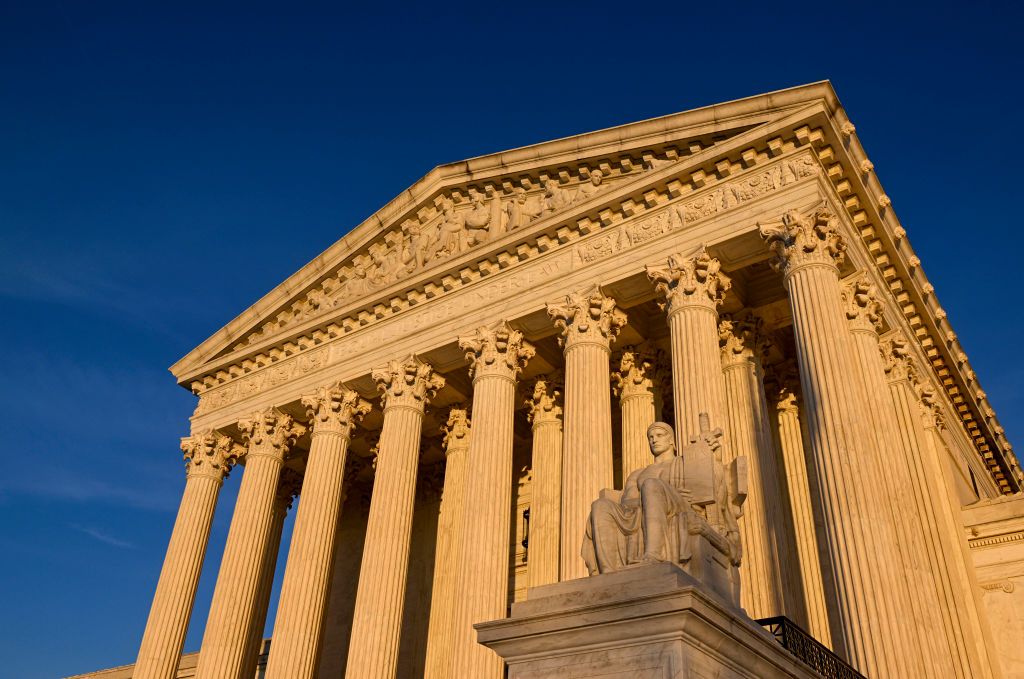
SCOTUS Hears St. Mary Catholic Parish v. Roy: Justices Question Smith Precedent
Summary
- The Supreme Court heard arguments in St. Mary Catholic Parish v. Roy, challenging Colorado's universal preschool program's 'equal opportunity' mandate.
- Colorado's program provides $6,300 per child for 15 hours of weekly preschool, usable at 2,000 public, private, and religious institutions.
- The mandate requires equal enrollment opportunity regardless of race, religion, sexual orientation, gender identity, or other factors, though enrollment preferences are allowed.
- Justice Clarence Thomas questioned why the Employment Division v. Smith precedent should apply, given its absence in recent religious school funding cases.
- The case's outcome is expected to further narrow the reach of the *Employment Division v. Smith* precedent, impacting religious institutions receiving public funds.
The Core Dispute
The specific reasoning employed by the Court will be crucial.
The Supreme Court recently heard arguments in St. Mary Catholic Parish v. Roy, a case that scrutinizes Colorado's universal preschool program and its requirements for participating providers. This program, established following voter approval in 2020, offers funding for 15 hours of preschool weekly for every four-year-old in the state, equating to approximately $6,300 per child. Families have the flexibility to utilize these funds at any of the roughly 2,000 approved preschools, which include public, private, and religious institutions.
A central condition for all participating providers is adherence to an "equal opportunity" mandate. This stipulation requires that children be afforded an equal chance to enroll, irrespective of their race, ethnicity, religious affiliation, sexual orientation, gender identity, housing status, income level, or disability. While this mandate is generally applied, Colorado does permit preschools to implement certain enrollment "preferences." These preferences can include prioritizing children of employees, siblings, members of a specific community, or families who commit to volunteering. Over 1,000 preschools currently utilize such preferences, setting the stage for the current legal challenge.
Legal Precedent Under Scrutiny
During the oral arguments for St. Mary Catholic Parish v. Roy, Justice Clarence Thomas initiated Colorado's portion of the discussion with a pointed observation. He noted that in the Supreme Court's two most recent cases involving religious schools public funding and public benefits—Espinoza v. Montana Department of Revenue and Carson v. Makin—the justices did not reference or apply the Employment Division v. Smith precedent. Justice Thomas then directly questioned Colorado's deputy solicitor general, asking why the *Smith* precedent should be invoked in the current case.
This inquiry highlights the fundamental legal question at the heart of the proceedings. The *Employment Division v. Smith* precedent is widely regarded as perhaps the most contentious free exercise clause SCOTUS ruling, and its continued relevance is a key point of contention. The Court's decision in *St. Mary Catholic Parish v. Roy* is expected to further clarify, and potentially narrow, the applicability of *Smith* in cases involving religious institutions and government programs.
Why This Case Matters
The outcome of St. Mary Catholic Parish v. Roy holds significant implications for the future of religious freedom jurisprudence and the interaction between religious institutions and public funding. While it appears unlikely that Colorado will prevail in this case, the true battle lies in determining the precise legal rationale for the Catholic preschools' expected victory. The specific reasoning employed by the Court will be crucial.
The resolution of this case will directly influence the remaining scope and interpretation of the *Employment Division v. Smith* precedent. It will define how much of this foundational free exercise ruling continues to apply, particularly in contexts where religious entities participate in publicly funded programs. This decision could reshape the landscape for religious organizations seeking to maintain their distinct identities while also accessing government benefits.
Practical Implications
Lawyers advising religious organizations or institutions receiving public benefits should closely monitor the outcome of St. Mary Catholic Parish v. Roy, as it is likely to further narrow the scope of Employment Division v. Smith, potentially altering compliance obligations related to anti-discrimination mandates tied to public funding for religious entities.
Source
How does this affect you?
Get an AI analysis of this article grounded in your jurisdictions, practice areas, and any policy documents you've uploaded to Wansom.
Wansom is AI and can make mistakes.