
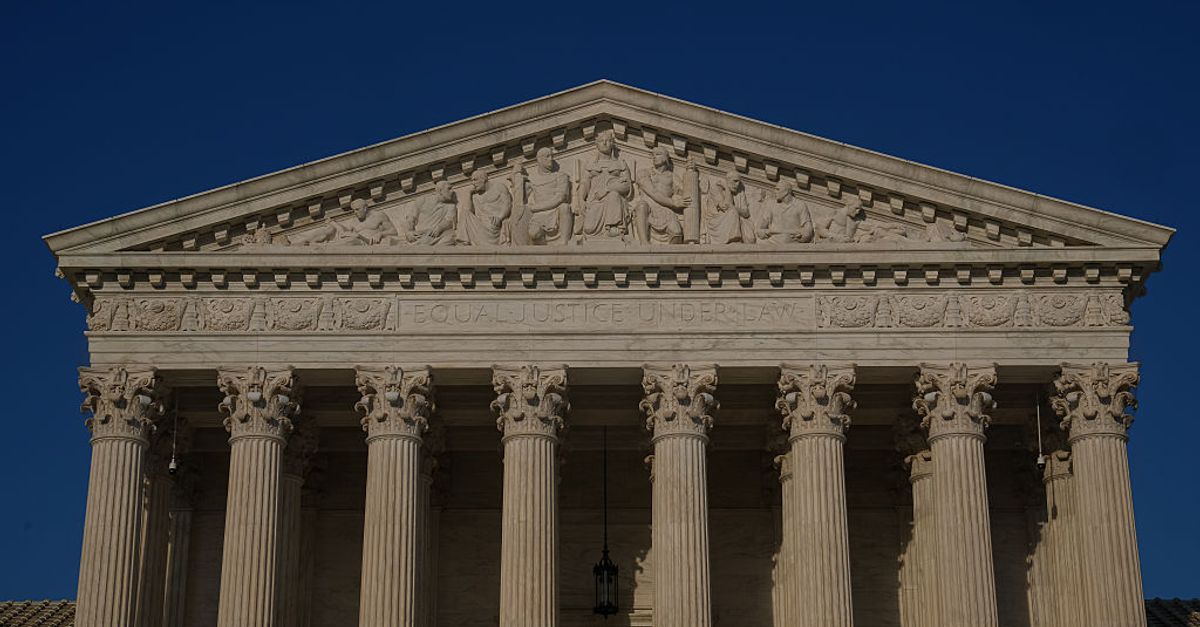
Supreme Court: Pauses Political Broadcasting Rates Ruling, Restores Party Access
Summary
- The Supreme Court temporarily paused a federal appeals court ruling on Friday, allowing political parties and joint fundraising committees to continue receiving favorable advertising rates.
- This decision effectively reinstates a March 30 public notice from the FCC Media Bureau, which had extended these preferential rates beyond federal candidates.
- The U.S. Court of Appeals for the 4th Circuit had previously limited these rates exclusively to federal candidates, a ruling now on hold.
- Justice Ketanji Brown Jackson was the lone dissenter in the Supreme Court's unsigned, four-page opinion.
- The National Republican Senatorial Committee and National Republican Congressional Committee had requested the Supreme Court to freeze the 4th Circuit's decision.
Supreme Court Temporarily Reinstates Favorable Ad Rates
This temporary pause by the Supreme Court means that current practices regarding campaign finance broadcasting rules can continue, providing a reprieve for these political entities.
On Friday, the nation's highest court issued an unsigned, four-page opinion that temporarily halted a federal appeals court decision concerning political broadcasting rates. This action by the Supreme Court effectively allows political parties and joint fundraising committees to continue benefiting from preferential advertising rates, at least for the time being, as the midterm elections approach. The ruling from the U.S. Court of Appeals for the 4th Circuit, which had previously restricted these advantageous rates solely to candidates for federal office, is now on hold.
Justice Ketanji Brown Jackson was the sole dissenter in the Supreme Court's decision. She indicated her preference to deny the request made by the National Republican Senatorial Committee (NRSC) and the National Republican Congressional Committee (NRCC), which had sought to freeze the 4th Circuit's ruling. This temporary pause by the Supreme Court means that current practices regarding campaign finance broadcasting rules can continue, providing a reprieve for these political entities.
The Regulatory Framework for Political Advertising
The core of this legal dispute revolves around long-standing federal election law, which stipulates that candidates vying for federal office are entitled to purchase advertising time at preferential rates. These advantageous rates are applicable during specific pre-election windows: 45 days prior to a primary election and 60 days before a general election. This provision aims to ensure fair access to media for federal candidates.
The current controversy began this spring when the Federal Communications Commission’s (FCC) Media Bureau issued a "public notice" on March 30. This notice expanded the interpretation of who could receive these favorable advertising rates, indicating that political parties and joint fundraising committees would also be eligible. This guidance from the FCC Media Bureau political ad rates effectively broadened the scope of entities benefiting from reduced broadcasting costs.
Legal Challenge and Appellate Court Intervention
The FCC Media Bureau's public notice quickly drew opposition. On April 29, Senator Jon Ossoff of Georgia, along with three other Democratic candidates for either the House or Senate, formally petitioned the full Federal Communications Commission to review the public notice. They argued that the FCC's guidance was inconsistent with existing federal election laws.
Approximately six weeks later, with no action taken by the FCC on their application for review, these Democratic candidates escalated the matter to federal court. There, they reiterated their contention that the public notice contradicted established federal election laws. Subsequently, a divided panel of the U.S. Court of Appeals for the 4th Circuit issued a ruling that limited the application of these favorable political broadcasting rates exclusively to federal candidates, thereby overturning the FCC Media Bureau's broader interpretation. It was this 4th Circuit political broadcasting rates decision that the Supreme Court has now temporarily paused, responding to the National Republican Senatorial Committee lawsuit and its congressional counterpart.
Implications for Campaign Finance and Future Elections
The Supreme Court's decision to pause the 4th Circuit's ruling has immediate and significant implications for campaign finance broadcasting rules, particularly as the midterm elections draw nearer. By temporarily reinstating the FCC Media Bureau's interpretation, the Supreme Court pauses political broadcasting rates ruling, allowing political parties and joint fundraising committees to continue securing more favorable advertising costs. This means that the campaign finance landscape, at least for the current election cycle, will operate under the broader eligibility for discounted ad rates.
While the Supreme Court's intervention offers a temporary resolution, it is crucial to understand that this is not a definitive judgment on the merits of the underlying legal question. The core dispute regarding the scope of federal election law advertising rates remains active. Compliance officers and legal counsel for political organizations and media outlets must monitor this situation closely, as future rulings or updated FCC guidance could alter the landscape once again. The SCOTUS political advertising rates decision provides a temporary reprieve but underscores the ongoing legal complexities.
Practical Implications
Compliance officers and legal counsel for political parties, joint fundraising committees, and media outlets must be aware that the Supreme Court has temporarily reinstated favorable broadcasting rates for these entities. This pause means current advertising rate practices can continue for now, but the underlying legal dispute remains active, necessitating close monitoring for definitive future rulings or FCC guidance changes.
Source
How does this affect you?
Get an AI analysis of this article grounded in your jurisdictions, practice areas, and any policy documents you've uploaded to Wansom.
Finish Reading the Full Story and the Expert Analysis.
Wansom is AI and can make mistakes.