
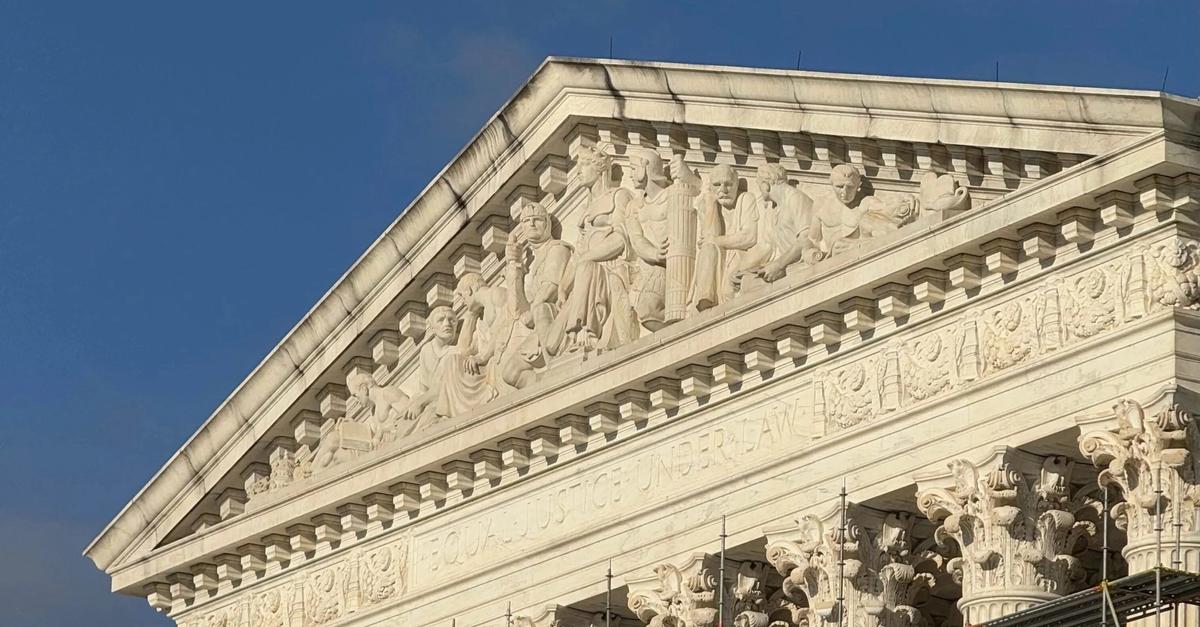
Supreme Court: Weighs DHS SAVE Database Use for Noncitizen Voter Rolls
Summary
- The Trump administration has asked the Supreme Court to permit the use of the DHS SAVE database to identify noncitizens on state voter rolls.
- This dispute is fully briefed, and a decision from the Supreme Court could be issued at any moment.
- Next Monday, the justices will convene for their "long conference" to consider petitions for review accumulated over the summer.
- One year ago, the Supreme Court cleared the way for President Trump to remove FTC Commissioner Rebecca Slaughter.
- In June, the Court ruled 6-3 that the president has the power to fire heads of certain independent agencies without cause.
Supreme Court Considers Federal Database for Voter Rolls
The administration's push to leverage the DHS SAVE database for identifying noncitizens on state voter rolls raises complex legal and practical questions.
The Supreme Court is currently considering a significant request from the Trump administration concerning the use of federal resources to scrutinize state election processes. The administration has formally asked the high court to authorize its use of the Department of Homeland Security’s Systematic Alien Verification for Entitlements (SAVE) database. This federal system is specifically designed to help identify individuals who are not citizens within state voter rolls, aiming to ensure the integrity of electoral participation.
The legal dispute surrounding this request has now been fully briefed by all parties involved, indicating that a decision from the justices could be issued at any moment. This particular case, focused on the DHS SAVE database noncitizen voter rolls, represents a critical juncture for federal oversight in state election matters.
This development coincides with the upcoming "long conference," scheduled for next Monday, where the justices will convene to review numerous petitions for certiorari that have accumulated over their summer recess. The inclusion of the SAVE database request among the cases under consideration highlights its perceived importance by the Court.
Recent Precedent on Presidential Authority
This current deliberation follows a notable ruling by the Supreme Court just months ago, which clarified the scope of presidential authority over independent agency heads. Last year, in an interim docket decision, the Court had initially paved the way for then-President Donald Trump to remove Federal Trade Commission (FTC) Commissioner Rebecca Slaughter from her position, even as her legal challenge to the termination was ongoing. This initial step signaled the Court's willingness to address fundamental questions of executive power.
At that time, the Court also indicated its intent to hear arguments regarding the president’s inherent ability to dismiss leaders of specific independent agencies without needing to provide a specific cause. This broader question about the limits of presidential power over the administrative state was a key focus.
Ultimately, in June, the justices delivered a 6-3 decision affirming that the president does indeed possess this power. This prior ruling, establishing a significant precedent for executive control over certain independent bodies, underscores the Court's recent engagement with questions of presidential authority and its limits.
Legal and Electoral Implications
The administration's push to leverage the DHS SAVE database for identifying noncitizens on state voter rolls raises complex legal and practical questions. The outcome of this particular request could have substantial implications for the intersection of federal immigration enforcement and state-level election administration, potentially reshaping how voter eligibility is verified across the nation.
A favorable ruling for the administration would establish a precedent for the federal government's role in verifying voter eligibility, potentially impacting how states manage their electoral databases and raising concerns about federal overreach into traditionally state-controlled processes. It would also directly address the target keyword phrase: DHS SAVE database noncitizen voter rolls.
Conversely, a rejection would reinforce existing boundaries between federal agencies and state election authorities, maintaining a more traditional division of labor in election oversight. The Supreme Court's engagement with such cases consistently shapes the legal landscape for both executive branch powers and the integrity of democratic processes, making this decision highly anticipated.
Source
How does this affect you?
Get an AI analysis of this article grounded in your jurisdictions, practice areas, and any policy documents you've uploaded to Wansom.
Finish Reading the Full Story and the Expert Analysis.
Get the latest legal & regulatory intelligence in United States
Wansom is AI and can make mistakes.