
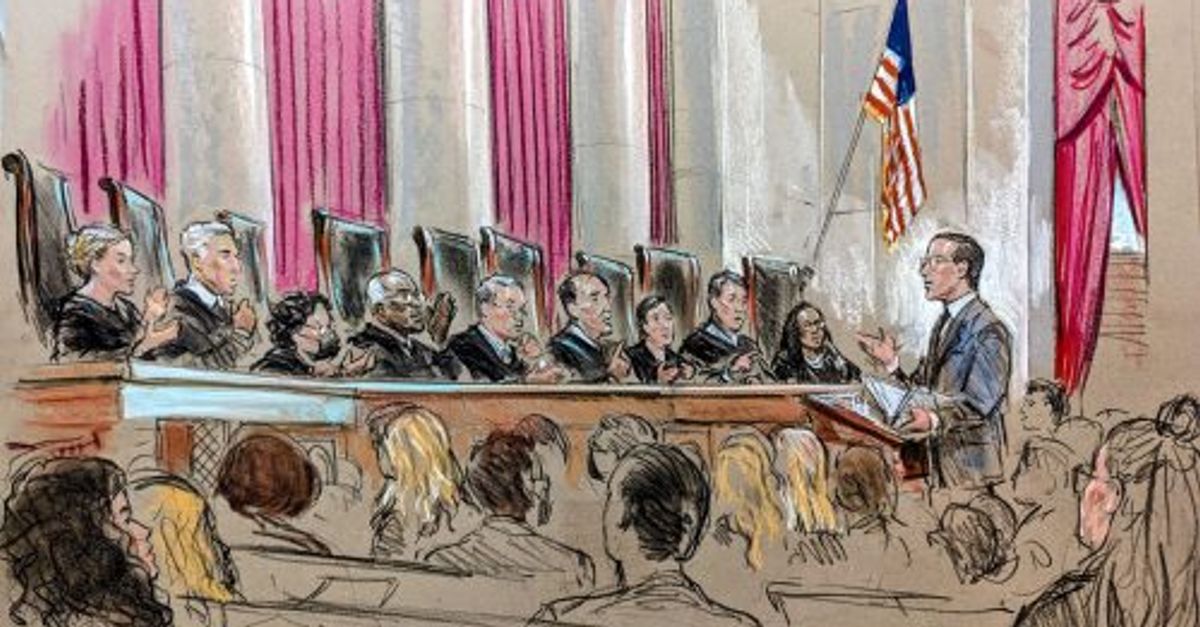
Supreme Court: Divergent Emergency Docket Rulings for Trump, Biden
Summary
- The Supreme Court denied the Biden administration's August 2024 request to lift injunctions blocking new Title IX regulations.
- Less than eight months later, the Court sided with the Trump administration, allowing it to terminate education grants despite a lower court order.
- Both cases involved emergency relief requests from the Department of Education and were decided by the same nine justices.
- The Trump administration achieved a 78% success rate (28 of 36) in its first term and 82% (27 of 33) in its second term on emergency applications.
- The Biden administration's success rate on emergency applications stands at 67% (10 of 15).
Contrasting Emergency Rulings
An examination of emergency applications reveals a noticeable difference in the success rates experienced by the Trump and Biden administrations.
The Supreme Court recently issued divergent decisions on two emergency applications originating from the Department of Education, both seeking intervention against lower-court directives. In one instance, the Trump administration secured a favorable ruling from the nation's highest court after a federal judge mandated the Department of Education to continue funding grants that the administration had previously terminated. This intervention by the Supreme Court allowed the government to prevail in its request.
Conversely, the Biden administration faced a different outcome in August 2024 when its request to partially lift lower-court injunctions was denied by the same nine justices. These injunctions had been put in place to block new Title IX regulations, which were designed to broaden protections against sex-based discrimination within educational settings. However, these 2024 regulations were later vacated by a federal court in January 2025 and formally rescinded by the Department of Education in September 2026, reinstating the 2020 Title IX regulations. Despite both cases involving appeals for emergency relief from federal court orders and originating from the same executive department, their resolutions were entirely opposite.
The Supreme Court's Emergency Docket
The Supreme Court's emergency docket, often referred to as the "shadow docket," handles urgent requests for relief, typically involving stays of lower court orders or injunctions. These applications are decided swiftly, often without full briefing or oral arguments, and can have significant immediate impacts on policy and law. This expedited process allows the Court to address time-sensitive matters that cannot await the traditional appellate review timeline, which can span many months or even years.
Both the Trump and Biden administrations have frequently utilized this mechanism to challenge adverse rulings from federal courts, seeking to either implement or halt specific governmental actions. The nature of these proceedings means that the justices must make rapid determinations on complex legal and policy issues, often under considerable public scrutiny and with limited input from the parties involved.
Statistical Disparities in Success Rates
An examination of emergency applications reveals a noticeable difference in the success rates experienced by the Trump and Biden administrations. During his initial term in office, the Trump administration saw 28 out of 36 substantively decided emergency applications granted, translating to a success rate of 78% in the published full-term tally. This figure further increased in his second term, where 27 of 33 applications were successful, reaching an 82% prevalence rate.
In contrast, the Biden administration has prevailed in 10 of its 15 emergency applications, resulting in a 67% success rate. While these statistics suggest an apparent advantage for the Trump administration in obtaining emergency relief from the Supreme Court, it is crucial to acknowledge the inherent complexities in direct comparisons. The specific policies, underlying legal claims, and unique procedural circumstances of each case can significantly influence the justices' decisions, making it challenging to attribute outcomes solely to the administration in power.
Implications for Presidential Authority
The contrasting outcomes and statistical trends raise important questions regarding the Supreme Court's approach to presidential power, particularly when administrations seek emergency intervention. While the two specific Department of Education cases might initially suggest a more favorable reception for one administration than another, the nuances of each application—including differing legal arguments and factual backdrops—complicate any straightforward conclusion.
Nevertheless, the observed disparities in success rates on the emergency docket contribute to an ongoing discussion about judicial deference to executive actions and the perceived impartiality of the Court in politically charged cases. These patterns underscore the dynamic relationship between the executive and judicial branches, especially in the context of urgent legal challenges and the strategic decisions made by parties seeking or defending against emergency relief.
Practical Implications
Lawyers advising government agencies or parties challenging federal actions via emergency applications to the Supreme Court should be aware of the historical success rate disparities between administrations, which may influence strategic decisions and expectations for obtaining or defending against emergency relief.
Source
Source: Insights from legal analysis.
How does this affect you?
Get an AI analysis of this article grounded in your jurisdictions, practice areas, and any policy documents you've uploaded to Wansom.
Finish Reading the Full Story and the Expert Analysis.
Get the latest legal & regulatory intelligence in United States
Wansom is AI and can make mistakes.