
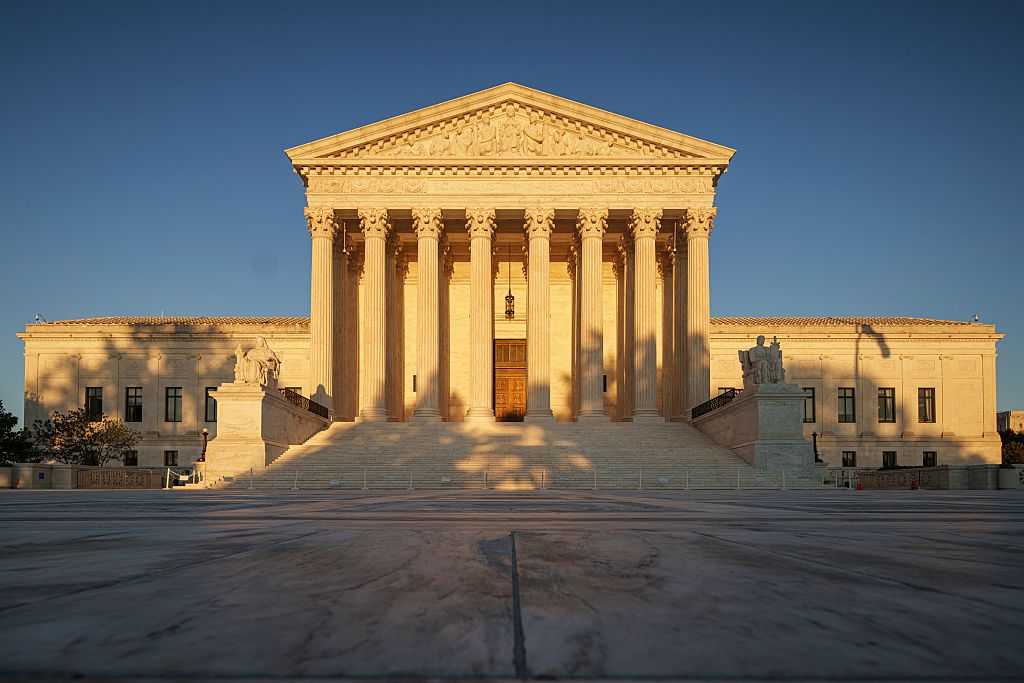
SCOTUS: St. Mary Catholic Parish v. Roy Justices Favor Religious Freedom
Summary
- The Supreme Court heard oral arguments in St. Mary Catholic Parish v. Roy, concerning Colorado's universal preschool program.
- Catholic preschools are challenging their exclusion from the program due to their refusal to admit LGBTQ+ children or children with LGBTQ+ parents.
- Colorado's program, launched in 2023, offers 15 hours of free preschool weekly and requires a nondiscrimination agreement.
- A majority of justices seemed to agree that the exclusion might violate the First Amendment and require a more stringent constitutional test.
- The Court may apply the standard itself or remand the case to lower courts for further review.
The Core Dispute
The impending decision in St. Mary Catholic Parish v. Roy carries substantial implications for the intersection of religious liberty and public programs nationwide.
The Supreme Court recently heard arguments in St. Mary Catholic Parish v. Roy, a case that pits religious educational institutions against Colorado's statewide universal preschool initiative. During the proceedings, a majority of the justices appeared inclined to rule that the exclusion of Catholic preschools from this state-funded program infringes upon First Amendment protections. The central contention revolves around Colorado's refusal to grant these preschools an exemption from specific enrollment criteria.
The plaintiffs, which include the Archdiocese of Denver and two Catholic parishes operating preschools—one of which has since ceased operations—are challenging the state's requirement that participating schools admit all eligible students. This mandate specifically includes children from LGBTQ families, encompassing both LGBTQ children and those with LGBTQ parents. The challengers argue that Colorado's stance on this matter necessitates a more rigorous constitutional review than what was applied by the lower courts, a position that seemed to resonate with a significant portion of the high court.
Program Requirements and Legal Context
Colorado's universal preschool program, initiated in 2023, aims to provide substantial educational access to families across the state. Under this program, eligible families can receive up to 15 hours of free preschool services each week at participating institutions. To qualify for participation, preschools must adhere to various state standards and formally agree to a nondiscrimination clause. This agreement explicitly commits them to offering "eligible children an equal opportunity to enroll and receive preschool services regardless of race, ethnicity, religious affiliation, sexual orientation, gender identity, lack of housing, income level, or disability."
The state of Colorado maintains that any refusal by a participating preschool to serve LGBTQ families would directly contravene this signed nondiscrimination agreement. This interpretation forms the crux of the dispute, as the Catholic preschools contend that their religious freedom, protected by the First Amendment, should allow for an exemption from this specific aspect of the agreement. The Supreme Court's consideration of whether to apply a heightened constitutional standard, or to send the case back to lower courts for such an application, underscores the significant legal questions at play concerning religious discrimination and state-funded programs.
Why This Case Matters
The impending decision in St. Mary Catholic Parish v. Roy carries substantial implications for the intersection of religious liberty and public programs nationwide. Should the Supreme Court ultimately side with the Catholic preschools, it could redefine the boundaries of religious exemptions for organizations that choose to participate in state-funded initiatives. The court's apparent inclination to apply a more stringent constitutional test suggests a potential shift in how such conflicts between religious freedom and nondiscrimination policies are evaluated.
A ruling favoring the challengers could establish a precedent affecting how states design and implement programs that involve private, religiously-affiliated entities, particularly concerning admission criteria related to sexual orientation and gender identity. Conversely, a decision upholding Colorado's position would reinforce the state's ability to enforce comprehensive nondiscrimination requirements on all participants in its universal programs. The outcome will clarify whether religious institutions can selectively participate in government programs while maintaining exemptions from certain universally applied nondiscrimination clauses, particularly those protecting LGBTQ+ individuals. This case is pivotal for understanding the future scope of religious freedom claims within the context of publicly funded services.
Practical Implications
The potential ruling in St. Mary Catholic Parish v. Roy could significantly impact the scope of religious exemptions for organizations participating in state-funded programs, particularly concerning nondiscrimination policies related to sexual orientation and gender identity. Lawyers advising religious educational institutions or state agencies must monitor this decision closely to ensure compliance and advise on potential policy adjustments regarding program participation and admission criteria.
Source
How does this affect you?
Get an AI analysis of this article grounded in your jurisdictions, practice areas, and any policy documents you've uploaded to Wansom.
Wansom is AI and can make mistakes.