
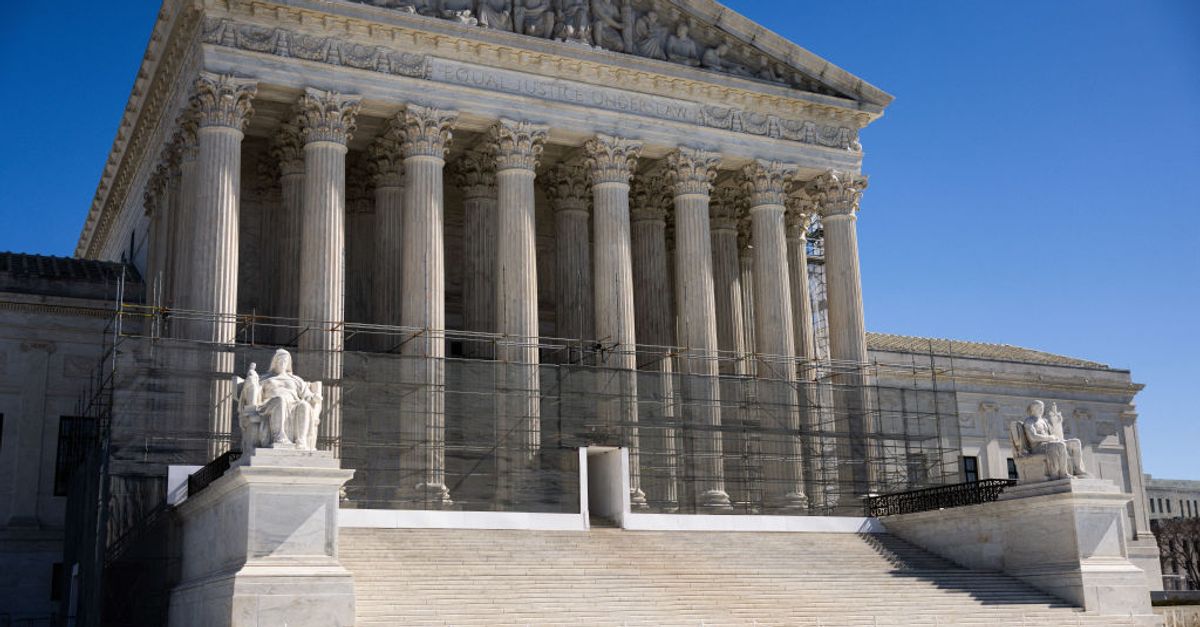
US Supreme Court: Allows New Hampshire to Restrict Student IDs for Voting
The Supreme Court on Thursday afternoon cleared the way for New Hampshire to bar the use of student IDs as valid photo identification for obtaining a ballot, pausing a lower federal court's ruling. In a brief, unsigned order, the justices cited the "Purcell principle," which advises against altering election rules on the eve of an election, to stay a federal judge's decision that had prevented the state from enforcing a directive discouraging election officials from considering student IDs as evidence of voter identity. This action allows New Hampshire's HB 323, a law passed in April and effective in June, to be fully implemented, despite a challenge from the Coalition for Open Democracy alleging it burdens the right to vote and discriminates against young voters. Justice Ketanji Brown Jackson dissented, arguing the district court's order was a targeted remedy for misinformation, not a change in law.
This decision carries significant legal weight for election law practitioners and voting rights advocates, underscoring the Supreme Court's consistent application of the Purcell principle in election-related disputes, particularly as an election approaches. It signals a judicial reluctance to intervene in state election administration at critical junctures, even when constitutional challenges are pending. For states, it temporarily reinforces their authority to define voter identification requirements, while for advocacy groups, it represents a procedural hurdle in efforts to expand or maintain ballot access for specific demographics, such as students.
Legally, the case revolves around the U.S. Constitution's protections for the right to vote and prohibitions against discrimination, challenged against New Hampshire's state law, HB 323. The Purcell principle, a key procedural doctrine, dictates that federal courts should generally not change election rules close to an election. The key parties involved include the Supreme Court of the United States, U.S. District Judge Joseph Laplante, Justice Ketanji Brown Jackson, the State of New Hampshire (including its legislature and Secretary of State David Scanlan), and the Coalition for Open Democracy. The outcome of the underlying constitutional challenge to HB 323 is not yet reported.
Attorneys advising political campaigns, advocacy organizations, or state election officials must be acutely aware of the powerful influence of the Purcell principle, especially as election cycles draw near. Challenges to state election laws, particularly those concerning voter identification, should be initiated well in advance of an election to mitigate the risk of being stayed under this doctrine. Businesses and non-profits engaged in voter registration or civic education should understand the implications for student voters and adapt their outreach strategies to comply with evolving state-specific identification requirements. Monitoring the progression of the constitutional challenge to HB 323 will be crucial for understanding the long-term impact on voter access.
How does this affect you?
Get an AI analysis of this article grounded in your jurisdictions, practice areas, and any policy documents you've uploaded to Wansom.
Finish Reading the Full Story and the Expert Analysis.
Get the latest legal & regulatory intelligence in United States
Wansom is AI and can make mistakes.