
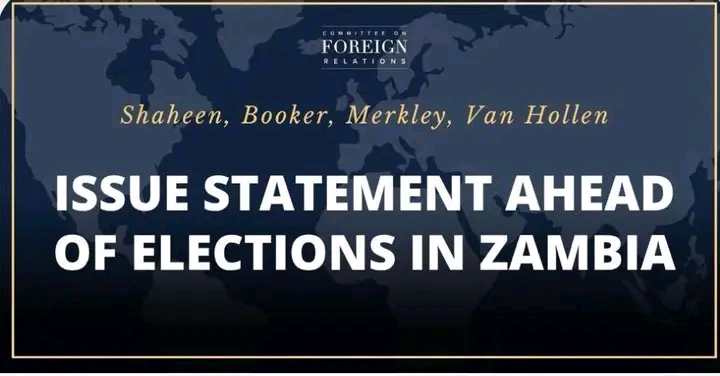
US Senators: Hichilema's Oppressive Laws in Zambia Draw Rebuke
Summary
- U.S. Senator Jeanne Shaheen issued a strong rebuke to Zambian President Hakainde Hichilema.
- Senator Shaheen, Ranking Member of the Senate Foreign Relations Committee, accused President Hichilema of using oppressive laws.
- The laws are allegedly being used to target political opponents and undermine elections in Zambia.
- This condemnation highlights international concerns regarding Zambia's election integrity and democratic practices.
International Scrutiny on Zambia
This high-level intervention from Washington signals growing concern over the trajectory of democratic governance in the Southern African nation.
A significant diplomatic development has seen U.S. Senator Jeanne Shaheen, a prominent Democrat from New Hampshire and the Ranking Member of the influential Senate Foreign Relations Committee, deliver a forceful condemnation of Zambian President Hakainde Hichilema. This high-level intervention from Washington signals growing concern over the trajectory of democratic governance in the Southern African nation. The rebuke specifically targets President Hichilema for actions perceived to undermine the integrity of Zambia's electoral processes.
Senator Shaheen's statement explicitly accused President Hichilema of leveraging oppressive laws to target political opponents and to subvert the fairness of elections. This direct challenge from a key figure within the U.S. legislative body highlights the increasing focus of US Senators on Hichilema's administration and its adherence to democratic principles in Zambia. The President Hakainde Hichilema rebuke underscores a perceived pattern of behavior that, according to the U.S. Senator, threatens the foundational elements of a free and fair political landscape.
The gravity of such a statement from the Ranking Member of the Senate Foreign Relations Committee cannot be overstated. It represents a formal expression of disapproval from a legislative body deeply involved in shaping U.S. foreign policy and human rights advocacy globally. The accusations suggest a deliberate strategy to consolidate power by restricting political space and manipulating legal instruments, rather than through open and competitive democratic means.
Concerns Over Legal Framework
The core of the U.S. Senator's criticism revolves around the alleged use of existing legal frameworks in Zambia to suppress dissent and disadvantage political rivals. The reference to "oppressive laws" implies a concern that statutes, which might ostensibly serve legitimate governmental functions, are being applied in a manner that stifles political opposition and curtails fundamental freedoms essential for a vibrant democracy. Such practices inevitably raise significant Zambia election integrity concerns, as the playing field for political competition becomes uneven.
When legal instruments are perceived to be weaponized against political adversaries, it erodes public trust in institutions and casts a shadow over the legitimacy of electoral outcomes. The focus on Zambia political opposition laws suggests that the legislative environment itself, or its interpretation by the current administration, is creating an atmosphere where genuine political contestation is hindered. This can manifest in various forms, from restrictions on assembly and speech to the arbitrary application of laws against critics, thereby limiting their ability to participate effectively in the political process.
This international spotlight on Zambia's legal and political environment signals a broader apprehension about the health of its democratic institutions. The allegations suggest that the very mechanisms designed to ensure justice and order are being repurposed to serve partisan interests, thereby undermining the principles of rule of law and equal protection under the law. The implications for civil society and independent media, crucial pillars of any democracy, are also implicitly questioned when such concerns are raised.
Geopolitical Ramifications
The strong rebuke from the US Senate Foreign Relations Committee Zambia carries substantial geopolitical weight, signaling a potential recalibration or intensification of U.S. foreign policy Zambia human rights engagement. Such statements from influential U.S. lawmakers can significantly impact a nation's international standing, influencing diplomatic relations, aid packages, and perceptions among global investors. For Zambia, this could translate into increased scrutiny from other international bodies and democratic allies, potentially affecting its access to development assistance or its ability to secure favorable trade agreements.
From a practical and legal perspective, this development signals increased international scrutiny on Zambia's legal framework and election practices. This heightened attention could influence foreign investment decisions, as companies and investors often factor political stability, rule of law, and human rights records into their risk assessments. Lawyers advising clients on potential investments or operations in Zambia may now need to emphasize the importance of monitoring the evolving political landscape and assessing potential political and human rights risks more rigorously.
Ultimately, the U.S. Senator's statement serves as a clear message that the international community, particularly the United States, is closely observing Zambia's democratic trajectory. Adherence to democratic principles, respect for human rights, and the conduct of free and fair elections remain central tenets of U.S. foreign policy, and any perceived deviation from these standards can lead to significant diplomatic and economic repercussions for the nations involved.
Practical Implications
This development signals increased international scrutiny on Zambia's legal framework and election practices, which could influence foreign investment decisions and require lawyers to advise clients on potential political and human rights risks in the country.
Source
How does this affect you?
Get an AI analysis of this article grounded in your jurisdictions, practice areas, and any policy documents you've uploaded to Wansom.
Wansom is AI and can make mistakes.