
US Proposal: Sudan Arms Embargo Expansion to Entire Nation
Summary
- The United States has proposed to the UN Security Council an expansion of the existing Darfur arms embargo to cover all of Sudan.
- This `US proposal Sudan arms embargo expansion` aims to pressure warring parties, reduce their capacity for conflict, and limit civilian violations by cutting off weapons supplies.
- While Denmark, Britain, and France support the proposal, China, Russia, and Sudan's representative oppose it.
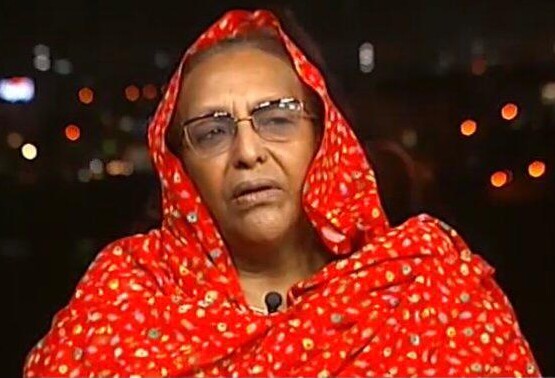
- Activist Nemat Koko emphasizes that the continuous flow of weapons directly links to increased risks of sexual and gender-based violence against women, who bear a disproportionate burden of the conflict.
- Koko advocates for women's active involvement in monitoring arms embargo implementation and for justice for perpetrators of violations, asserting that women's protection begins with addressing the environment that enables violence.
International Push for Broader Arms Restrictions
An environment saturated with weapons and devoid of security instills greater fear and imposes severe restrictions on women, impeding their access to essential resources like markets, water, firewood, healthcare, education, and employment.
The United States has put forward a significant proposal to the UN Security Council, advocating for the expansion of the existing arms embargo on Darfur to encompass the entirety of Sudan. This `US proposal Sudan arms embargo expansion` is framed not merely as a security or political maneuver, but as a critical instrument aimed at compelling the warring factions to diminish their capacity for conflict. Its primary objectives include disrupting the flow of weapons and thereby curtailing the severe violations perpetrated against the civilian population.
This initiative has garnered support from key international players, with Denmark, Britain, and France publicly backing the American stance. However, the proposal has also met with considerable opposition. China, Russia, and Sudan's own representative have openly voiced their disagreement, highlighting the geopolitical complexities surrounding efforts to control the `Sudan conflict weapons flow`.
The broader intent behind this proposed `UN Security Council Sudan arms embargo` is to create an environment where the ability of armed groups to wage war is severely hampered. By cutting off access to weapons, proponents hope to reduce the overall level of violence and, consequently, the suffering endured by civilians across Sudan.
The Human Cost: Women at the Forefront of Suffering
The potential for a comprehensive weapons ban to mitigate the dangers faced by women is a central concern driving the `Darfur arms embargo expansion` discussion. According to Nemat Koko, a prominent political and human rights activist, the widespread availability and continuous influx of weapons are inextricably linked to the ongoing conflict. She argues that by limiting the warring parties' access to and use of arms, the extent of violence against civilians can be significantly reduced.
Koko, speaking on Radio Dabanga’s Kandakat wa Mayarem programme, underscores that women bear a disproportionate burden in this protracted conflict, facing heightened risks of `Sexual gender-based violence Sudan`. She emphasizes that an arms embargo should be understood not just as a security decision, but as an issue fundamentally connected to women's safety, their right to movement, life, work, and the protection of their families. An environment saturated with weapons and devoid of security instills greater fear and imposes severe restrictions on women, impeding their access to essential resources like markets, water, firewood, healthcare, education, and employment.
The proliferation of both light and heavy weaponry directly constrains women's mobility and undermines their capacity to safeguard their families, maintain social cohesion, and secure livelihoods. Furthermore, the deliberate targeting of vital infrastructure such as water, electricity, health, and education facilities places additional strain on women, particularly those who are breadwinners or heads of households, as they grapple with increased responsibilities amidst collapsing services. Koko highlights that the war's impact extends beyond individual women, profoundly affecting their crucial social and economic roles within their families and communities.
Beyond Security: A Call for Comprehensive Protection
Nemat Koko warns that the sustained `Sudan conflict weapons flow` empowers warring factions to prolong hostilities, creating an environment where violations are more easily committed, and victims struggle to access justice and protection. From a feminist perspective, she asserts that protecting women begins not after a violation occurs, but by proactively addressing the conditions that enable such acts. This includes tackling weapons proliferation, the breakdown of protective institutions, and the inadequacy of justice and accountability mechanisms.
Koko advocates for meaningful participation of women in the arms embargo discourse, moving beyond mere symbolic gestures or attendance at conferences. She stresses the importance of involving women in monitoring, surveillance, and documentation efforts, and calls for feminist and community initiatives to actively track arms flows and associated violations. Amplifying the voices of Sudanese women, both domestically and internationally, through political, civil, and community organizations, is crucial to press for restrictions on weapon dissemination and ultimately, an end to the war.
For Koko, women's engagement in overseeing the implementation of any arms embargo is a natural extension of their ongoing struggle against the war and their efforts to defend local communities. She firmly believes that the feminist movement must integrate the demand for justice with the call to end the conflict, arguing that a ceasefire alone is insufficient without a concurrent process to hold perpetrators of violations, including `Sexual gender-based violence Sudan`, accountable.
Practical Implications
Lawyers and compliance officers should monitor the progress of the US proposal for an expanded arms embargo on Sudan at the UN Security Council. Its potential implementation could introduce new restrictions on arms-related trade and activities involving Sudan, impacting clients' supply chains or operations and requiring due diligence adjustments.
Source
How does this affect you?
Get an AI analysis of this article grounded in your jurisdictions, practice areas, and any policy documents you've uploaded to Wansom.
Finish Reading the Full Story and the Expert Analysis.
Wansom is AI and can make mistakes.