
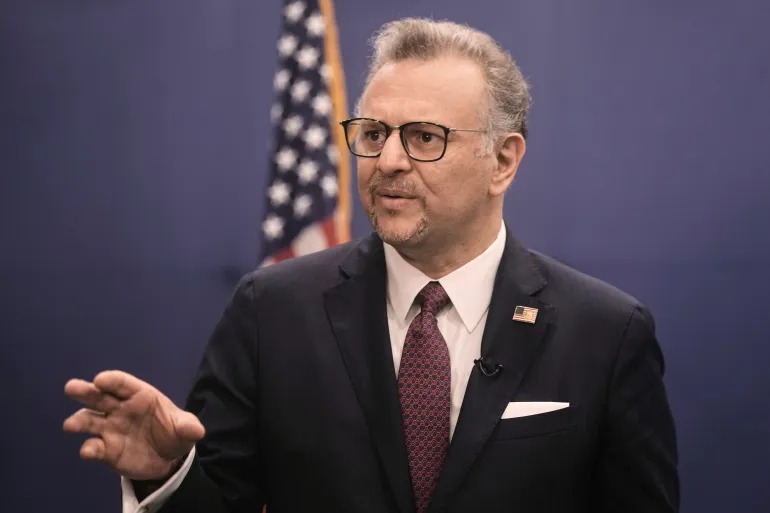
US Advisor Massad Boulos: Sudan Arms Commercial Networks Fuel Conflict
Summary
- US Senior Advisor Massad Boulos suggested private commercial networks might be facilitating arms flows to warring factions in Sudan.
- Boulos affirmed the United Arab Emirates' denial of direct involvement in the Sudanese conflict.
- This perspective offers an alternative to reports from UN experts documenting state-operated logistical corridors for heavy weapons.
- Boulos indicated that external interference in the conflict extends far beyond any single capital.
- The statements were made on September 7, 2026, during an interview with BBC's "Focus on Africa" program.
What Happened
By foregrounding the potential role of private arms traders Sudan conflict, Boulos suggests that traditional investigative approaches, which often focus on state-sponsored activities, may not fully capture the scope of the problem.
On September 7, 2026, Massad Boulos, the Senior Advisor to the US President for Arab and African Affairs, offered a significant perspective on the ongoing conflict in Sudan. Speaking during an interview with the BBC's "Focus on Africa" program, Boulos suggested that private commercial networks might be playing a crucial role in facilitating the flow of weapons to the warring factions within the country. This statement came amidst persistent accusations regarding alleged military support from Abu Dhabi to the Rapid Support Forces (RSF), which Boulos addressed directly.
Boulos affirmed the United Arab Emirates' consistent denial of any involvement in fueling the Sudanese conflict. He recounted a recent meeting, stating, "We meet with the UAE regularly. I met with them last week." He further elaborated on their official stance, noting, "Their position is that they deny any direct involvement." However, Boulos then introduced the possibility that "there may be some traders or others who are making such supplies, providing supplies to both sides," thereby pointing to a different mechanism for the illicit arms trade.
This framing by the US advisor shifts the focus from direct state-to-state military aid to a more complex web of non-state actors. Rather than directly endorsing reports that link regional governments to the conflict, Boulos highlighted undeclared commercial channels as a potential explanation for the continued influx of weapons into Sudan. He emphasized that external interference in the conflict extends far beyond the actions of any single capital, suggesting a broader and more diffuse network of actors.
Contrasting Narratives on Arms Flow
The perspective articulated by Massad Boulos presents an alternative narrative to findings previously documented by United Nations panel experts and human rights observers. These independent bodies have consistently reported and documented state-operated logistical corridors specifically designed to channel heavy weapons into Sudan. Their investigations have often pointed to direct governmental involvement in the supply chains fueling the conflict, contrasting with Boulos's emphasis on independent arms dealers and intermediaries.
Boulos's statements, therefore, introduce a layer of complexity, suggesting that while state-level involvement might be denied, private entities could still be actively engaged in Sudan arms trafficking commercial networks. This nuanced view implies that the illicit arms trade might operate through less visible, commercially driven channels, potentially bypassing official state oversight. The US advisor, however, refrained from detailing the specific mechanisms of these illicit supply lines during his interview, stating that Washington was "not here to delve into these details."
This divergence in explanations underscores the challenges in fully understanding the sources of weaponry in the Sudanese conflict. While UN experts have focused on identifying and reporting state-backed routes, Boulos's remarks highlight the potential for a parallel or complementary system driven by private commercial interests. This suggests that efforts to curb the flow of weapons must consider both state and non-state actors involved in the Massad Boulos Sudan arms commercial networks.
Implications for Illicit Trade Oversight
The insights provided by Massad Boulos carry significant implications for how international bodies and national governments approach the monitoring and interdiction of illicit arms flows. By foregrounding the potential role of private arms traders Sudan conflict, Boulos suggests that traditional investigative approaches, which often focus on state-sponsored activities, may not fully capture the scope of the problem.
The emphasis on independent traders and intermediaries operating outside direct governmental control means that compliance officers and legal counsel advising clients with operations or supply chains in or connected to Sudan should heighten their due diligence efforts. Identifying and mitigating risks associated with private commercial networks potentially involved in illicit arms trafficking becomes paramount, moving beyond a sole focus on state-actor compliance. This intelligence suggests a need to scrutinize a broader range of commercial entities and their potential links to the conflict.
Ultimately, Boulos's statements, while affirming the UAE's denial of direct involvement, introduce a critical dimension to the discussion: the pervasive influence of private actors in global conflicts. This perspective, which acknowledges the role of US advisor Sudan illicit arms, underscores the need for comprehensive strategies that address both overt state actions and the more clandestine operations of private commercial networks in fueling ongoing hostilities. UN experts Sudan arms reports, while valuable, may need to be complemented by intelligence on these less visible commercial channels.
Practical Implications
This intelligence suggests that compliance officers and legal counsel advising clients with operations or supply chains in or connected to Sudan should heighten due diligence efforts to identify and mitigate risks associated with private commercial networks potentially involved in illicit arms trafficking, expanding beyond traditional state-actor focus.
Source
How does this affect you?
Get an AI analysis of this article grounded in your jurisdictions, practice areas, and any policy documents you've uploaded to Wansom.
Finish Reading the Full Story and the Expert Analysis.
Wansom is AI and can make mistakes.