
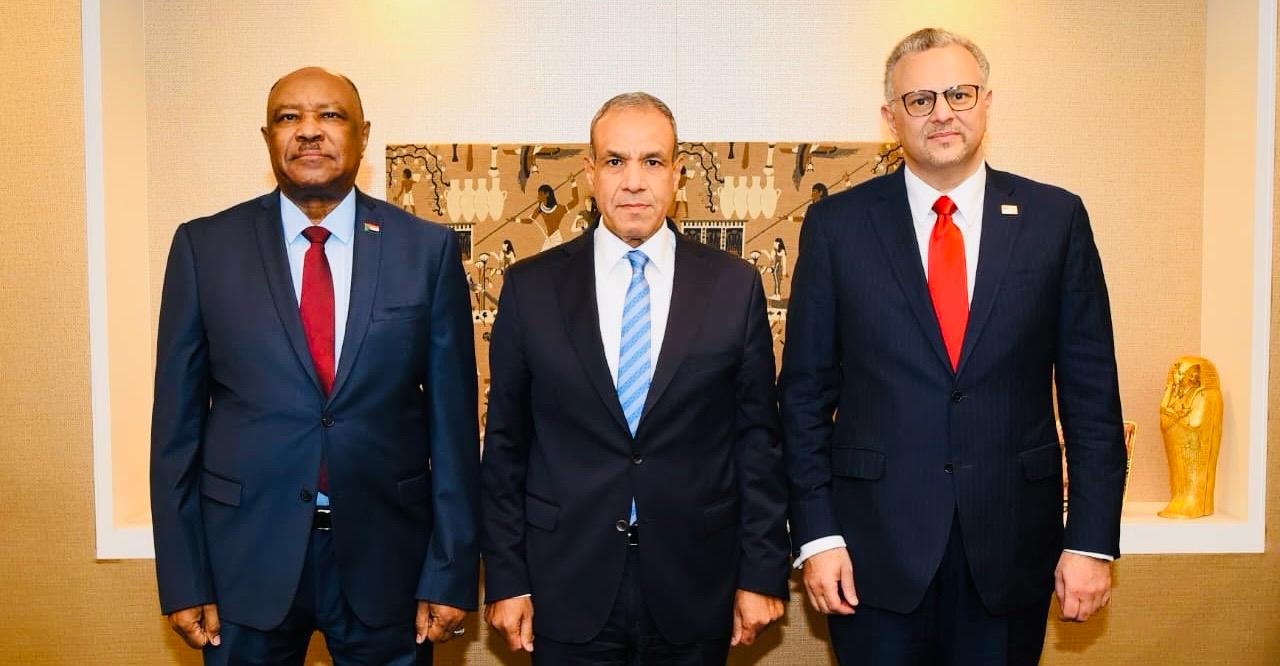
US, Egypt, Sudan Hold UNGA Peace Talks for Political Settlement
Summary
- US, Egyptian, and Sudanese foreign affairs officials met in New York on Sunday to discuss advancing diplomatic initiatives for a sustainable political settlement in Sudan.
- Egyptian Foreign Minister Badr Abdelatty stressed the need to preserve Sudan’s unity, sovereignty, and national institutions, advocating for dialogue and negotiation.
- US Senior Adviser Massad Boulos highlighted the urgent need for a humanitarian truce to facilitate comprehensive civilian dialogue and a unified, peaceful Sudan.
- Separate talks in Cairo involved Egyptian President Abdel Fattah El-Sisi and US CIA Director John Ratcliffe, focusing on the war and continued US-Egyptian coordination.
- Former Sudanese Prime Minister Abdallah Hamdok is also in New York, leading a delegation calling for an immediate humanitarian truce, civilian protection, and aid access during UN General Assembly discussions.
Diplomatic Push for Sudan Peace
Achieving a sustainable political settlement, as advocated by all parties involved in these US Egypt Sudan UNGA peace talks, is seen as the foundational step toward restoring stability and enabling a return to civilian governance.
A high-level meeting recently convened in New York, bringing together key diplomatic figures from the United States, Egypt, and Sudan to address the ongoing conflict. US President’s Senior Adviser for Arab and African Affairs, Massad Boulos, met with Egyptian Foreign Minister Badr Abdelatty and Sudanese Foreign Minister Mohieddin Salem on Sunday. The primary objective of these discussions was to advance existing diplomatic initiatives and establish the necessary conditions for a sustainable political settlement in Sudan.
During the talks, Egyptian Foreign Minister Abdelatty emphasized the critical importance of preserving Sudan’s unity, sovereignty, and territorial integrity, alongside its national institutions and state capabilities. He called for a concerted intensification of regional and international efforts to resolve the conflict through dialogue and negotiation. Massad Boulos underscored the urgent need for all parties to agree on a clear path towards lasting peace, highlighting that Sudanese civilians are in dire need of a humanitarian truce. Such a truce, he noted, could pave the way for comprehensive civilian dialogue and ultimately lead to a unified, peaceful Sudan.
Broader International Engagement
This tripartite meeting in New York occurred amidst a broader landscape of international diplomatic activity focused on Sudan, particularly on the sidelines of the UN General Assembly. Prior to this, Egyptian President Abdel Fattah El-Sisi held separate discussions in Cairo with US Central Intelligence Agency Director John Ratcliffe. Their conversation also centered on the conflict in Sudan and the imperative for continued US-Egyptian coordination on the matter.
Further underscoring the multi-faceted approach to resolving the crisis, former Sudanese Prime Minister Abdallah Hamdok is also present in New York. He is leading a delegation from the Civil Democratic Alliance for Revolutionary Forces, known as Somoud, engaging in talks with various US and other international officials. This delegation has specifically called for an immediate and comprehensive humanitarian truce, along with stronger measures to protect civilians and ensure that humanitarian aid reaches those in desperate need across Sudan.
The Path Forward for Sudan
These concerted diplomatic efforts, spanning high-level bilateral meetings and engagements on the periphery of the UN General Assembly, underscore a growing international consensus on the urgent need for a resolution to the conflict in Sudan. The consistent calls for a comprehensive humanitarian truce, protection of civilians, and unimpeded aid delivery highlight the severe human cost of the ongoing hostilities. Achieving a sustainable political settlement, as advocated by all parties involved in these US Egypt Sudan UNGA peace talks, is seen as the foundational step toward restoring stability and enabling a return to civilian governance.
For legal and compliance professionals, these ongoing Sudan political settlement discussions are critical indicators. Progress toward a durable peace and a functioning political framework could significantly influence future sanctions regimes, alter political risk assessments for businesses operating or considering investments in the region, and reshape the legal environment for both commercial and humanitarian engagement. The emphasis on preserving Sudan’s unity, sovereignty, and national institutions suggests that any eventual settlement will aim to rebuild a cohesive state, which has profound implications for long-term legal and regulatory stability. The outcome of these discussions, including the potential for a lasting humanitarian truce, will directly impact the feasibility and legality of operations for international organizations and private entities alike, making close monitoring of these high-stakes diplomatic maneuvers essential.
Practical Implications
Lawyers and compliance officers advising clients with operations or investments in Sudan should monitor these high-level diplomatic discussions. Progress towards a sustainable political settlement could influence future sanctions regimes, political risk assessments, and the legal framework for business and humanitarian engagement in the country.
Source
How does this affect you?
Get an AI analysis of this article grounded in your jurisdictions, practice areas, and any policy documents you've uploaded to Wansom.
Finish Reading the Full Story and the Expert Analysis.
Get the latest legal & regulatory intelligence in Sudan
Wansom is AI and can make mistakes.