
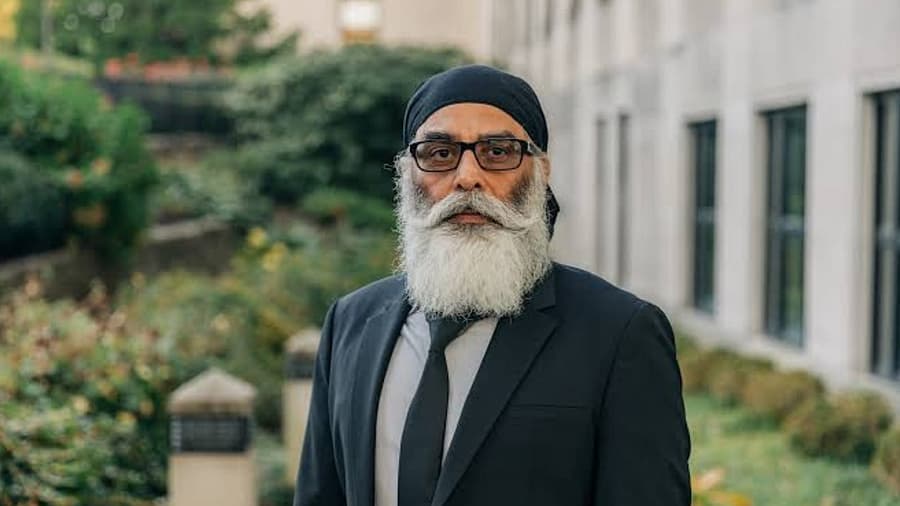
US District Court: Allows Hague Service in Pannun Lawsuit Against Doval, Goel
Summary
- A US federal court has permitted Gurpatwant Singh Pannun to serve a lawsuit on Indian officials Ajit Doval and Samant Goel through Indian courts.
- The lawsuit, filed in 2024, alleges a conspiracy to assassinate Pannun due to his role in the Khalistan movement.
- Service will be conducted under Article 19 of the Hague Convention on the Service Abroad of Judicial and Extrajudicial Documents.
- Previous attempts to serve Doval in the US and Doval, Goel, and Yadav through India's Central Authority were unsuccessful.
- Pannun must submit a proposed service packet by November 30 for transmission by the Clerk of Court to identified Indian courts.
What Happened
The court's decision to permit Pannun lawsuit service Doval Goel Hague Convention mechanisms underscores the robust framework provided by international treaties for ensuring due process across borders.
The United States District Court for the Southern District of New York has authorized a novel approach for serving legal documents on two high-ranking Indian officials in a civil lawsuit. On November 9, US District Judge Katherine Polk Failla issued an order permitting Khalistani separatist Gurpatwant Singh Pannun to serve National Security Advisor Ajit Doval and former Research and Analysis Wing (RAW) chief Samant Goel through the Indian judicial system. This development marks a significant step in Pannun's lawsuit, which alleges a conspiracy to assassinate him on American soil.
The court's decision specifically allows for the service of process on Doval and Goel via district courts in Delhi. This method is sanctioned under the Hague Convention on the Service Abroad of Judicial and Extrajudicial Documents, with the court affirming that Article 19 of the Convention provides the legal basis for mailing summons directly to these courts for onward transmission. Following this ruling, Pannun has been directed to prepare and submit a proposed service packet by November 30, after which the Clerk of Court will be responsible for transmitting these documents to the designated Indian courts.
Legal Context and Challenges
This ruling by the US District Court Southern District New York addresses the persistent challenges of international service of process, particularly when dealing with high-profile foreign government officials. Gurpatwant Pannun, who serves as general counsel for Sikhs for Justice (SFJ), initiated this lawsuit in 2024, naming the Government of India, Doval, Goel, Vikram Yadav, Nikhil Gupta, and other unnamed individuals as defendants. The core of the complaint centers on allegations that these parties conspired to orchestrate his killing due to his involvement in the Khalistan movement.
Prior to seeking the court's intervention for Hague Convention service, Pannun had made multiple unsuccessful attempts to serve the defendants. He reported three separate instances where he tried to serve Ajit Doval during the latter's visits to the United States, but these efforts were thwarted by security personnel. Furthermore, attempts to serve Doval, Goel, and Yadav through India’s Central Authority, operating under the Ministry of Law and Justice, also proved unsuccessful. The court's allowance of service through Indian courts under the Hague Convention provides a practical example of how litigants can overcome such obstacles when direct service or central authority channels fail.
Significance of the Ruling
The court's decision to permit Pannun lawsuit service Doval Goel Hague Convention mechanisms underscores the robust framework provided by international treaties for ensuring due process across borders. By explicitly referencing Article 19 of the Hague Convention, the court has clarified a pathway for litigants to effectuate service when traditional methods are impractical or obstructed. This precedent could be particularly relevant for future cases involving foreign officials where direct engagement is difficult.
This development highlights the complexities inherent in cross-border litigation, especially when it involves allegations against state actors. The US court allows service Ajit Doval and Samant Goel Hague Convention service, thereby advancing a case that touches upon sensitive geopolitical issues and the rights of individuals. The requirement for Pannun to submit a detailed service packet by the end of November, followed by the Clerk of Court's transmission, illustrates the meticulous procedural steps involved in such international legal actions.
Practical Implications
This development provides a practical example of the complexities and successful application of the Hague Convention for service of process on foreign government officials in US litigation. Lawyers advising clients on cross-border disputes or those representing government entities should note this precedent regarding the mechanisms and challenges of serving high-profile foreign defendants, particularly when direct service attempts fail.
Source
How does this affect you?
Get an AI analysis of this article grounded in your jurisdictions, practice areas, and any policy documents you've uploaded to Wansom.
Finish Reading the Full Story and the Expert Analysis.
Get the latest legal & regulatory intelligence in India
Wansom is AI and can make mistakes.