
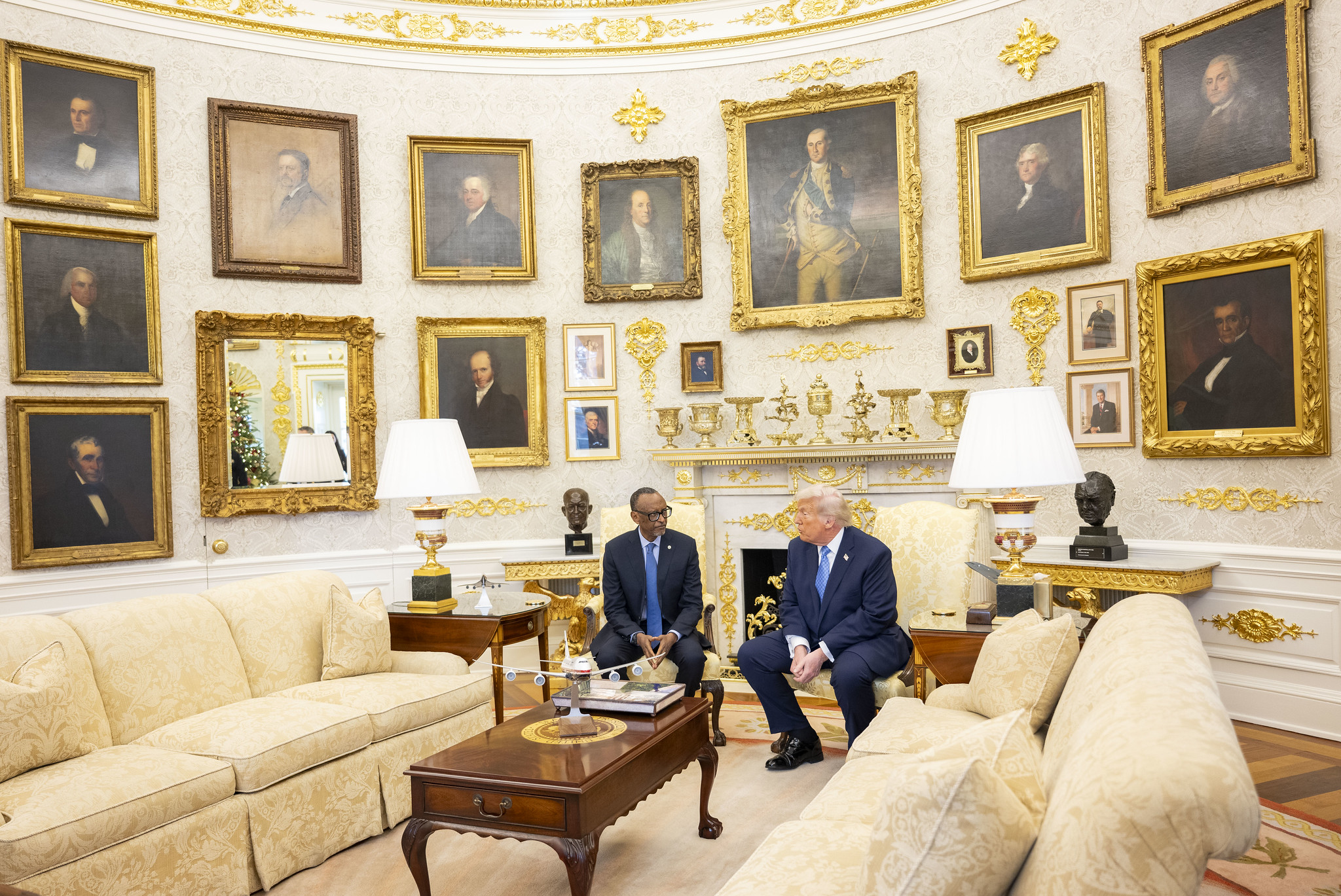
US Commends Rwanda: Washington Accords Adherence Praised
Summary
- The implementation of the Washington Accords for Peace and Prosperity is currently drawing attention in Washington.
- US officials and lawmakers are highlighting Rwanda's efforts to meet its obligations under these accords.
- The United States has commended Rwanda for fulfilling its commitments to the peace deal.
- Kinshasa is reportedly 'dodging' its responsibilities, indicating non-compliance with the peace agreement.
Renewed Focus on Washington Accords
The United States has formally commended Rwanda for its consistent delivery on the terms of the Washington Accords.
The implementation of the Washington Accords for Peace and Prosperity has recently captured significant attention within Washington, D.C. US officials and lawmakers are closely monitoring the progress of this critical diplomatic initiative, which aims to foster stability in the Great Lakes region. This renewed focus underscores the United States' ongoing commitment to regional peace efforts and its role in mediating complex international relations.
Central to this heightened scrutiny is a clear distinction in adherence to the accords. United States representatives have specifically highlighted the efforts undertaken by Rwanda, noting that the nation is actively fulfilling its commitments and obligations as stipulated by the agreement. This positive assessment of Rwanda's compliance stands in contrast to the actions of other parties involved in the peace process.
In a notable diplomatic move, the United States has formally commended Rwanda for its consistent delivery on the terms of the Washington Accords. This commendation signals Washington's recognition of Rwanda's constructive role in advancing the objectives of the peace deal. Conversely, the Democratic Republic of Congo (DRC), represented by Kinshasa, has been observed to be 'dodging' its responsibilities, indicating a lack of compliance with the agreed-upon peace deal.
Legal and Diplomatic Context
The Washington Accords for Peace and Prosperity represent a significant framework designed to de-escalate tensions and establish a lasting peace between Rwanda and the Democratic Republic of Congo. These accords, by their very nature, establish a set of mutual obligations and expectations for the signatory parties, intended to guide their conduct and foster regional stability. The US, acting as a key diplomatic facilitator, plays a crucial role in monitoring and assessing adherence to these provisions.
From a diplomatic perspective, the US commendation of Rwanda and the implicit criticism of Kinshasa's non-compliance carry considerable weight. Such pronouncements are integral to US Great Lakes diplomacy, signaling Washington's view on which parties are upholding their international commitments. This assessment can influence future diplomatic engagements, aid allocations, and the overall trajectory of international support for the peace process.
The ongoing implementation, or lack thereof, of the Washington Accords directly impacts the viability of the broader Rwanda DRC peace deal. When one party, like Rwanda, is seen to be meeting its obligations while another, Kinshasa, is perceived as non-compliant, it creates an imbalance that can complicate further negotiations and undermine trust. The US position, therefore, serves as an important indicator of the diplomatic health of the accords and the prospects for their ultimate success.
Why US Assessments Matter
The United States' public acknowledgment of Rwanda's compliance and Kinshasa's non-compliance with the Washington Accords for Peace and Prosperity holds substantial implications for regional stability and international relations. Such assessments from a major global power can significantly influence the diplomatic standing of the involved nations, potentially leading to shifts in alliances, foreign aid, and international pressure.
For Rwanda, the commendation from US officials and lawmakers reinforces its image as a reliable partner committed to peace, potentially opening doors for continued or enhanced cooperation with the United States and other international bodies. This positive diplomatic signal can strengthen Rwanda's position in ongoing regional dialogues and future negotiations concerning the Great Lakes region.
Conversely, Kinshasa's perceived non-compliance with the peace accord could lead to increased diplomatic pressure from the US and its allies. This could manifest in various forms, from public statements urging adherence to more substantive policy adjustments. The continued 'dodging' of the peace deal by Kinshasa, as highlighted by Washington, poses a significant challenge to the overall efficacy of the Rwanda DRC peace deal and the broader efforts to achieve lasting stability in the volatile Great Lakes region.
Practical Implications
Lawyers advising clients operating in Rwanda or the DRC should closely monitor the diplomatic progress and compliance with the Washington Accords, as US assessments of adherence can signal shifts in regional stability, investment risk, and potential for future international policy interventions affecting business operations.
Source
Source: Original reporting via KT PRESS
How does this affect you?
Get an AI analysis of this article grounded in your jurisdictions, practice areas, and any policy documents you've uploaded to Wansom.
Finish Reading the Full Story and the Expert Analysis.
Get the latest legal & regulatory intelligence in Rwanda
Wansom is AI and can make mistakes.