
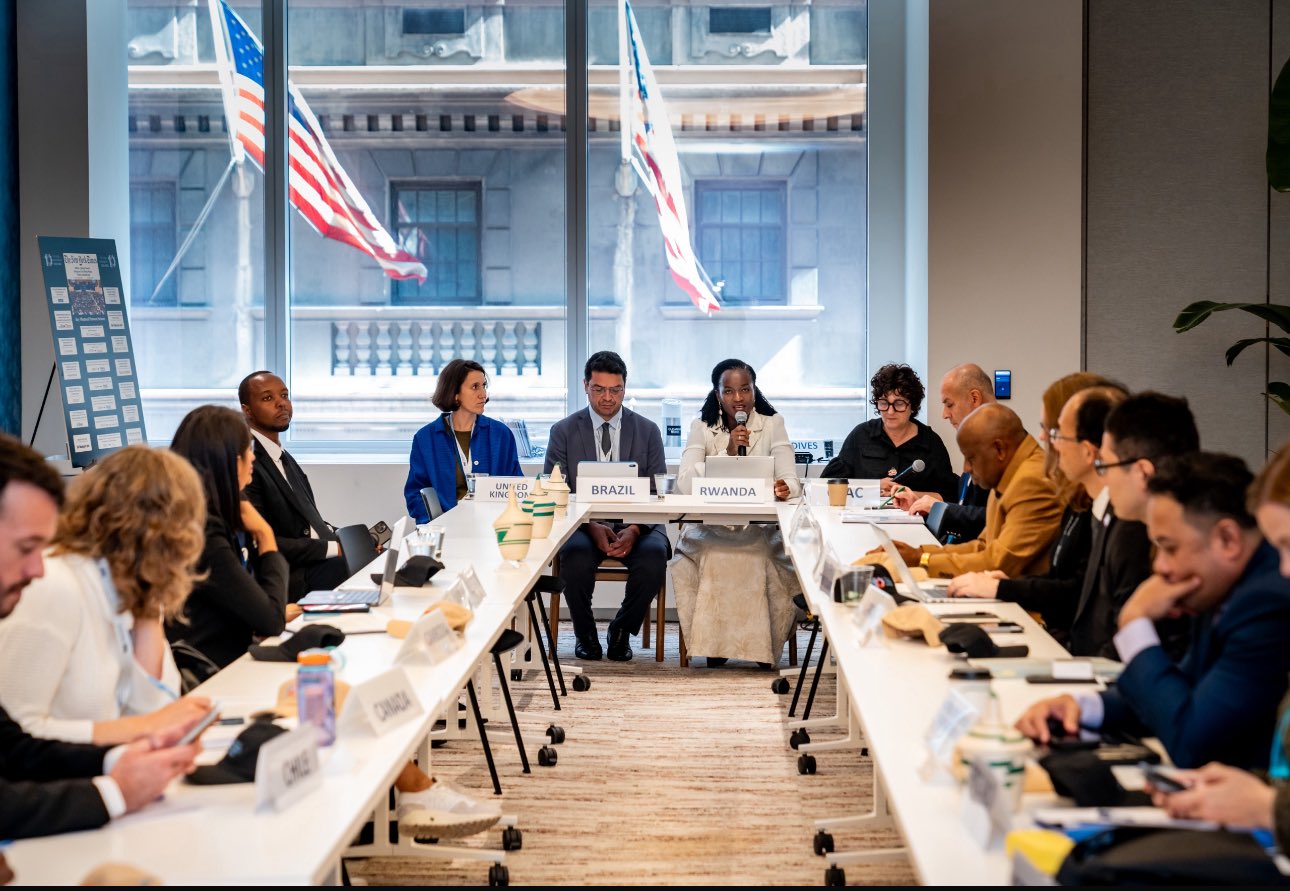
Rwanda: Kigali Amendment 10th Anniversary Drives Cooling Progress
Summary
- The landmark Kigali Amendment is marking its tenth anniversary, prompting renewed global discussions.
- Governments and climate partners are exploring how to accelerate the agreement's delivery of cleaner and more efficient cooling solutions.
- The amendment's core purpose is to curb the use of harmful refrigerants, specifically hydrofluorocarbons (HFCs).
- A re-energized global effort is now underway to advance sustainable cooling practices and technologies worldwide.
A Decade of Action
The re-invigorated focus on the Kigali Amendment ten years after its inception signals a critical juncture in the global pursuit of sustainable cooling.
The global community is marking a significant milestone: the tenth anniversary of the landmark Kigali Amendment. This pivotal international accord, designed to curtail the use of harmful refrigerants, is now the subject of renewed focus and intensive discussions among governments and various climate partners worldwide. A decade after its adoption, stakeholders are actively engaged in evaluating the pace and efficacy of the agreement's implementation.
Central to these ongoing deliberations is an exploration into how the Kigali Amendment can more swiftly achieve its overarching goals. The discussions are centered on identifying pathways and strategies to accelerate the delivery of cleaner and more efficient cooling solutions across the globe. This renewed impetus underscores a collective determination to enhance the environmental benefits envisioned by the amendment, pushing for faster adoption of sustainable practices and technologies. The current efforts signal a re-energized commitment to the principles established ten years ago.
The Amendment's Mandate
The Kigali Amendment stands as a crucial international agreement, specifically targeting the phase-down of hydrofluorocarbons (HFCs), a potent class of greenhouse gases used extensively in refrigeration and air conditioning. Adopted in Kigali, Rwanda, this amendment to the Montreal Protocol represents a significant expansion of global efforts to protect the ozone layer and mitigate climate change. Its designation as a "landmark" agreement reflects its ambitious scope and the consensus achieved among nations to address a critical environmental challenge.
This accord legally binds signatory nations to progressively reduce their production and consumption of HFCs, thereby curbing the release of these harmful refrigerants into the atmosphere. The framework established by the Kigali Amendment provides a structured pathway for countries to transition towards more environmentally benign alternatives and energy-efficient cooling technologies. The ongoing exploration by governments and climate partners into accelerating its delivery highlights the dynamic nature of international environmental law and the continuous need to adapt and strengthen policy responses to evolving climate science and technological advancements. The HFC phase-down stipulated by this amendment is a cornerstone of global climate action.
Renewed Urgency for Sustainable Cooling
The re-invigorated focus on the Kigali Amendment ten years after its inception signals a critical juncture in the global pursuit of sustainable cooling. The "race to deliver on sustainable cooling" has effectively begun anew, emphasizing the urgent need for widespread adoption of technologies that are not only cleaner but also more energy-efficient. This renewed commitment is vital for mitigating the escalating climate crisis, as HFCs possess a high global warming potential, contributing significantly to atmospheric heating.
Achieving the cleaner and more efficient outcomes envisioned by the amendment has profound implications for public health, economic development, and environmental sustainability, particularly in regions like Africa where demand for cooling is rapidly increasing. The ongoing discussions among governments and climate partners are not merely procedural; they represent a concerted effort to overcome implementation challenges and capitalize on opportunities for innovation. The success of this renewed push will determine how quickly the world can transition away from harmful refrigerants, securing a more sustainable future and reinforcing the enduring legacy of the Montreal Protocol's framework.
Practical Implications
Lawyers and compliance officers should monitor for new national regulations or incentives in Rwanda and other African jurisdictions stemming from the renewed focus on the Kigali Amendment's HFC phase-down, particularly for clients in manufacturing, HVAC, and cold chain logistics sectors.
Source
Source: Original reporting via KT PRESS
How does this affect you?
Get an AI analysis of this article grounded in your jurisdictions, practice areas, and any policy documents you've uploaded to Wansom.
Finish Reading the Full Story and the Expert Analysis.
Get the latest legal & regulatory intelligence in Rwanda
Wansom is AI and can make mistakes.