
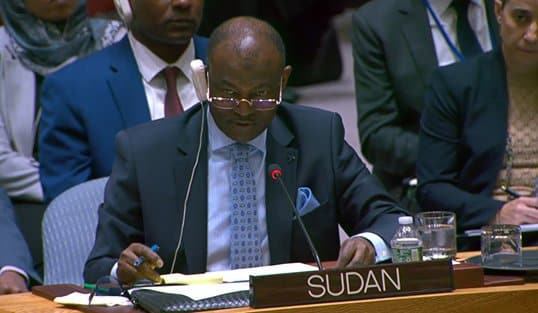
UN Security Council Extends Sudan Sanctions; Geographical Scope Retained
On October 9, 2026, Sudan welcomed the UN Security Council's decision to maintain the geographical scope of its sanctions regime, following a unanimous vote to extend the measures imposed under Resolution 1591 for two months, for the second time, after the United States withdrew a proposal for expansion. Sudan's mission to the United Nations expressed its view that the optimal path involves activating the existing system and ensuring accountability for violators, rather than expanding the sanctions regime. This 'technical extension' signifies a brief renewal without substantive changes, a common practice within the Security Council. Sudan affirmed its readiness to engage constructively with Council members on enhancing the effectiveness of Resolution 1591, advocating for an approach free from politicization and selectivity, and distinguishing between the state and legitimate institutions versus militias and armed groups. The Sudanese statement highlighted that the primary challenge to the system has been a lack of enforcement will, not its geographical scope, and noted that Sudan, along with the Panel of Experts established by Resolution 1591, has provided evidence of continuous arms, ammunition, drone, and mercenary flows to the Rapid Support Forces.
This development carries significant legal implications for practitioners advising on international law, sanctions compliance, and regional stability in Africa. The Security Council's decision to opt for a technical extension, rather than expanding the sanctions, reflects a complex interplay of diplomatic pressures and geopolitical considerations. For legal professionals, this means the existing framework of restrictions under Resolution 1591 remains in force, requiring continued adherence to its provisions. However, the underlying debate about the efficacy and scope of these sanctions, coupled with Sudan's assertions regarding enforcement failures and arms flows to non-state actors, signals ongoing scrutiny and potential future adjustments to the regime. Businesses operating in or with Sudan must remain acutely aware of these dynamics, as any shift in the sanctions landscape could have direct operational and compliance consequences.
The legal context for this situation is rooted in Chapter VII of the United Nations Charter, which grants the Security Council the authority to impose measures, including sanctions, to maintain or restore international peace and security. Specifically, Resolution 1591 (2005) established the sanctions regime on Sudan, which includes an arms embargo, travel ban, and asset freeze. The concept of a 'technical extension' is a procedural mechanism used by the Security Council to temporarily prolong a mandate or regime without altering its core substance, often to allow for further negotiations or assessment. The debate over enforcement versus expansion touches upon fundamental principles of international law, including state sovereignty, the responsibility of states to control their borders, and the challenges of implementing international mandates in conflict-affected regions. The mention of the Panel of Experts under Resolution 1591 underscores the critical role of independent monitoring and reporting mechanisms in informing the Security Council's decisions.
Key parties involved in this matter include the United Nations Security Council, which is the primary decision-making body for international sanctions, and the Government of Sudan, represented by its mission to the UN, which actively engaged in the diplomatic process. The United States is also a significant actor, having initially proposed an expansion of the sanctions before withdrawing its proposal. The Rapid Support Forces (RSF) are implicitly a key party due to the allegations of receiving arms flows, which directly relates to the enforcement of the arms embargo component of Resolution 1591. The outcome of this specific matter, as reported, is the two-month technical extension of the existing sanctions regime without expansion.
Practitioners, particularly those in international trade, finance, and humanitarian law, should closely monitor future deliberations and resolutions by the UN Security Council concerning Sudan. While the current extension maintains the status quo, the ongoing discussions about enforcement, the geographical scope, and the distinction between state and non-state actors suggest that the sanctions regime remains a fluid area. Attorneys should advise clients on the continued necessity of strict compliance with the existing provisions of Resolution 1591 and prepare for potential future changes, whether they involve stricter enforcement, modifications to the scope, or even eventual lifting of sanctions. Staying abreast of reports from the Panel of Experts and other international bodies will be crucial for understanding the evolving risk landscape and advising on due diligence requirements.
How does this affect you?
Get an AI analysis of this article grounded in your jurisdictions, practice areas, and any policy documents you've uploaded to Wansom.
Finish Reading the Full Story and the Expert Analysis.
Get the latest legal & regulatory intelligence in Sudan
Wansom is AI and can make mistakes.