
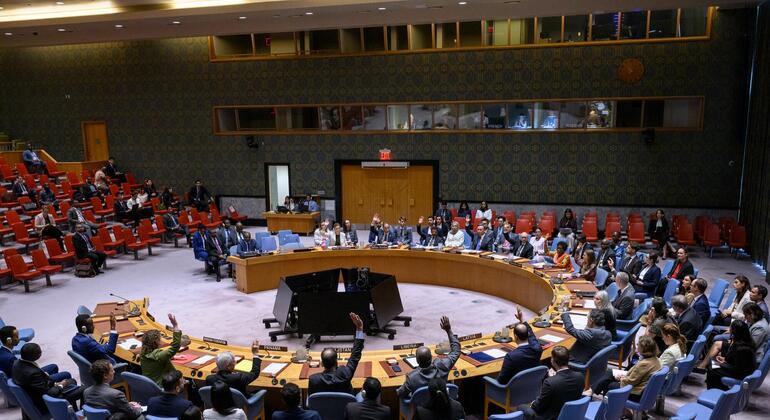
UN Security Council: Extends Sudan Sanctions Two Months After US Withdraws Proposal
Summary
- The UN Security Council unanimously extended Sudan's sanctions regime for two months until December 11, 2026.
- This "technical extension" followed the United States' withdrawal of its proposal to expand the arms embargo.
- The US had sought to extend the Darfur arms embargo to all of Sudan and include dual-use technology.
- The US proposal faced significant disagreement, including rejection by Russia, leading to its withdrawal.
- Existing UN sanctions remain in effect, but the immediate threat of a broader arms embargo has been averted.
UNSC Extends Sudan Sanctions Two Months
However, the withdrawal of the United States' proposal to expand the arms embargo offers a significant, albeit temporary, reprieve.
The United Nations Security Council (UNSC) has unanimously voted to extend the existing sanctions regime on Sudan for a period of two months. This decision, reached on a Thursday, came after the United States opted to withdraw its earlier proposal that sought a significant expansion of the embargo's scope. The extension, characterized as a "technical" measure, sets the new expiration date for the sanctions regime as December 11, 2026. This move by the UNSC aims to provide additional time for member states to engage in further negotiations regarding the future of the sanctions.
The unanimous adoption of the resolution to extend the Sudan sanctions technically underscores the Council's intent to maintain the current framework while deliberations continue. The two-month duration is notably shorter than typical extensions, reflecting the ongoing internal disagreements among Security Council members concerning the broader implications and potential modifications to the sanctions. This temporary measure ensures the continuity of the existing restrictions without immediate substantive changes.
US Withdraws Arms Embargo Expansion Proposal
The US proposal that was ultimately withdrawn aimed to significantly broaden the arms embargo currently in place for Darfur, extending its reach to cover the entirety of Sudan. Beyond geographical expansion, the draft resolution also sought to address the proliferation of drones and dual-use technology within the country, introducing new restrictions on these items. This ambitious proposal, however, encountered considerable opposition and failed to garner the necessary consensus among Security Council members.
Disagreement within the UNSC became evident during weeks of negotiations surrounding the US draft. Several nations expressed a preference for a straightforward one-year extension of the current sanctions regime without any modifications. Crucially, Russia, a permanent member possessing veto power, explicitly rejected the United States' proposal. The lack of unanimous support ultimately led Washington to retract its draft, paving the way for the technical extension of the existing measures.
Legal and Regulatory Context
In the operational parlance of the UN Security Council, a "technical extension" refers to a concise decision that prolongs the mandate of a mission or a sanctions regime without introducing any fundamental alterations to its core substance or assigned tasks. Such extensions are typically granted for a shorter duration than standard renewals, serving primarily to bridge gaps and facilitate ongoing discussions among member states. In this instance, the Sudan sanctions technical extension ensures that the established framework remains active while the Council addresses unresolved issues.
The sanctions regime currently in effect was initially imposed by the UN Security Council at an earlier date. Its continued operation means that all existing prohibitions and requirements remain fully applicable. The recent UNSC Sudan sanctions renewal decision therefore does not introduce new obligations but rather reaffirms the necessity for continued adherence to the established legal and regulatory framework governing activities related to Sudan.
Why It Matters for Compliance
For legal professionals and compliance officers advising entities with operations or dealings in Sudan, the recent UNSC decision carries specific implications. The existing UN sanctions regime remains fully in effect, necessitating continued vigilance and strict adherence to all current restrictions. This means that established compliance protocols and due diligence processes must be maintained without interruption.
However, the withdrawal of the United States' proposal to expand the arms embargo offers a significant, albeit temporary, reprieve. The immediate threat of a broader embargo encompassing all of Sudan, including restrictions on dual-use technology, has been averted. This development means that clients are not, for now, facing potentially expanded compliance obligations that would have arisen from a wider Darfur arms embargo expansion. While the current regime persists, the immediate pressure of adapting to a more stringent and comprehensive set of restrictions has been temporarily lifted, allowing for continued operations under the familiar existing framework until Sudan sanctions December 2026.
Practical Implications
Lawyers and compliance officers advising clients with operations or dealings in Sudan should note that the existing UN sanctions regime remains in effect, requiring continued adherence to current restrictions. However, the immediate threat of a broader arms embargo covering all of Sudan, including dual-use technology, has been averted with the US proposal's withdrawal, offering a temporary reprieve from potentially expanded compliance obligations.
Source
How does this affect you?
Get an AI analysis of this article grounded in your jurisdictions, practice areas, and any policy documents you've uploaded to Wansom.
Finish Reading the Full Story and the Expert Analysis.
Get the latest legal & regulatory intelligence in Sudan
Wansom is AI and can make mistakes.