
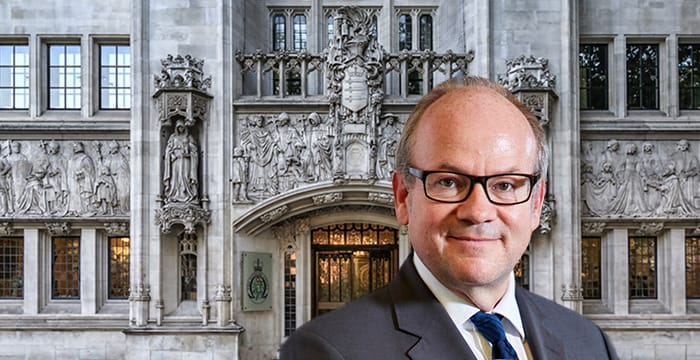
UK Supreme Court Justice Warns AI Risks De-Skilling Future Lawyers
UK Supreme Court judge Lord Sales warned on November 23, 2026, that artificial intelligence (AI) risks de-skilling the next generation of lawyers by automating tasks traditionally performed by trainees and junior lawyers, potentially hindering their professional development. Speaking at a conference hosted by DAC Beachcroft, Lord Sales articulated concerns that the increasing capability of AI in areas like legal research and document review could deprive junior lawyers of crucial opportunities to develop professional judgment. He highlighted that seemingly routine tasks, such as reviewing numerous cases and drafting notes that are subsequently critiqued, are fundamental to learning and skill acquisition, suggesting that firms might achieve short-term efficiency at the expense of long-term talent development. To mitigate this, he proposed that parts of legal training might need to occur without AI, and firms may need to invest more heavily in training a smaller cohort of lawyers to effectively scrutinise AI-generated work.
This warning from a senior judicial figure underscores a critical, evolving challenge for the legal profession in the UK, impacting talent development, firm efficiency, and the future quality of legal services. For practitioners and law firms, it highlights the tension between leveraging AI for operational gains and the imperative of cultivating skilled, independent legal professionals capable of complex analysis and judgment. The potential for a generation of lawyers with underdeveloped foundational skills could have profound implications for the quality of legal advice, client representation, and the overall integrity of the justice system. It also raises questions about career progression pathways and the value proposition of junior legal roles if core learning tasks are outsourced to technology.
While not directly referencing a specific statute or ruling, Lord Sales's comments are situated within the broader regulatory and ethical framework governing legal practice in England and Wales, overseen by bodies such as the Solicitors Regulation Authority (SRA) and the Bar Standards Board (BSB). These bodies are responsible for ensuring competence and ethical standards, and the implications of AI on these standards are a growing area of focus. The discussion forms part of a wider judicial debate on AI's role in the courts, with Supreme Court President Lord Reed and outgoing Master of the Rolls Sir Geoffrey Vos also expressing concerns about AI-made decisions and public trust. Key parties involved include Lord Sales himself, DAC Beachcroft as the conference host, and implicitly, all UK law firms and aspiring legal professionals.
Attorneys and law firms in the UK should proactively re-evaluate their training methodologies and professional development programs to ensure junior lawyers acquire fundamental skills despite increasing AI integration. This may involve designing structured training rotations that deliberately expose junior staff to tasks without AI assistance, or creating AI-assisted workflows that still demand critical human oversight and judgment. Firms should closely monitor ongoing discussions and potential guidance from regulatory bodies regarding AI's impact on competence requirements and training standards. Furthermore, the profession must consider the ethical implications of AI deployment, not just for efficiency, but for the foundational development of future legal talent and the maintenance of high professional standards, ensuring that technological advancement does not inadvertently erode core legal competencies.
How does this affect you?
Get an AI analysis of this article grounded in your jurisdictions, practice areas, and any policy documents you've uploaded to Wansom.
Finish Reading the Full Story and the Expert Analysis.
Get the latest legal & regulatory intelligence in United Kingdom
Wansom is AI and can make mistakes.