
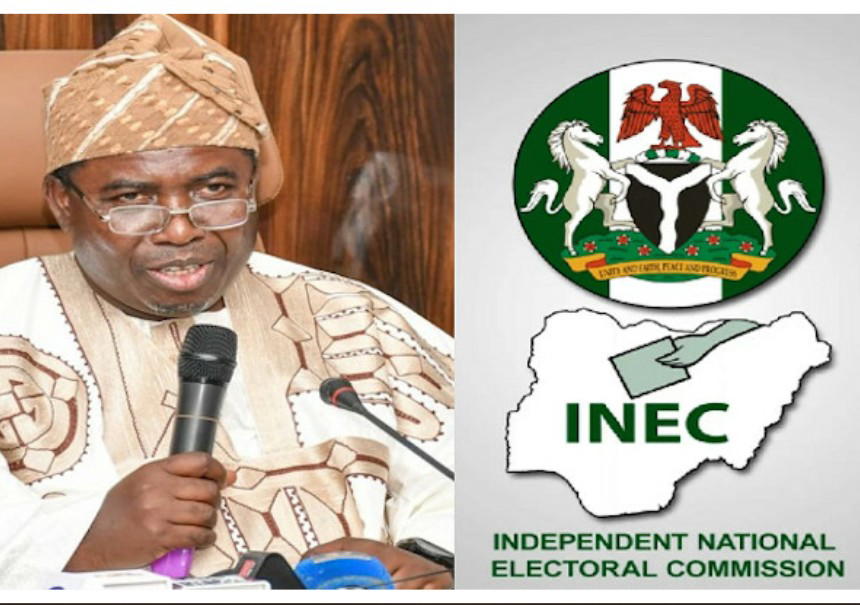
UIY Challenges INEC Warri Delineation: Demands Legal, Geographical Basis
Summary
- The Ugbarajo Itsekiri Youths (UIY) have demanded that the Independent National Electoral Commission (INEC) provide the legal and geographical basis for its Warri Federal Constituency delineation data.
- UIY states the uploaded data has potential implications for community identity, representation, political participation, and public confidence in democratic institutions.
- The group's concerns are amplified by existing allegations of electoral irregularities.
- This challenge could set precedents for electoral boundary standards and impact future election petitions in Nigeria.
The Challenge Unfolds
Legal professionals specializing in electoral law or administrative law are advised to closely monitor the progression and resolution of this dispute.
The Ugbarajo Itsekiri Youths (UIY) have issued a direct and significant demand to the Independent National Electoral Commission (INEC), urging the electoral body to furnish the comprehensive legal and geographical foundation for the Warri Federal Constituency units and ward delineation data it recently made public. This action by the Ugbarajo Itsekiri Youths to INEC represents a formal questioning of the methodology and rationale underpinning critical electoral divisions within the region. The group is specifically seeking a detailed explanation of how these boundaries were established, emphasizing the need for clarity and justification.
This formal request from UIY underscores a fundamental aspect of electoral governance in Nigeria, where the precise demarcation of federal constituencies and their constituent wards directly influences political representation and participation. The organization's insistence on receiving both the legal and geographical basis for the Warri Federal Constituency delineation indicates a thorough and critical review of INEC's operational procedures in this sensitive area. Their objective is to ensure that the process of defining these electoral zones is not only transparent but also demonstrably sound in its application of established criteria.
Concerns Over Representation and Trust
The Ugbarajo Itsekiri Youths articulate that the recently uploaded delineation report carries profound potential implications across several critical dimensions of democratic life. They contend that the current data could significantly impact community identity, potentially altering how various groups within the Warri Federal Constituency perceive their place and recognition within the broader electoral landscape. Furthermore, UIY asserts that the specific delineation choices have direct and tangible consequences for political representation, raising concerns about whether the political voice and influence of all communities are adequately preserved and reflected.
Beyond the immediate concerns of identity and equitable representation, the group also highlights the potential for the delineation to affect political participation. They suggest that an opaque or perceived unfair boundary-setting process could lead to disengagement among the populace, thereby diminishing overall civic involvement. Crucially, UIY emphasizes that the integrity of the report, if not adequately justified, could erode public confidence in democratic institutions themselves. This concern is particularly acute given the backdrop of existing allegations of electoral irregularities, which further heighten the need for unquestionable transparency and fairness in all aspects of electoral administration.
Precedent and Future Electoral Disputes
This specific challenge to INEC's Warri Federal Constituency delineation carries substantial weight and broader implications for the future of electoral processes across Nigeria. The demand by UIY for a clear and verifiable legal and geographical basis for boundary demarcation could establish a vital precedent for how all electoral boundaries are determined and subsequently justified throughout the nation. A successful outcome for UIY in compelling INEC to provide such detailed justifications would likely influence future processes for ward delineation and constituency mapping, potentially ushering in an era of enhanced transparency and accountability in electoral administration.
Legal professionals specializing in electoral law or administrative law are advised to closely monitor the progression and resolution of this dispute. The eventual outcome could significantly clarify the established legal and geographical standards required for the creation and validation of electoral boundaries, thereby impacting how future election petitions are constructed, presented, and ultimately adjudicated. Moreover, this case could set a crucial benchmark for effectively addressing community representation disputes, ensuring that the mapping of electoral zones accurately reflects the demographic, social, and cultural realities on the ground, which is essential for strengthening the overall integrity and perceived fairness of Nigeria's democratic system.
Practical Implications
Lawyers specializing in electoral law or administrative law should monitor this challenge to INEC's ward delineation, as it could set precedents for the legal and geographical basis required for electoral boundaries and impact future election petitions or community representation disputes in Nigeria.
Source
How does this affect you?
Get an AI analysis of this article grounded in your jurisdictions, practice areas, and any policy documents you've uploaded to Wansom.
Finish Reading the Full Story and the Expert Analysis.
Wansom is AI and can make mistakes.