
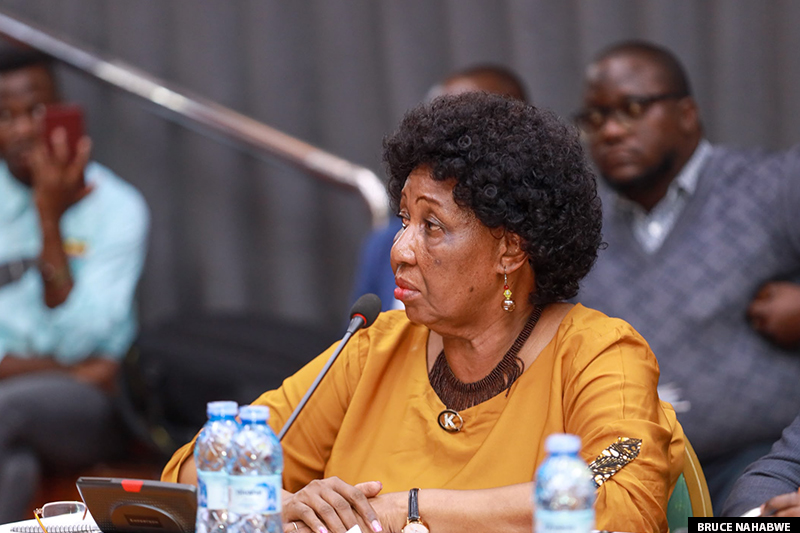
President Museveni Rejects UHRC Wangadya Resignation
Summary
- UHRC Chairperson Mariam Fauzat Wangadya informed Parliament that President Yoweri Museveni rejected her resignation.
- Wangadya appeared before COSASE to address accountability concerns from the Auditor General’s report.
- She apologized to the committee for her previous failure to appear.
Parliamentary Scrutiny and a Rejected Resignation
The reported rejection of Chairperson Mariam Fauzat Wangadya's resignation by President Museveni could be perceived as a direct assertion of executive authority over the leadership of this crucial institution.
Uganda Human Rights Commission (UHRC) chairperson Mariam Fauzat Wangadya recently appeared before the Committee on Commissions, Statutory Authorities and State Enterprises (COSASE) in Parliament. Her presence was necessitated by a need to address significant accountability concerns that had been highlighted in a report by the Auditor General. During this parliamentary session, Wangadya made a notable disclosure to the Members of Parliament, revealing that her resignation from the leadership of the UHRC had been explicitly rejected by President Yoweri Museveni.
This revelation came amidst her engagement with the committee regarding the financial and operational oversight of the human rights institution. Furthermore, Ms. Wangadya took the opportunity to issue an apology to the committee members for her prior failure to attend an earlier scheduled appearance, indicating a commitment to cooperate with the ongoing parliamentary inquiry into the commission's affairs.
Oversight and Executive Intervention
The appearance of the UHRC chairperson before COSASE underscores the critical role of parliamentary oversight in ensuring the proper functioning and financial probity of Uganda's statutory bodies. COSASE is tasked with scrutinizing the reports of the Auditor General, which provide an independent assessment of how public funds are managed by various government entities and commissions. The accountability concerns raised in the Auditor General’s report regarding the Uganda Human Rights Commission thus triggered this parliamentary summons for Ms. Wangadya.
The disclosure of President Museveni's rejection of Mariam Fauzat Wangadya's resignation introduces a layer of executive intervention into the leadership of a constitutionally mandated independent body. This direct involvement by the President in the tenure of the UHRC chairperson, particularly after a resignation attempt, raises questions about the dynamics between the executive and independent commissions, especially one charged with safeguarding human rights.
Implications for Institutional Independence
The Uganda Human Rights Commission plays a pivotal role in upholding and protecting human rights within the country, operating under a mandate that ideally requires significant independence from political influence. The reported rejection of Chairperson Mariam Fauzat Wangadya's resignation by President Museveni could be perceived as a direct assertion of executive authority over the leadership of this crucial institution.
Such an intervention, particularly when the commission is simultaneously facing parliamentary scrutiny over accountability issues, might impact public and international perceptions of the UHRC's autonomy. The ability of the UHRC to effectively investigate human rights abuses and hold state actors accountable relies heavily on its perceived and actual independence. The ongoing situation, involving both parliamentary demands for accountability and a presidential decision regarding the chairperson's tenure, highlights potential challenges to the operational independence of key governance institutions in Uganda.
Practical Implications
Lawyers should note the ongoing accountability scrutiny of the UHRC chairperson and the President's direct intervention in her tenure, which could signal potential governance instability or political influence within a key human rights institution, impacting its perceived independence and future decisions.
Source
How does this affect you?
Get an AI analysis of this article grounded in your jurisdictions, practice areas, and any policy documents you've uploaded to Wansom.
Wansom is AI and can make mistakes.