
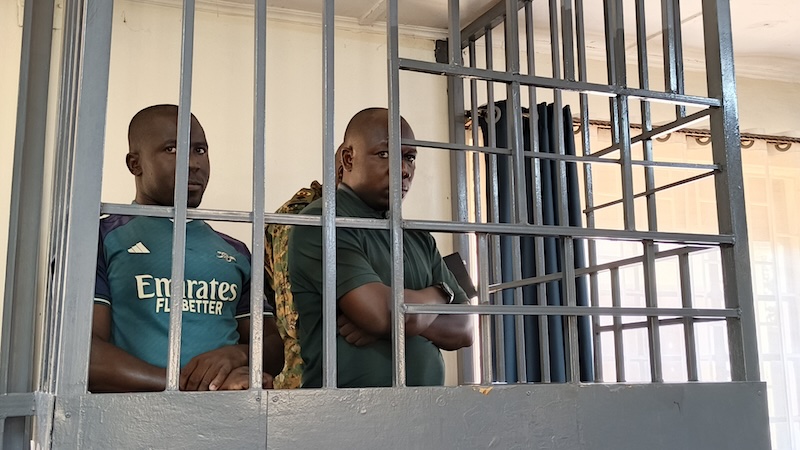
Uganda General Court Martial: Convicts 2 State Spies in Bomb Murders
Summary
- Two former state intelligence informers, Hamza Lyavaala and Walusansa Adiil, were convicted by Uganda's General Court Martial.
- The conviction on Monday followed their guilty pleas to two counts of murder.
- These charges relate to bomb incidents in Munyonyo and Kalerwe, which are notably reported to have occurred in June 2025.
- Brig Richard Tukacungurwa chaired the military tribunal that delivered the judgment after the accused admitted prosecution facts.
What Happened
The conviction of individuals formerly serving as state informers for orchestrating deadly bomb attacks carries significant implications for public trust and accountability within Uganda's security sector.
Uganda's General Court Martial, situated in Makindye, has convicted two individuals, Hamza Lyavaala and Walusansa Adiil, who were formerly associated with state intelligence. The conviction, handed down on Monday, followed their admission of guilt to two counts of murder. These serious charges are linked to their involvement in bomb incidents that occurred in Munyonyo and Kalerwe.
The military tribunal, presided over by Brig Richard Tukacungurwa, reached its verdict after Lyavaala and Adiil acknowledged the factual details presented by the prosecution. This concession was pivotal to their conviction for the deadly events. Notably, the bomb incidents at Munyonyo and Kalerwe, which formed the basis of their conviction, are reported to have taken place in June 2025, a date that surprisingly lies in the future relative to the date of their judgment.
Legal Context and Proceedings
The General Court Martial functions as a specialized military judicial body within Uganda, authorized to hear cases involving military personnel or, as demonstrated here, individuals with previous connections to state security apparatus. The decision by Hamza Lyavaala and Walusansa Adiil to plead guilty to the murder charges streamlined the legal process, obviating the need for an extensive trial. By admitting the prosecution's facts, they accepted the veracity of the evidence and the circumstances outlined by the state regarding their role in the fatal bombings.
This conviction of former state informers for two counts of murder underscores the severe nature of the offenses. Murder charges typically carry significant penalties, reflecting the ultimate loss of life caused by the bomb attacks. The court's proceedings, under the leadership of Brig Richard Tukacungurwa, concluded swiftly once the accused conceded their culpability and the foundational elements of the state's case. This judicial outcome highlights the military court's jurisdiction over cases involving individuals linked to national security, even if their direct employment status has since changed.
Why It Matters
The conviction of individuals who once served as state informers for orchestrating deadly bomb attacks carries significant implications for public trust and accountability within Uganda's security sector. The case involving Hamza Lyavaala and Walusansa Adiil, who admitted their guilt in connection with the Munyonyo and Kalerwe bombings, brings to the forefront concerns about potential abuses of power or involvement in criminal activities by those formerly tasked with intelligence gathering. This Uganda state spies bomb conviction raises questions about oversight mechanisms and the conduct of operatives associated with government agencies.
Furthermore, the reported date of the bomb incidents in June 2025 introduces an unusual and striking element to the case. While the conviction has already occurred, the future dating of the crimes presents a peculiar temporal dimension that warrants careful consideration in understanding the full scope of the reported events. The General Court Martial's decisive action following the guilty pleas demonstrates a robust judicial response to serious criminal acts, irrespective of the accused's former affiliations, reinforcing the principle that no one is above the law, even those with past connections to state intelligence.
Source
How does this affect you?
Get an AI analysis of this article grounded in your jurisdictions, practice areas, and any policy documents you've uploaded to Wansom.
Finish Reading the Full Story and the Expert Analysis.
Get the latest legal & regulatory intelligence in Uganda
Wansom is AI and can make mistakes.