
Uganda Court of Appeal: Shukla Must Deposit Debt Security
Summary
- The Uganda Court of Appeal ordered Mukesh Shukla to deposit Shs 4.8 billion and $36,870.02 as debt security.
- The deposit must be made within 30 days to Bank of Baroda (Uganda) Limited.
- This ruling, by Justice Esta Nambayo, granted a conditional stay of execution in the debt dispute.
- Shukla is the proprietor of Shumuk Aluminium Industries Limited, the entity involved in the debt.
- The order ensures security for an outstanding debt owed to the Bank of Baroda.
Court Mandates Substantial Debt Security
The substantial amounts specified—Shs 4.8 billion and $36,870.02—highlight the judiciary's commitment to ensuring that debtors provide tangible assurances when seeking to delay the enforcement of judgments.
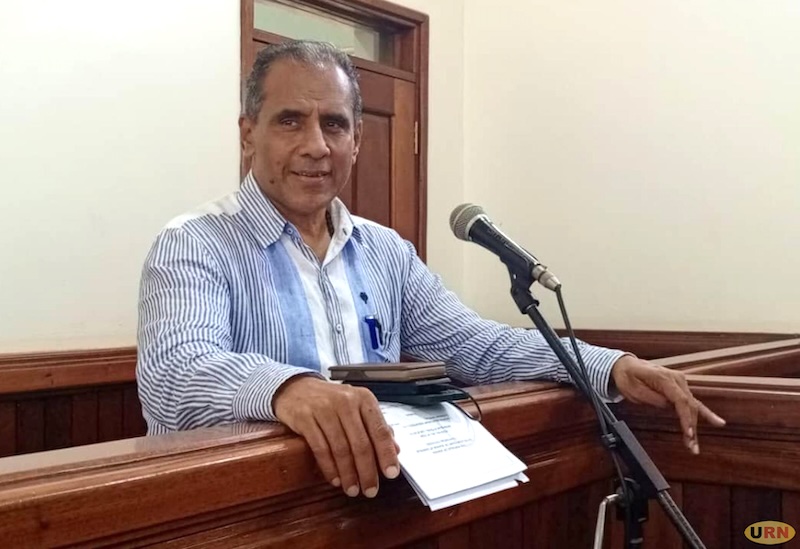
The Uganda Court of Appeal has issued a significant directive in a long-standing debt dispute involving businessman Mukesh Shukla, the proprietor of Shumuk Aluminium Industries Limited. In a recent ruling, the court mandated Mr. Shukla to deposit a substantial sum as security for an outstanding debt owed to Bank of Baroda (Uganda) Limited. This order requires the immediate provision of funds to secure the financial obligations in question.
Specifically, the court has ordered Mr. Shukla to remit Shs 4.8 billion, alongside an additional $36,870.02. This combined amount must be deposited within a strict 30-day timeframe from the date of the ruling. The directive stems from a decision by Justice Esta Nambayo, who presided over the matter as a single judge of the appellate court, granting a conditional stay of execution in the ongoing legal proceedings.
Legal Framework of Conditional Stays
The decision by the Court of Appeal to impose a conditional stay of execution is a standard legal mechanism employed in debt recovery and enforcement cases. Such a stay temporarily halts the enforcement of a lower court's judgment, but it is often contingent upon the fulfillment of specific conditions by the party seeking the stay. In this instance, the condition is the deposit of a significant financial security, designed to protect the interests of the creditor, Bank of Baroda (Uganda) Limited, should the appeal ultimately fail.
This type of ruling underscores the appellate court's authority to balance the rights of an appellant to pursue their legal remedies with the need to prevent the dissipation of assets or further prejudice to the judgment creditor. The requirement for Mukesh Shukla to provide security ensures that funds are available to satisfy the debt if the final determination of the dispute favors the Bank of Baroda, thereby mitigating the risk of the bank being unable to recover its outstanding dues.
Implications for Debt Enforcement in Uganda
The ruling by Justice Esta Nambayo sets a clear precedent regarding the stringent conditions that can be imposed for a stay of execution in Uganda's legal system, particularly in high-value debt disputes. The substantial amounts specified—Shs 4.8 billion and $36,870.02—highlight the judiciary's commitment to ensuring that debtors provide tangible assurances when seeking to delay the enforcement of judgments. This decision reinforces the principle that a stay of execution is not an automatic right but a privilege granted under specific, often financially demanding, terms.
For parties involved in debt recovery or enforcement proceedings in Uganda, this case illustrates the critical importance of being prepared for prompt financial action. The 30-day deadline for depositing such a significant sum emphasizes the urgency with which the Court of Appeal expects compliance with its orders, particularly when a conditional stay is granted. This outcome in the Mukesh Shukla Bank of Baroda dispute serves as a notable example of the judicial approach to securing creditor interests during the appellate process.
Practical Implications
Lawyers advising clients in debt recovery or enforcement proceedings in Uganda should note the Court of Appeal's willingness to impose substantial security deposits (Shs 4.8bn and $36,870.02) as a condition for a stay of execution, requiring prompt financial action from the debtor.
Source
How does this affect you?
Get an AI analysis of this article grounded in your jurisdictions, practice areas, and any policy documents you've uploaded to Wansom.
Finish Reading the Full Story and the Expert Analysis.
Get the latest legal & regulatory intelligence in Uganda
Wansom is AI and can make mistakes.