
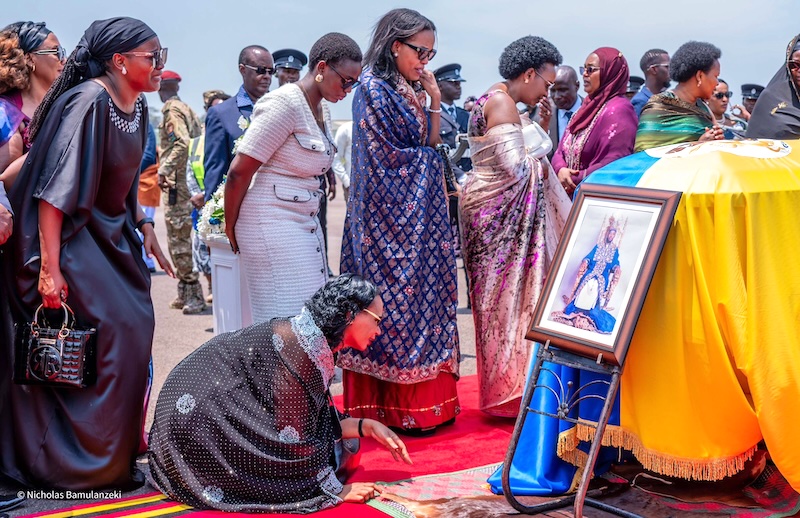
Uganda: Blocks DRC Mourners From King Oyo Burial Over Ebola
Summary
- Uganda has prohibited mourners from the Democratic Republic of Congo (DRC) from attending the burial of Tooro King Oyo Nyimba Kabamba Iguru IV.
- The ban was enacted by Uganda's Ministry of Health due to an ongoing Ebola outbreak in eastern DRC.
- The decision aims to prevent the potential spread of the Ebola virus into Uganda during the large royal funeral.
- The late King Oyo Nyimba Kabamba Iguru IV was 34 years old at the time of his passing.
- The Kingdom of Tooro is preparing to host thousands of mourners for the funeral ceremonies.
Uganda Imposes Travel Restrictions for Royal Funeral
The Ugandan Ministry of Health's advisory, which effectively imposes travel restrictions on DRC mourners, establishes a significant precedent for how public health concerns can impact cross-border movement and international events.
Ugandan authorities have implemented a prohibition preventing individuals from the Democratic Republic of Congo (DRC) from entering the country to attend a significant royal burial. This directive specifically targets those intending to participate in the funeral rites for Tooro's monarch, King Oyo Nyimba Kabamba Iguru IV, whose passing at the age of 34 has prompted extensive preparations for a large-scale ceremony.
The measure was officially communicated through an advisory issued by Uganda's Ministry of Health. The decision comes as the Kingdom of Tooro anticipates a substantial influx of attendees, potentially numbering in the thousands, for the solemn occasion. The ban underscores a proactive approach by Uganda to safeguard public health amidst regional challenges, particularly concerning highly contagious diseases.
This unprecedented step highlights the gravity with which Uganda views the potential for disease transmission during large public gatherings, especially those involving cross-border participation. The focus remains on mitigating risks while respecting the cultural significance of the event, necessitating a delicate balance between public safety and traditional observances.
Public Health Concerns Drive Decision
The primary justification for Uganda's decision to block DRC mourners stems from the ongoing Ebola virus outbreak, which continues to affect the eastern regions of the Democratic Republic of Congo. The Ministry of Health's advisory explicitly cites this public health crisis as the reason for the travel restrictions, aiming to prevent the potential spread of the deadly virus into Uganda.
Ebola, known for its high fatality rate and rapid transmission, poses a significant threat, particularly in environments where large groups of people gather and interact closely. The solemn nature of a royal funeral, drawing mourners from various locations, including affected areas, presents an elevated risk for disease propagation. Consequently, the Ugandan government, through its health ministry, has prioritized national public health by implementing these stringent entry controls.
This action aligns with broader international public health guidelines that advocate for measures to contain outbreaks, including restrictions on movement, especially from areas experiencing active transmission. The advisory serves as a critical public health measure designed to protect the Ugandan populace from imported cases of the virus, thereby preventing a potential domestic outbreak that could have devastating consequences.
Broader Implications for Cross-Border Movement
The Ugandan Ministry of Health's advisory, which effectively imposes travel restrictions on DRC mourners, establishes a significant precedent for how public health concerns can impact cross-border movement and international events. This decision illustrates the authority and willingness of national health bodies to enact stringent measures when faced with perceived epidemiological threats, even when they intersect with deeply cultural or social occasions like a royal funeral.
For legal and compliance professionals, this scenario underscores the evolving landscape of international travel and trade, where public health advisories can swiftly alter established norms. Such governmental actions could necessitate advising clients on compliance with sudden travel bans or entry restrictions, potentially impacting the movement of personnel or goods across borders. Furthermore, the invocation of public health emergencies as a basis for such restrictions could have implications for contractual obligations, including potential force majeure clauses, which might be triggered by unforeseen governmental interventions.
This incident serves as a clear reminder that public health considerations are increasingly becoming a critical factor in international relations and domestic policy, with direct consequences for individuals, businesses, and diplomatic ties. The proactive stance taken by Uganda's Ministry of Health highlights a growing global trend where national security is intertwined with health security, influencing decisions that affect cross-border mobility and event planning.
Practical Implications
Lawyers and compliance officers should note the precedent of the Ugandan Ministry of Health issuing travel restrictions based on public health concerns, which could impact cross-border movement of personnel or goods and necessitate advising clients on compliance with such advisories or potential force majeure implications.
Source
How does this affect you?
Get an AI analysis of this article grounded in your jurisdictions, practice areas, and any policy documents you've uploaded to Wansom.
Finish Reading the Full Story and the Expert Analysis.
Wansom is AI and can make mistakes.