
Uganda: Ggoobi Warns Accounting Officers of Personal Liability
Summary
- Uganda's government has tightened budget execution rules, according to Ramathan Ggoobi, Permanent Secretary for the Ministry of Finance.
- Accounting officers will now be personally liable for unauthorised spending and the quality of services provided.
- New projects will only be admitted into the Public Investment Plan with fully costed designs and credible feasibility studies.
- Ggoobi warned accounting officers against corruption and unauthorised recruitment.
Heightened Accountability for Public Funds
A cornerstone of this revised approach is the explicit declaration that accounting officers will now face personal liability for instances of unauthorised spending.
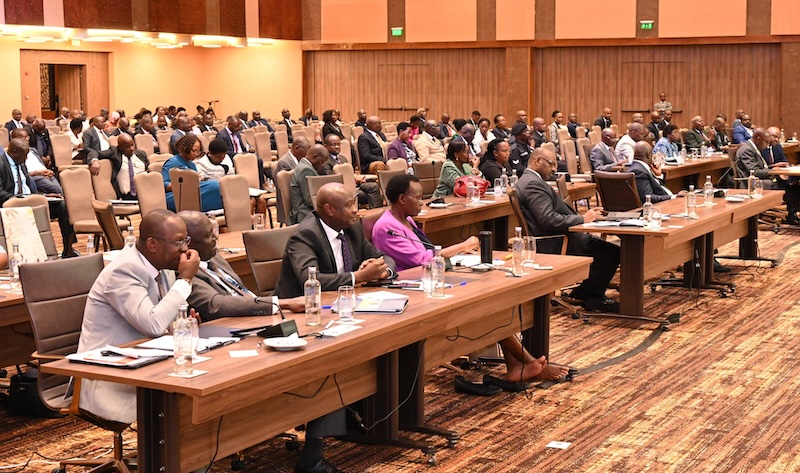
Ramathan Ggoobi, the Permanent Secretary for Uganda's Ministry of Finance, Planning and Economic Development, recently announced a significant shift in government policy regarding financial management and project execution. Addressing a gathering of accounting officers at Speke Resort Munyonyo, Ggoobi underscored the government's resolve to enforce stricter budget execution rules across all public entities. This new directive signals a clear move towards enhanced accountability, particularly targeting issues of financial impropriety and operational inefficiencies within the public sector.
A cornerstone of this revised approach is the explicit declaration that accounting officers will now face personal liability for instances of unauthorised spending. This measure aims to instill a greater sense of responsibility among those tasked with managing public finances, ensuring that expenditures align precisely with approved budgetary allocations. Furthermore, Ggoobi emphasized that this personal accountability extends beyond mere financial oversight to encompass the quality of services delivered by government projects and departments. This broadens the scope of responsibility, compelling officers to not only manage funds prudently but also to ensure tangible, high-quality outcomes for citizens.
Stricter Project Planning and Budget Discipline
In a related development, the government is implementing more stringent criteria for the inclusion of new initiatives into the Public Investment Plan. Ggoobi confirmed that future projects will no longer gain admission without first presenting fully costed designs and credible feasibility studies. This procedural tightening is designed to prevent the commencement of underprepared or financially unviable projects, thereby safeguarding public resources and ensuring that investments yield their intended benefits. The emphasis on robust preliminary analysis reflects a commitment to strategic planning and efficient resource allocation, aiming to curb the historical challenges associated with poorly conceived government projects.
Beyond project initiation, the Permanent Secretary also issued a stern warning to accounting officers regarding several critical areas of misconduct. He specifically cautioned against corruption, which remains a persistent threat to public trust and financial integrity. Additionally, Ggoobi highlighted the issue of unauthorised recruitment, a practice that can inflate payrolls and strain public budgets without proper justification. These warnings reinforce the government's determination to foster a culture of discipline and transparency in all aspects of public financial management, aligning with the broader objective of improving Uganda's budget execution rules.
Implications for Public Sector Management
The pronouncements by Ramathan Ggoobi, Permanent Secretary of the Ministry of Finance, Planning and Economic Development, mark a pivotal moment for accounting officer accountability in Uganda. By introducing personal liability for unauthorised spending and the quality of service, the government is significantly raising the stakes for individuals holding these crucial positions. This shift necessitates a profound re-evaluation of internal controls and compliance frameworks within all public sector entities. Officers must now operate with an acute awareness that their decisions and oversight directly impact their individual legal and financial standing, moving beyond a purely institutional accountability model.
This heightened focus on individual responsibility underscores the imperative for meticulous adherence to established financial regulations and project management protocols. The directive to ensure credible feasibility studies and costed designs for all Public Investment Plan projects, coupled with the warnings against corruption and unauthorised recruitment, creates a comprehensive framework for enhanced governance. Accounting officers are now expected to demonstrate not only fiscal prudence but also a proactive approach to ensuring service excellence, fundamentally reshaping the landscape of public sector management in Uganda.
Practical Implications
Lawyers advising Ugandan public sector clients should inform accounting officers of increased personal liability risks for financial mismanagement and service quality, necessitating stricter adherence to budget execution rules and project planning. Compliance officers must review internal controls to mitigate these heightened individual exposures.
Source
How does this affect you?
Get an AI analysis of this article grounded in your jurisdictions, practice areas, and any policy documents you've uploaded to Wansom.
Finish Reading the Full Story and the Expert Analysis.
Wansom is AI and can make mistakes.