
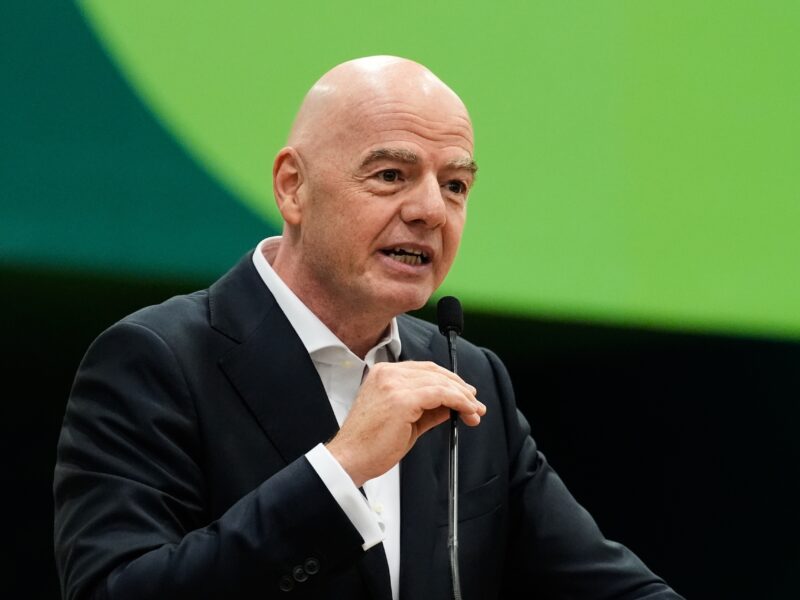
UEFA Seeks Thrive Capital Discovery in Infantino Swiss Criminal Case
Summary
- The Union of European Football Associations (UEFA) has filed a petition in a U.S. court to obtain discovery for potential criminal charges against FIFA President Gianni Infantino in Switzerland.
- The legal action targets Thrive Capital Management and its founder Joshua Kushner, seeking information related to an abandoned $4.2 billion deal for a 20% stake in FIFA World Cup profits.
- UEFA alleges Infantino's plan, which lacked consultation with FIFA bodies, was designed for his personal benefit and that of 'co-conspirators,' potentially at a fraudulently low valuation.
- The controversial proposal collapsed swiftly after widespread opposition and a senior adviser's resignation, but UEFA states confidence in FIFA's leadership has not been restored.
- The discovery aims to determine if the $4.2 billion price reflected an arm’s-length valuation or an off-market price promoted by Infantino for his own advantage.
Controversial World Cup Deal Sparks Inquiry
The Union of European Football Associations contends that the valuation work and internal analyses from Thrive Capital are crucial to determining if the $4.2 billion price represented a fair market assessment or a fraudulently low figure promoted by Infantino for personal gain.
The Union of European Football Associations (UEFA), headquartered in Nyon, Switzerland, has initiated a significant legal maneuver in the United States, signaling its intent to pursue criminal charges against FIFA President Gianni Infantino in Switzerland. This action stems from a controversial, now-abandoned proposal by Infantino to sell a substantial stake in the future profits generated by the FIFA World Cup. The European football governing body filed a petition in the U.S. District Court for the Southern District of New York, seeking discovery from Thrive Capital Management, a New York-based investment firm.
This legal step by UEFA seeks to gather crucial evidence related to a plan where Thrive Capital and its founder, Joshua Kushner — the younger brother of Jared Kushner, former President Donald Trump’s son-in-law — were slated to acquire a 20% share in World Cup profits for $4.2 billion. Infantino, a 56-year-old Swiss lawyer, had publicly championed the initiative, claiming it would significantly enhance FIFA's commercial opportunities. However, UEFA alleges that this plan was developed without proper consultation with the FIFA Council or its member associations.
The proposal involved placing the commercial rights to World Cup events into a new subsidiary, FIFA Forward Enterprise. Despite Infantino's public assurances, the plan met with fierce opposition. Within days of its announcement in late July, the initiative collapsed, largely due to threats of boycotts from UEFA and other football associations, coupled with the resignation of a senior adviser to Infantino in protest.
Cross-Border Legal Strategy Unfolds
In the aftermath of the collapsed deal, UEFA's legal strategy has shifted to leveraging U.S. judicial mechanisms to support potential **Swiss criminal proceedings FIFA corruption** allegations. The petition filed in the **US District Court Southern District of New York discovery** seeks to compel Thrive Capital Management and Joshua Kushner to provide documents, communications, and deposition testimony. UEFA asserts that Kushner and his firm possess unique insights into the year-long discussions surrounding the monetization of the World Cup, information that was reportedly withheld from or misrepresented to top FIFA officials.
This strategic **Union of European Football Associations subpoena** aims to shed light on the financial intricacies of the proposed transaction. UEFA specifically highlighted that “the valuation work exchanged with Thrive, and any internal Thrive analyses of FIFA’s enterprise value,” are directly relevant. The organization seeks to determine whether the $4.2 billion price tag accurately reflected an arm’s-length valuation of FIFA’s commercial rights or, as public indications suggest, represented a fraudulently undervalued price promoted by Infantino for his own benefit. This approach underscores the growing trend of utilizing international legal cooperation to pursue accountability in complex cross-border financial dealings.
The move by **UEFA seeks discovery Thrive Capital Infantino Swiss criminal case** is a critical step in their broader investigation. By obtaining this evidence through the U.S. courts, UEFA intends to bolster its case for **Gianni Infantino criminal charges FIFA** in Switzerland. This demonstrates a sophisticated legal strategy, recognizing that key evidence for a foreign criminal investigation might reside within U.S. jurisdiction, accessible through specific legal avenues.
Allegations of Self-Dealing and Undervaluation
UEFA's core contention is that the FIFA Forward Enterprise was conceived not as a genuine commercial venture for the benefit of the sport, but rather as a mechanism for Infantino and a “small circle of co-conspirators” to secure a permanent stake in, and profit from, football's premier governing body. This, UEFA argues, would be “to the detriment of FIFA, its members, and other parties within the football family.” The lack of consultation with the FIFA Council or its member associations before announcing such a significant financial restructuring forms a central part of these accusations.
Despite Infantino's public statements about “unleashing the commercial potential” of the World Cup, UEFA's filing suggests a different motive behind the proposed **FIFA World Cup profits sale investigation**. The European body explicitly stated that the withdrawal of the transaction did not restore confidence in the development process or the officials involved. Concerns remain that top FIFA officials were deliberately kept out of the loop during the extensive talks about monetizing the World Cup, raising questions about transparency and governance at the highest levels of international football.
The requested discovery from **Joshua Kushner Thrive Capital subpoena** is therefore pivotal. It aims to provide concrete data to assess the true value of FIFA's commercial rights and whether the $4.2 billion offer was a legitimate market price or an artificially low figure designed to benefit specific individuals. This scrutiny into the valuation process is central to the potential criminal proceedings, as it could reveal evidence of financial impropriety or self-enrichment.
Broader Implications for Football Governance
The fallout from the abandoned World Cup profit sale plan has been significant, leading to increased scrutiny of FIFA's leadership and governance. Even with the transaction withdrawn, UEFA has made it clear that trust in the process and the officials responsible has not been restored. This ongoing controversy has fueled growing calls for Infantino's resignation, highlighting deep-seated concerns within the global football community regarding transparency and ethical conduct at FIFA.
This case serves as a stark reminder for individuals and entities engaged in international transactions, particularly within sports organizations, about the potential for cross-border legal scrutiny. The strategic decision by UEFA to pursue discovery in the U.S. for a criminal case in Switzerland exemplifies how legal actions can transcend national boundaries, emphasizing the importance of robust compliance and governance frameworks. The outcome of this **UEFA seeks discovery Thrive Capital Infantino Swiss criminal case** could have lasting implications for the future direction and integrity of international football governance.
Practical Implications
Lawyers advising international sports organizations or involved in cross-border investigations should note the strategic use of U.S. discovery mechanisms to gather evidence for potential criminal proceedings in foreign jurisdictions. This case highlights the potential for individuals and entities involved in international transactions to face scrutiny and legal action across borders, even if the primary alleged misconduct occurred elsewhere, emphasizing the importance of robust compliance and governance frameworks.
Source
How does this affect you?
Get an AI analysis of this article grounded in your jurisdictions, practice areas, and any policy documents you've uploaded to Wansom.
Finish this article free. Just your email for instant unlock.
Wansom is AI and can make mistakes.