
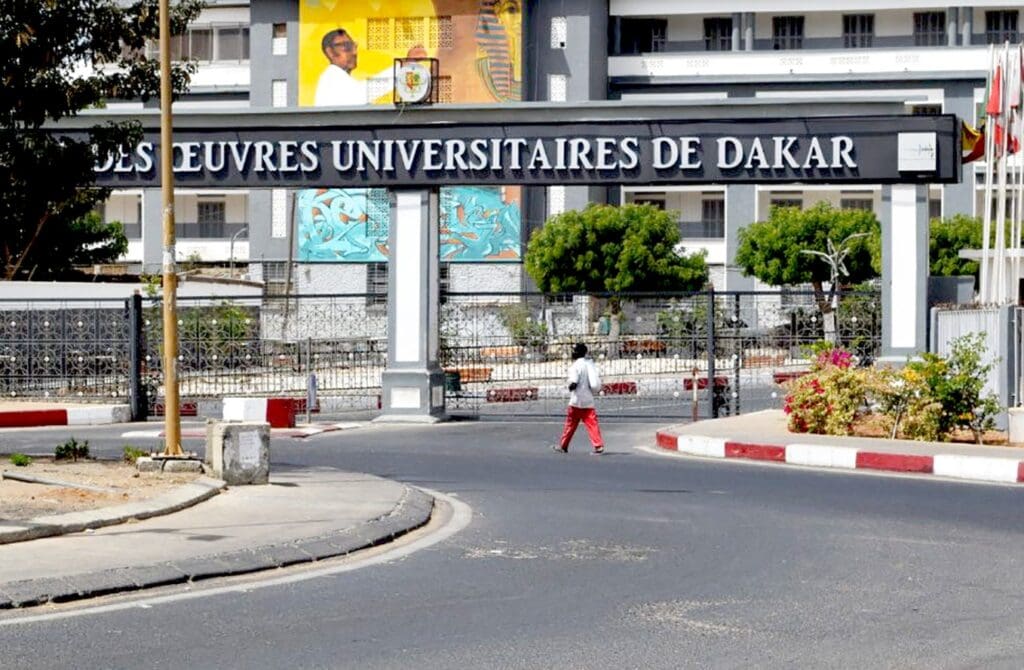
UCAD Ordered to Pay 5 Billion FCFA to Former Students
A référé court in Senegal has provisionally determined that the Université Cheikh Anta Diop (UCAD) must pay 5 billion FCFA to three former students of its Faculty of Economics and Management (Faseg), Aliou Gningue, Cheikh Tidiane Diop, and Mamour Diongue, with this sum calculated for the period between June 17, 2022, and September 10, 2026. This significant provisional order stems from a long-standing dispute where the students were initially excluded from the university in 2016 following campus disturbances. The Supreme Court had previously intervened in December 2019, ordering their reinstatement and imposing a daily penalty (astreinte) of 10 million FCFA for any delay in compliance. The current référé court ruling represents a provisional liquidation of this astreinte, though the judge reportedly did not order immediate execution of the decision.
This development carries substantial legal significance for educational institutions, administrative law, and the enforcement of judicial decisions in Senegal. The provisional liquidation of such a large astreinte underscores the judiciary's power to compel compliance with its orders, particularly those from the Supreme Court, and highlights the financial repercussions for public entities that fail to adhere to judicial directives. For practitioners, it reinforces the importance of understanding the mechanisms for enforcing administrative court judgments and the potential for significant financial penalties when such judgments are not respected. The case also touches upon the delicate balance between university autonomy, student rights, and the state's role in ensuring justice, especially in matters with political undertones, as suggested by the broader debate on student sanctions at UCAD.
The legal framework underpinning this case involves principles of administrative law, judicial review, and the enforcement of court orders, particularly those related to astreintes. The Supreme Court (Cour suprême) in Senegal serves as the highest court in the administrative hierarchy, and its decisions, such as the 2019 reinstatement order, are binding. The référé court, a specialized tribunal for urgent matters, has jurisdiction to provisionally liquidate astreintes, which are coercive penalties designed to compel performance of an obligation. Key parties include the Université Cheikh Anta Diop (UCAD), a public institution, and the three former students, Aliou Gningue, Cheikh Tidiane Diop, and Mamour Diongue. The involvement of political movements like PASTEF UCAD further contextualizes the matter within the broader socio-political landscape, suggesting that the legal proceedings are intertwined with public discourse on governance and human rights.
Attorneys and legal professionals in Senegal should closely monitor the progression of this case, particularly regarding the final confirmation and execution of the 5 billion FCFA provisional order. This situation serves as a critical reminder for public institutions and their legal counsel about the severe financial liabilities that can arise from non-compliance with judicial directives, especially Supreme Court rulings. Practitioners advising universities or other administrative bodies should review their internal compliance mechanisms for court orders and consider proactive measures to avoid similar astreinte penalties. Furthermore, the case highlights the potential for long-running disputes involving student rights and administrative sanctions to escalate into significant financial and reputational risks, necessitating robust legal strategies and, where appropriate, early dispute resolution. The explicit mention that the judge did not order immediate execution suggests further legal steps or negotiations may be anticipated before any payment is finalized.
How does this affect you?
Get an AI analysis of this article grounded in your jurisdictions, practice areas, and any policy documents you've uploaded to Wansom.
Finish Reading the Full Story and the Expert Analysis.
Get the latest legal & regulatory intelligence in Senegal
Wansom is AI and can make mistakes.