
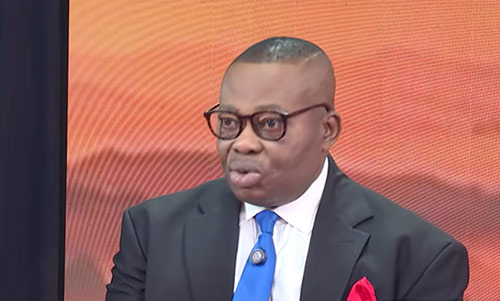
Ubani SAN: Nigeria Tax Transparency Demand Crucial for Public Trust
Summary
- Dr. M. O. Ubani, SAN, stated he would accept a Danish tax rate in Nigeria if the government provided a Danish quality of life.
- He argues that the crucial aspect of the Nigerian tax debate is the return on public funds, not merely the tax rate.
- Dr. Ubani demands that the government demonstrate the achievements of public funds before requesting increased contributions from citizens.
- His commentary emphasizes the need for government public funds transparency Nigeria and accountability in public spending.
- This position was articulated following discussions held by the International Bar Association.
Dr. M. O. Ubani SAN's Call for Accountability
His fundamental assertion is that the critical element in the Nigerian tax debate is not the percentage levied, but rather the tangible benefits and returns derived from the utilization of public funds.
Prominent legal figure Dr. M. O. Ubani, SAN, has recently articulated a strong stance on Nigeria's fiscal policy, specifically addressing the ongoing discussions surrounding increased taxation. His commentary underscores a critical condition for public acceptance of higher tax burdens, emphasizing the need for governmental transparency and demonstrable performance.
Dr. Ubani expressed that he would not oppose contributing to the national treasury at a rate comparable to Denmark's, provided that the Nigerian government could, in turn, guarantee a standard of living and public services akin to those enjoyed in Denmark. This conditional willingness highlights a significant disconnect between current public expectations and governmental delivery. His remarks were made in the context of discussions following the International Bar Association, signaling a widely recognized concern within legal and professional circles.
His fundamental assertion is that the critical element in the Nigerian tax debate is not the percentage levied, but rather the tangible benefits and returns derived from the utilization of public funds. This perspective shifts the focus from mere revenue generation to the efficacy and impact of government spending, setting a clear benchmark for future fiscal engagements with the populace.
The Imperative of Government Public Funds Transparency in Nigeria
At the heart of Dr. M. O. Ubani SAN's position is a robust demand for government public funds transparency Nigeria. He insists that before any further demands are made on citizens for increased contributions, the government must demonstrably illustrate the achievements and impact of previously collected public funds. This call for accountability is central to the broader Nigerian tax debate accountability, which often grapples with public skepticism regarding the judicious use of state resources.
This perspective frames the discussion around taxation public services Nigeria as a two-way street, where citizen compliance is intrinsically linked to governmental performance and openness. The argument suggests that a lack of clear evidence regarding the positive outcomes of existing revenue streams undermines the moral and practical basis for soliciting additional taxes. Therefore, the onus is placed squarely on the government to build trust through verifiable results and clear communication about its financial stewardship.
Why This Matters for Nigeria's Fiscal Future
The opinion articulated by Dr. M. O. Ubani, SAN, carries significant weight for Nigeria's fiscal trajectory and the relationship between the state and its citizens. It underscores that public willingness to engage in higher taxation public services Nigeria is not a given, but rather contingent upon a perceived return on investment in the form of improved infrastructure, social services, and overall quality of life. This sentiment is crucial for policymakers to consider when formulating new tax policies or seeking to broaden the tax base.
Furthermore, this demand for transparency and accountability could influence public discourse and advocacy efforts, empowering citizens and civil society organizations to demand greater oversight of public spending. The emphasis on 'return' rather than 'rate' provides a powerful framework for evaluating government effectiveness and could shape future legal and public challenges to tax increases. Ultimately, Dr. Ubani's intervention highlights that sustainable fiscal policy in Nigeria must be built on a foundation of trust, transparency, and tangible improvements in public welfare.
Practical Implications
Lawyers advising clients on tax policy or public finance in Nigeria should note this prominent legal opinion from Dr. M. O. Ubani, SAN, which articulates a strong demand for government transparency and accountability in public spending as a prerequisite for increased taxation. This perspective could inform client advocacy, public engagement strategies, or arguments in tax-related disputes, particularly concerning the rationale for tax increases.
Source
How does this affect you?
Get an AI analysis of this article grounded in your jurisdictions, practice areas, and any policy documents you've uploaded to Wansom.
Finish Reading the Full Story and the Expert Analysis.
Get the latest legal & regulatory intelligence in Nigeria
Wansom is AI and can make mistakes.