
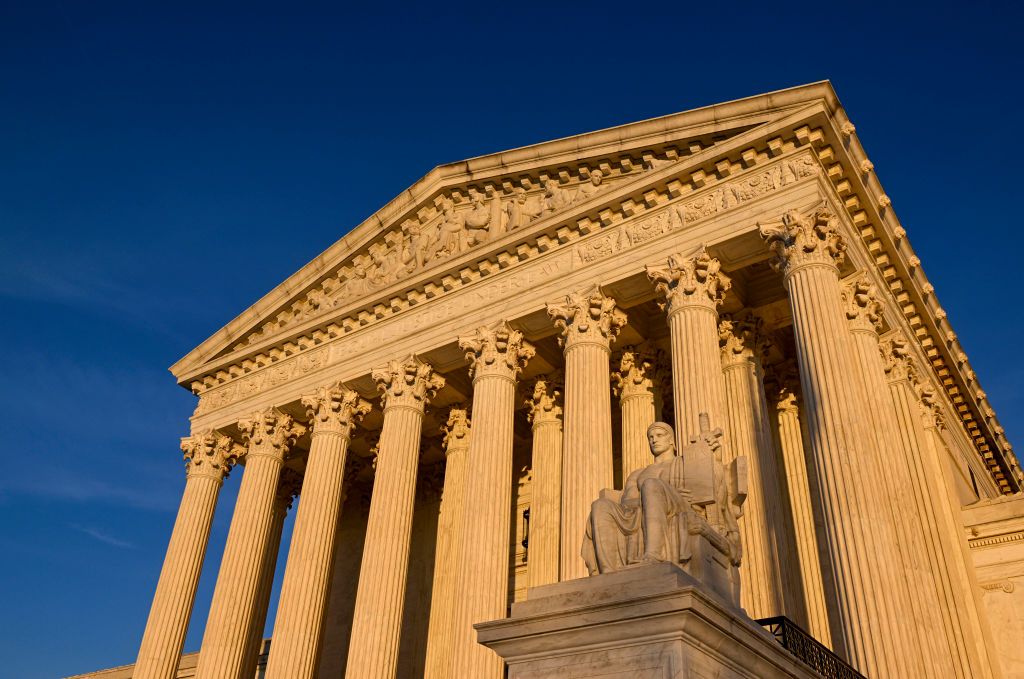
U.S. Supreme Court: Bivens Actions for Federal Officer Accountability Under Review
The U.S. Supreme Court is currently considering whether to eliminate or further restrict the ability to sue federal officers for constitutional violations under the *Bivens* doctrine, with arguments scheduled for November 9 in *Nielsen v. Watanabe*.
This pivotal case involves the potential curtailment or outright abolition of the *Bivens v. Six Unknown Named Agents of the Federal Bureau of Narcotics* (1971) precedent, which established an implied cause of action for money damages against federal officers for Fourth Amendment violations, absent a specific federal statute. The Court's review comes at a time when there is a public desire to hold federal agents, such as ICE officers, accountable for alleged constitutional breaches. Historically, the Supreme Court has been reluctant to extend *Bivens* to other constitutional rights or new contexts, and several conservative justices have openly called for its complete overruling, raising fundamental questions about federal accountability and the separation of powers.
For practitioners, this case holds profound implications for civil litigation against federal agents and the enforcement of individual constitutional rights in the United States. If *Bivens* is eliminated or severely curtailed, it could remove the primary, and often only, avenue for individuals to seek monetary redress for constitutional violations committed by federal agents, potentially leaving victims without an effective remedy and reducing incentives for federal officers to adhere strictly to constitutional mandates. This contrasts sharply with 42 U.S.C. Section 1983, which provides a statutory remedy for constitutional violations by state and local officers, highlighting a potential disparity in accountability mechanisms.
The key parties involved are the U.S. Supreme Court, which will hear the case *Nielsen v. Watanabe*, and the federal officers, including ICE agents, whose potential liability is at stake. The original precedent, *Bivens v. Six Unknown Named Agents of the Federal Bureau of Narcotics*, forms the legal bedrock under scrutiny. The underlying issue also touches upon the broader question of whether the judiciary or Congress should be responsible for providing remedies for constitutional violations.
Attorneys representing individuals alleging constitutional violations by federal officers should closely monitor the *Nielsen v. Watanabe* proceedings, as the outcome could drastically alter the landscape for civil litigation against federal agents. Businesses and organizations that interact with federal agencies, particularly those whose operations might lead to encounters with federal law enforcement, should also be aware of potential shifts in accountability mechanisms. Practitioners should prepare for the possibility of a significantly restricted or eliminated *Bivens* remedy, necessitating exploration of alternative legal theories or legislative advocacy to ensure redress for constitutional harms.
How does this affect you?
Get an AI analysis of this article grounded in your jurisdictions, practice areas, and any policy documents you've uploaded to Wansom.
Wansom is AI and can make mistakes.