
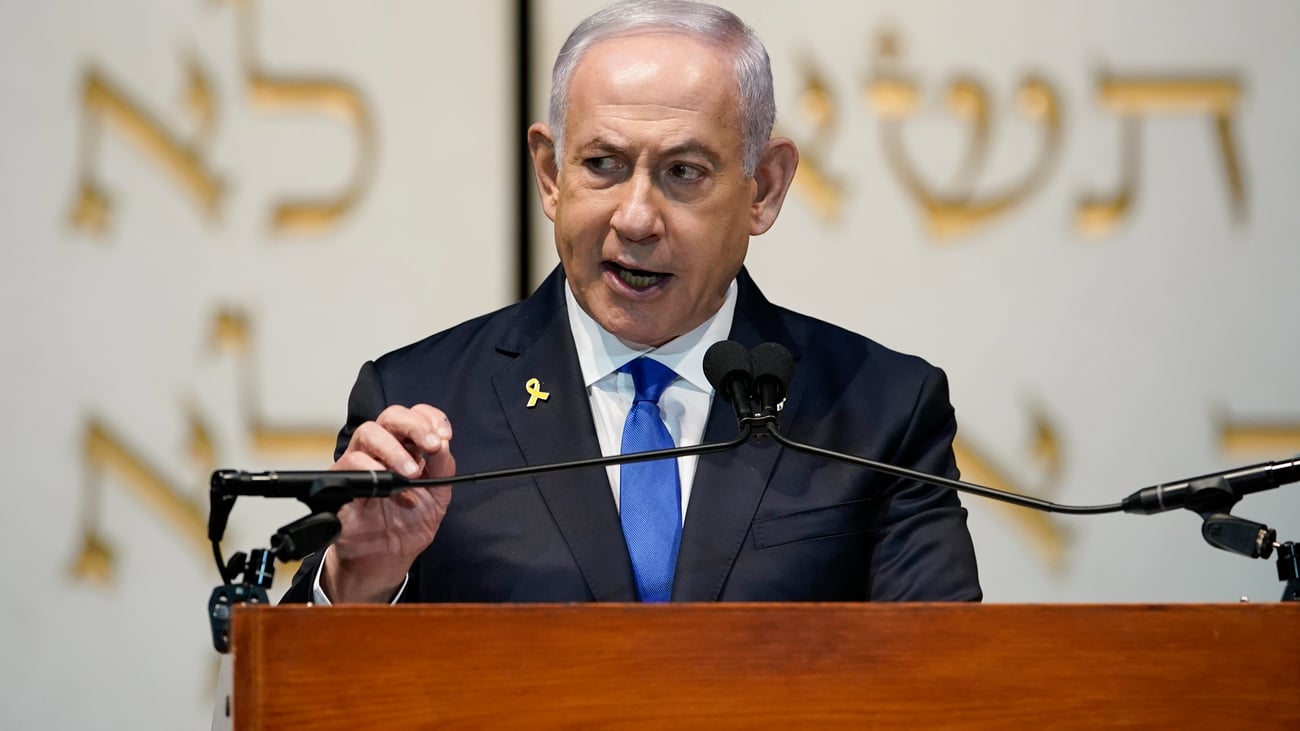
Netanyahu: Urges Far-Right Unity for Israel Election
Summary
- Prime Minister Benjamin Netanyahu's Likud party criticized National Security Minister Itamar Ben Gvir for refusing to unite his Jewish Power party with Finance Minister Bezalel Smotrich's Religious Zionism ahead of the October 27 Israel election.
- Netanyahu has urged Smotrich and Ben Gvir to form a joint slate, citing historical instances where right-wing disunity led to electoral losses and undesirable political outcomes.
- Ben Gvir rejected the unity proposal, claiming it would cost his party parliamentary seats and suggesting Smotrich instead unite with former general Ofer Winter's surging new far-right party.
- Analysts warn that Smotrich's Religious Zionism party risks falling below the 3.25% electoral threshold if it runs independently, potentially "burning" right-wing votes.
- Both ultranationalist parties seek independence to act as kingmakers and promote uncompromising positions, rather than solely follow Likud's lead.
Netanyahu's Urgent Plea for Far-Right Unity
The outcome of this internal struggle for far-right unity is pivotal for the upcoming Israel election and the future composition of the government.
Prime Minister Benjamin Netanyahu's Likud party recently voiced strong criticism against National Security Minister Itamar Ben Gvir, accusing him of jeopardizing the right-wing coalition's prospects in the upcoming October 27 Israel election. The rebuke came after Ben Gvir, a prominent far-right Cabinet member, rejected pleas from Netanyahu to form a joint electoral slate with Finance Minister Bezalel Smotrich. Likud's official social media account questioned Ben Gvir's motives, asking whether he sought a broad national government under Netanyahu or was allowing "personal considerations" to "burn right-wing votes," potentially leading to a left-wing government.
Netanyahu himself has been actively campaigning for this far-right unity. In a video posted on Thursday night, the Prime Minister directly urged Smotrich and Ben Gvir to unite, emphasizing that historical wins for the right-wing bloc consistently followed unified runs, while separate campaigns resulted in losses. He later extended an invitation to both ministers for a meeting on Sunday, reiterating the urgency to "save the right-wing bloc" by not wasting a single vote.
While Smotrich appeared receptive to the unity proposal, stating on Thursday evening that it was "time for unity and responsibility in the national camp," Ben Gvir remained defiant. He accused Netanyahu of attempting to weaken his Jewish Power party, which consistently polls well above the electoral threshold. Ben Gvir asserted that a joint run with Smotrich would actually cost Jewish Power three to four parliamentary seats, and instead suggested that Netanyahu facilitate a joint slate between Smotrich and former general Ofer Winter.
Electoral Dynamics and Historical Context
The urgency behind Netanyahu's push for far-right unity stems from evolving electoral dynamics and historical lessons. A new far-right party, founded by former general Ofer Winter, has seen a surge in recent polls, posing a significant challenge to the established right-wing parties. Analysts suggest that Winter's growing popularity could draw votes away from Smotrich's base, potentially preventing his Religious Zionism party from crossing the crucial 3.25% electoral threshold required for parliamentary representation, unless it merges with another party. This contrasts sharply with Ben Gvir's Jewish Power party, which consistently polls at a comfortable seven to eight parliamentary seats.
Netanyahu underscored the potential consequences of a fragmented right-wing vote by referencing the 1992 election. He argued that despite the right bloc securing more votes than the left in that election, their separate runs led to what he termed the "disaster of Oslo, Arafat, Hamas and recurring catastrophes." This historical parallel refers to the 1993 Oslo Accords, a peace process initiated between the slain center-left Israeli Prime Minister Yitzhak Rabin and Palestinian leader Yasser Arafat, which Netanyahu views as a negative outcome of disunity.
The Far-Right's Strategic Independence
The current standoff highlights a broader strategic tension within the Israeli right. Both Smotrich's Religious Zionism and Ben Gvir's Jewish Power parties, once marginalized by mainstream politicians, have cultivated a desire for independence. This autonomy allows them to act as "kingmakers" within the coalition and to promote their uncompromising ultranationalist positions, rather than simply aligning with the historically more secular Likud party.
These two parties have a history of both collaboration and separation. They ran together twice before, first securing six seats in 2021, then doubling their total to 14 seats in the 2022 election that formed the current parliament. However, that alliance subsequently split, with each party, Religious Zionism and Jewish Power, holding seven seats independently. Ben Gvir, whose recent controversial statement advocating for Israel to kill "30 to 40" Palestinians nightly in Gaza drew international condemnation, exemplifies the hardline stance these parties often adopt. Furthermore, Ofer Winter, the leader of the surging new far-right party, has been a vocal critic of the current governing coalition, particularly for its reliance on ultra-Orthodox parties and the resultant allowance for men in that community to avoid military service.
Why It Matters for the Israel Election
The outcome of this internal struggle for far-right unity is pivotal for the upcoming Israel election and the future composition of the government. Netanyahu's urgent appeals reflect a deep concern that a fractured right-wing vote could diminish the overall strength of his bloc, potentially paving the way for a left-wing government, an outcome Likud explicitly warned against. The ability of Smotrich's party to clear the electoral threshold is directly linked to whether a joint slate can be formed, making the unity talks critical not just for individual parties but for the entire right-wing coalition's viability.
The refusal of a key figure like Ben Gvir to unite, despite historical precedents and current polling risks, underscores the complex interplay of personal ambition, party independence, and strategic calculations within Israel's ultranationalist political landscape. The Prime Minister's efforts to forge a united front are therefore not merely about electoral convenience, but about securing the ideological direction and political power of the right-wing in the next parliamentary term.
Source
How does this affect you?
Get an AI analysis of this article grounded in your jurisdictions, practice areas, and any policy documents you've uploaded to Wansom.
Finish Reading the Full Expert Analysis.
Wansom is AI and can make mistakes.