
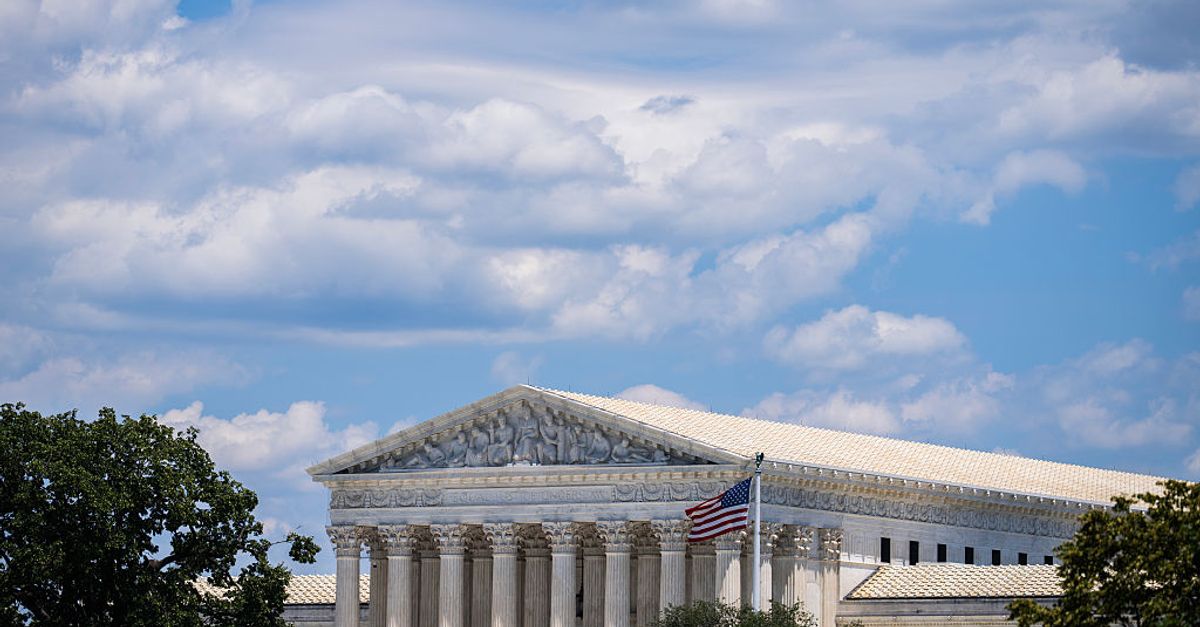
Trump Administration: Asks Supreme Court to Uphold Transgender Military Ban
Summary
- The Trump administration has asked the Supreme Court to review a federal appeals court decision that blocked its ban on transgender military service.
- Solicitor General D. John Sauer argued the D.C. Circuit's ruling was an "unprecedented intervention" into military affairs, contradicting Supreme Court precedents on judicial deference.
- The ban, implemented on February 26 following a presidential executive order, disqualifies individuals with gender dysphoria or those who have undergone related medical interventions.
- The Department of Defense justified the policy by citing the incompatibility of gender dysphoria's medical and mental health constraints with high military standards.
- The Supreme Court's decision on whether to hear this case will significantly impact military constitutional law and the legal standing of transgender individuals in the armed forces.
Supreme Court Asked to Intervene on Military Transgender Policy
Sauer argued that allowing this lower court decision to stand would constitute an "unprecedented intervention into military affairs," directly contradicting established Supreme Court precedents that mandate deference to the executive and legislative branches on matters of military judgment.
The Trump administration has formally requested that the Supreme Court review a federal appeals court decision that currently prevents the government from enforcing its ban on transgender individuals serving in the military. This significant legal maneuver occurred on a recent Friday, signaling the administration's determination to uphold its policy regarding military service for transgender persons.
U.S. Solicitor General D. John Sauer, representing the administration, characterized the ruling by the U.S. Court of Appeals for the District of Columbia Circuit as fundamentally flawed. Sauer argued that allowing this lower court decision to stand would constitute an "unprecedented intervention into military affairs," directly contradicting established Supreme Court precedents that mandate deference to the executive and legislative branches on matters of military judgment.
The administration's appeal places the contentious issue of the Trump administration Supreme Court transgender military ban squarely before the nation's highest judicial body. The core question for the justices is whether the policy, which restricts transgender military service, violates constitutional principles. The outcome of this request will significantly shape the future of transgender rights within the armed forces and the scope of judicial review over military policy.
Genesis and Specifics of the Ban
The policy at the heart of this legal challenge was initially adopted by the Trump administration last year, shortly after President Donald Trump's inauguration for his second term. President Trump formalized the directive by signing an executive order, which specifically tasked Secretary of Defense Pete Hegseth with implementing a prohibition targeting "individuals with gender dysphoria."
Following this executive order, the Department of Defense (DoD) officially issued the ban on February 26. This comprehensive policy generally disqualifies individuals from military service if they have a current diagnosis of gender dysphoria or have undergone medical interventions to address the condition. The DoD articulated its rationale by stating that the "medical, surgical, and mental health constraints on individuals who have a current diagnosis or history of, or exhibit symptoms consistent with, gender dysphoria are incompatible with the high mental and physical standards necessary for military service."
This gender dysphoria military policy SCOTUS is now being asked to review outlines specific criteria for exclusion, directly impacting those who identify as transgender and either currently serve or aspire to serve in the U.S. military. The policy's detailed prohibitions reflect the administration's stance on the perceived compatibility of gender dysphoria with military readiness.
Broader Implications for Military Constitutional Law
The Solicitor General's appeal underscores a critical tension between judicial oversight and executive authority in military matters. Sauer's argument that the D.C. Circuit transgender military ruling represents an "unprecedented intervention" highlights the administration's view that courts should generally defer to the military's judgments, citing existing Supreme Court precedents.
This transgender military service ban challenge carries profound implications for military constitutional law and the evolving understanding of transgender rights within federal service. Should the Supreme Court agree to hear the case, its decision could establish a significant precedent regarding the extent to which the judiciary can scrutinize military personnel policies, particularly those touching upon identity and medical conditions. A group of transgender individuals, including both active service members and prospective recruits, are actively challenging the policy, asserting their constitutional rights.
The Supreme Court's response to the administration's request — whether to grant certiorari and hear the case or to decline review — will be a pivotal moment. It will not only determine the immediate fate of the ban but also offer crucial insights into the legal framework governing the rights of transgender individuals in uniform and the balance of power between branches of government concerning military affairs.
Practical Implications
Lawyers advising military personnel, potential recruits, or LGBTQ+ rights organizations should closely monitor this development, as the Supreme Court's decision to hear or decline this case will significantly impact the legal standing of transgender individuals in military service and could set a precedent for constitutional challenges to military policy.
Source
How does this affect you?
Get an AI analysis of this article grounded in your jurisdictions, practice areas, and any policy documents you've uploaded to Wansom.
Finish Reading the Full Expert Analysis.
Wansom is AI and can make mistakes.