
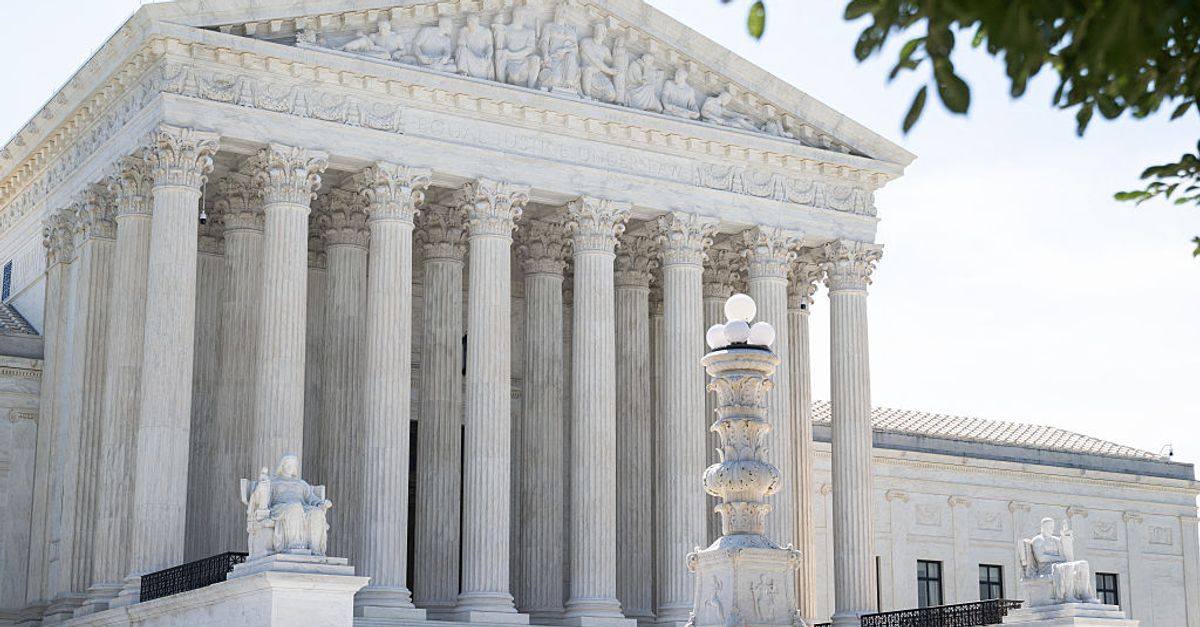
Trump Administration: SCOTUS Asked to Lift Big Bend Border Wall Injunction
Summary
- The Trump administration has asked the Supreme Court to permit the resumption of border wall construction in Texas's Big Bend region.
- This request challenges a federal trial judge's order that temporarily halted the construction.
- The Illegal Immigration Reform and Immigrant Responsibility Act of 1996 grants the Homeland Security Secretary broad authority to waive legal requirements for border wall projects.
- In 2026, two Homeland Security Secretaries issued three waivers to bypass environmental laws for Big Bend construction, including within a national park.
- Federal courts are limited to reviewing these waivers only for alleged constitutional violations.
The Current Legal Battle Over Border Wall Construction
The outcome will establish a critical precedent for how future administrations can bypass established legal frameworks, particularly environmental protections, in the name of national security or other expedited federal initiatives.
The Trump administration has once again brought its border wall construction efforts before the Supreme Court, seeking an immediate order to proceed with building in the Big Bend area of southwestern Texas. This appeal, filed on a Wednesday afternoon, challenges a temporary injunction issued by a federal trial judge in El Paso, which had halted the construction. U.S. Solicitor General D. John Sauer characterized the lower court's decision as both "baseless" and "unprecedented," underscoring the administration's view of the judicial intervention.
The push to construct a wall along the U.S.-Mexico border has been a cornerstone of Donald Trump's immigration policy since his initial presidential campaign and throughout his first term. Following his departure from office, President Joe Biden largely ceased these construction activities in 2021. However, upon his return to the presidency in 2025, Trump initiated efforts to restart the building of the border barrier, leading to the current legal confrontation regarding the Big Bend segment.
Executive Authority and Environmental Waivers
At the heart of this dispute is the extensive authority granted to the Secretary of Homeland Security under the Illegal Immigration Reform and Immigrant Responsibility Act of 1996 (IIRIRA). This legislation empowers the Secretary to "waive all legal requirements" deemed necessary to ensure the "expeditious construction" of border walls and associated roads. Crucially, the Act also severely limits judicial oversight, stipulating that federal courts may only entertain challenges to such waiver decisions if they specifically allege a violation of the Constitution.
In 2026, during the renewed construction push, two successive Homeland Security Secretaries, Kristi Noem and Markwayne Mullin, utilized this statutory power. They jointly issued three distinct waivers, specifically exempting various environmental and conservation laws to facilitate the construction of the border wall within the Big Bend region. This area, which notably encompasses parts of Big Bend National Park, represents nearly a quarter of the entire U.S.-Mexico border. Secretaries Noem and Mullin explicitly determined that additional border barriers were essential for the Big Bend area.
Implications for Executive Power and Judicial Review
The Supreme Court's impending decision on the Trump administration's request carries significant weight, extending beyond the immediate fate of the Big Bend border wall. The justices will effectively be ruling on the scope of the Homeland Security Secretary's waiver authority under IIRIRA and, by extension, the limits of executive power in national security and infrastructure projects. This case will also test the boundaries of judicial review when Congress has explicitly curtailed it, as seen in the IIRIRA's provisions.
The outcome will establish a critical precedent for how future administrations can bypass established legal frameworks, particularly environmental protections, in the name of national security or other expedited federal initiatives. A ruling in favor of the administration could broaden executive discretion, while a decision upholding the lower court's injunction might reinforce the role of judicial oversight, even in areas where Congress has sought to restrict it. This makes the Supreme Court's intervention a pivotal moment for understanding the balance between executive action and legal accountability.
Practical Implications
Lawyers should monitor the Supreme Court's decision on the DHS Secretary's waiver authority under IIRIRA, as it will impact the scope of executive power in national security projects and judicial review of environmental law exemptions, setting a precedent for future infrastructure and land use cases.
Source
How does this affect you?
Get an AI analysis of this article grounded in your jurisdictions, practice areas, and any policy documents you've uploaded to Wansom.
Finish Reading the Full Story and the Expert Analysis.
Get the latest legal & regulatory intelligence in United States
Wansom is AI and can make mistakes.