
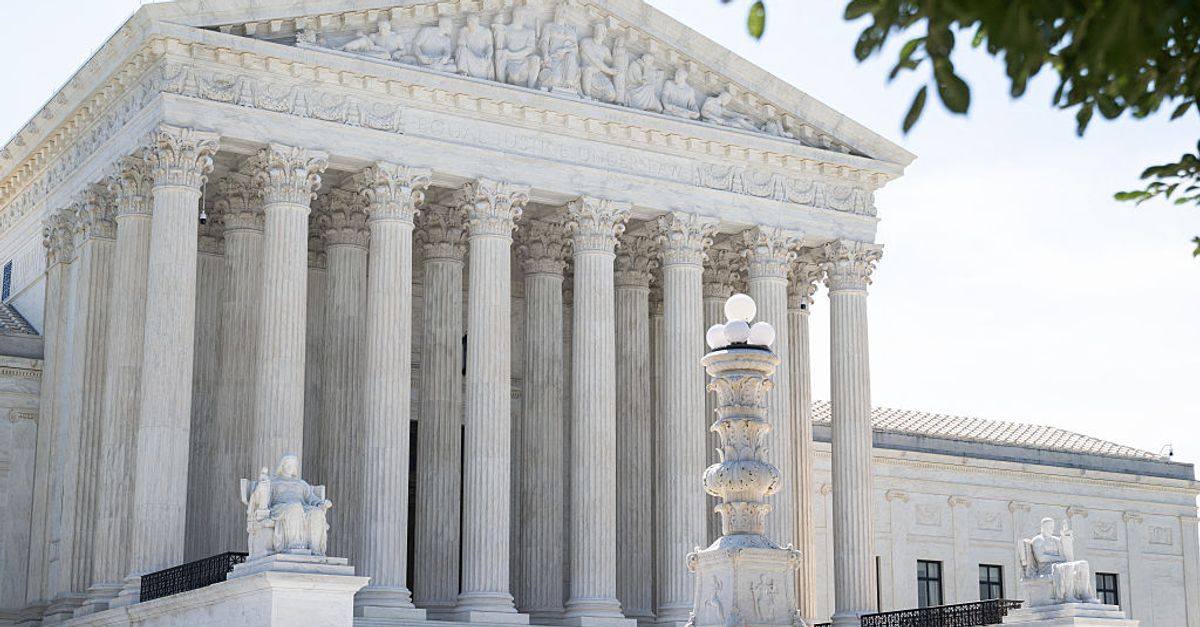
Trump Admin: Asks SCOTUS to Allow Border Wall Construction
on both the government and the courts. The cases involve individuals like Badar Khan Suri, an Indian national with a Ph.D. who came to the U.S. in 2022 for a postdoctoral fellowship, whose wife is a U.S. citizen of Palestinian descent and whose father advised a Hamas leader. Both Khalil and Suri have since been released, but the outcome of the Supreme Court's decision on whether to grant review is not yet reported.
The legal significance of this matter is substantial for practitioners, businesses, and the public, as it directly impacts the scope of judicial review over executive actions in immigration enforcement. A ruling in favor of the Trump administration's position could severely limit the ability of non-citizens to challenge their detentions in federal trial courts, potentially diminishing due process protections. Conversely, a decision affirming trial court jurisdiction would reinforce judicial checks on executive power. The Solicitor General's argument about litigation burden highlights the broader administrative implications, while the underlying facts touch upon sensitive issues of national security, free speech, and familial associations in the context of immigration law.
The legal context for these cases primarily involves federal immigration law, specifically provisions within the Immigration and Nationality Act (INA) that often restrict judicial review, and the general jurisdiction of federal district courts. The existence of a circuit split among the federal courts of appeals indicates differing interpretations of these complex jurisdictional statutes, necessitating Supreme Court intervention to establish a uniform legal standard. The Supreme Court's role as the ultimate arbiter of federal law is crucial here, as it will define the balance between executive authority in immigration matters and the fundamental right to judicial review for individuals facing detention and deportation.
Key parties involved include the federal government, represented by U.S. Solicitor General D. John Sauer, and the individuals Mahmoud Khalil and Badar Khan Suri. The U.S. Supreme Court is the central judicial body being asked to resolve the jurisdictional conflict. The federal courts of appeals are also significant, as their divergent rulings have created the need for Supreme Court clarification. The excerpt also mentions Georgetown University, where Suri held a postdoctoral fellowship, and the familial connections of Suri's wife, which appear to be part of the government's rationale for detention.
Practitioners in immigration law, civil rights, and administrative law should closely monitor the Supreme Court's decision on whether to grant certiorari in these cases. A ruling on the jurisdictional question will profoundly impact litigation strategies for challenging immigration detentions, influencing the appropriate forum and available remedies for detained non-citizens. Attorneys must be prepared for potential shifts in the landscape of judicial review, which could either expand or severely restrict avenues for relief, making a thorough understanding of the circuit split and the Solicitor General's arguments essential for advising clients effectively.
How does this affect you?
Get an AI analysis of this article grounded in your jurisdictions, practice areas, and any policy documents you've uploaded to Wansom.
Finish Reading the Full Story and the Expert Analysis.
Get the latest legal & regulatory intelligence in United States
Wansom is AI and can make mistakes.