
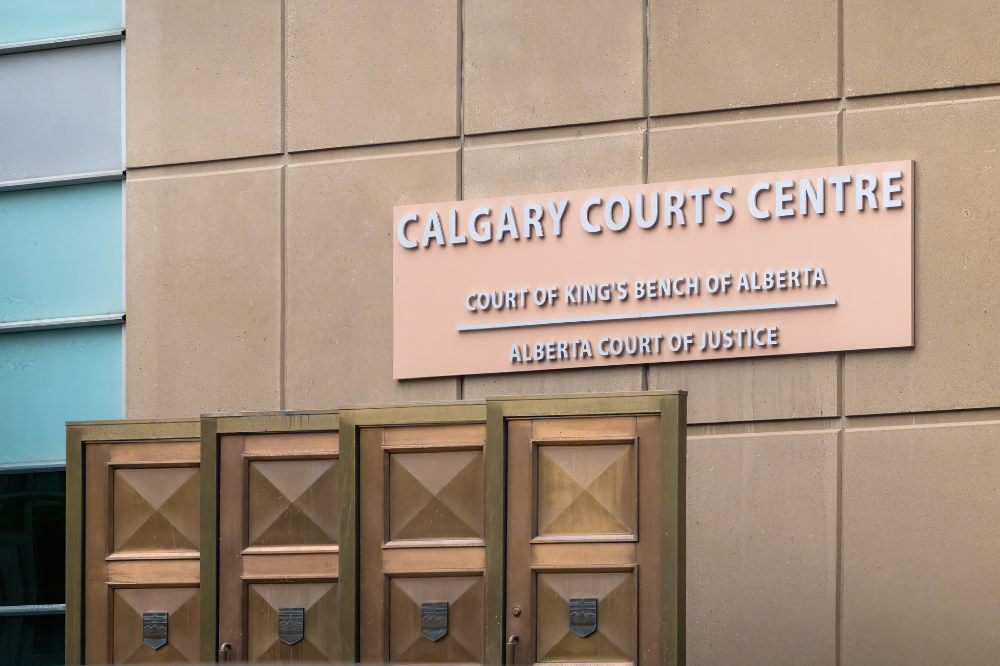
Alberta Court: Travis v Schultz Rule 4.33 Related Action Dismissed
Summary
- Gordon Ryley Travis's negligence claim against his former lawyer, Toby D. Schultz, was dismissed for long delay under Alberta's Rule 4.33.
- The Court of King's Bench of Alberta upheld the dismissal, ordering Travis to pay $20,000 in costs.
- Rule 4.33, known as the "drop dead rule," mandates dismissal if no "significant advance" occurs for three years, with no judicial discretion.
- Activity in a parallel "Denis Action," to which Travis was not a party, was deemed insufficient to constitute a "significant advance" in his specific negligence claim.
- The court, citing Center Street Limited Partnership, ruled that related action steps only count if they are "potentially dispositive" of the case at hand.
What Happened
Lawyers practicing in Alberta must meticulously manage their dockets to prevent Alberta personal injury litigation delay, understanding that only actions directly contributing to the resolution of the specific claim will count.
Gordon Ryley Travis faced the dismissal of his negligence claim against his former lawyer, Toby D. Schultz, a decision recently affirmed by the Court of King's Bench of Alberta. This legal action, known as the Schultz Action, stemmed from Travis having previously lost two personal injury cases due to alleged inaction by Schultz. The Court's ruling upheld the initial dismissal for long delay, finding that the negligence claim had not seen a significant advance for over three years.
The basis for this dismissal is Rule 4.33 of the Alberta Rules of Court, a provision often referred to as the "drop dead rule Alberta" due to its mandatory nature. This rule stipulates that an action must be dismissed if a period of three years or more elapses without any substantial progress. Courts are afforded no discretion to overlook this requirement, meaning factors such as the inherent merits of the claim or whether a party has legal representation are deemed irrelevant to its application. While Rule 4.33(2) outlines two specific exceptions, the court in Travis v. Schultz, 2026 ABKB 693 determined that neither was applicable to the circumstances of this case.
The critical timeline in the Schultz Action shows that the last recorded step was the service of an expert report on September 14, 2021. Toby D. Schultz subsequently filed his application for dismissal due to long delay on November 8, 2024, marking a period exceeding three years since any demonstrable progress. As a result of the upheld dismissal, Travis was ordered to pay a costs award of $20,000, with further appeal costs yet to be determined.
Interpreting "Significant Advance" in Related Actions
Central to the appeal's failure was the court's interpretation of what constitutes a "significant advance" under Rule 4.33. A significant advance is defined as a step that moves the litigation towards its resolution in an essential manner. This assessment is functional, focusing on the substance and actual effect of an action rather than its label or how it was filed, a principle confirmed by the Alberta Court of Appeal in multiple prior decisions. Travis attempted to argue that activity occurring in a separate, parallel proceeding, known as the Denis Action, should satisfy the "significant advance test Alberta" for his negligence claim against Schultz.
The Denis Action involved a fee recovery claim initiated by Jonathan B. Denis, who was Travis's initial lawyer before Schultz, directly against Schultz. Crucially, Travis himself was not a party to this particular proceeding. Despite presenting two specific events from the Denis Action as evidence of progress, the court ultimately rejected his argument. This rejection was grounded in the precedent set by Center Street Limited Partnership v. Nuera Platinum Construction Ltd, 2025 ABCA 290, which clarifies that steps taken in a related action can only be considered a "significant advance" if that related action is potentially dispositive of the case at hand.
The court concluded that the Denis Action did not meet this dispositive threshold for the Travis v Schultz Rule 4.33 related action. Its resolution could not decide any of the core issues pertinent to Travis's negligence claim against Schultz. Furthermore, while a settlement in the Denis Action might have removed a potential deduction from a future damages award in the Schultz Action, it did not, in itself, advance Travis any closer to securing a victory against Schultz. Therefore, the activity in the parallel proceeding was deemed insufficient to prevent the mandatory dismissal.
Broader Implications for Alberta Litigation
This ruling underscores the stringent application of the Alberta Rules of Court Rule 4.33 and its "drop dead rule Alberta" implications for litigants and legal professionals. The decision reinforces that the onus is squarely on the plaintiff to actively and directly advance their specific case, ensuring that essential steps are taken within the three-year window. The court's lack of discretion means that even seemingly relevant activity in related or parallel proceedings will not satisfy the "significant advance test Alberta" unless it directly and essentially moves the specific action towards resolution.
The outcome in Travis v. Schultz serves as a critical reminder that the courts will not conflate progress in one legal dispute with progress in another, even if the parties or underlying facts bear some relation. Lawyers practicing in Alberta must meticulously manage their dockets to prevent Alberta personal injury litigation delay, understanding that only actions directly contributing to the resolution of the specific claim will count. This strict interpretation ensures that litigation does not languish indefinitely, promoting timely resolution of disputes.
Practical Implications
Lawyers in Alberta must ensure active and direct advancement of their specific cases under Rule 4.33; activity in related or parallel proceedings will not satisfy the 'significant advance' requirement to avoid dismissal for long delay, even if seemingly relevant to the overall dispute.
Source
How does this affect you?
Get an AI analysis of this article grounded in your jurisdictions, practice areas, and any policy documents you've uploaded to Wansom.
Finish Reading the Full Story and the Expert Analysis.
Get the latest legal & regulatory intelligence in Canada
Wansom is AI and can make mistakes.