
Los Angeles Trader Joe's Shooting Retrial Tests Provocative Act Theory
Summary
- Gene Atkins is currently undergoing a retrial for second-degree murder in the death of a Trader Joe's employee during a shootout with police.
- Prosecutors are seeking to convict Atkins of second-degree murder under the 'provocative act theory' of murder, which holds that a defendant can be found guilty if their actions provoke a third-party to use deadly force.
- The case has significant implications for California self-defense laws and how police departments approach situations involving deadly force.
- Atkins has already been convicted of 40 other counts related to the incident, including attempted murder, false imprisonment, and grand theft.
What Happened
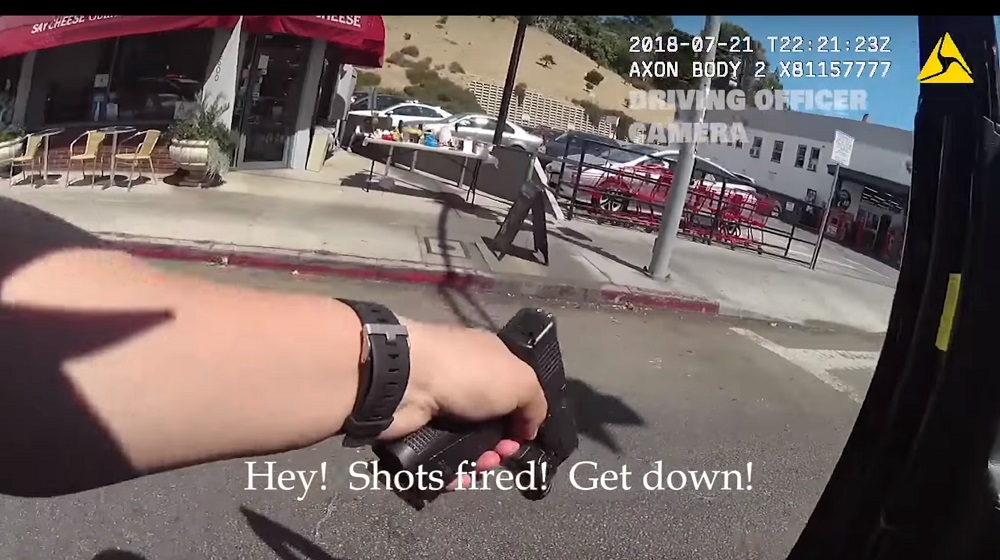
A high-speed pursuit through Los Angeles streets ended in chaos outside a Trader Joe's supermarket on July 21, 2018. Gene Atkins, then 36, fled from police after allegedly shooting his grandmother and girlfriend at close range. The pursuit continued for over an hour, with Atkins firing his gun out of the back windshield of his grandmother's car. Eventually, he crashed into an electric pole outside Trader Joe's, leading to a tense standoff with police. During this time, Atkins continued to fire at officers, who were trying to protect themselves and others. The situation escalated further when Atkins ran into the supermarket, where he hid in the produce aisle and continued firing at police. A police bullet struck 27-year-old Melyda Marciela Corado, a Trader Joe's employee, as she tried to escape the chaos. Despite the city paying the Corado family $9.5 million to settle a wrongful death claim, prosecutors are seeking to convict Atkins of second-degree murder under the 'provocative act theory' of murder.
Legal Context
The case against Gene Atkins hinges on the 'provocative act theory', which holds that a defendant can be found guilty of murder if they commit a crime that provokes a third-party, in this case the police, to use deadly force. This theory is central to the prosecution's argument that Atkins' actions led directly to Corado's death. The defense, however, may argue that the officers involved acted lawfully in self-defense. The trial has significant implications for how California courts interpret the 'provocative act theory', which could impact police use of deadly force and lead to changes in self-defense laws.
Why It Matters
The retrial of Gene Atkins has far-reaching consequences, not only for the families involved but also for the broader community. If convicted of second-degree murder under the 'provocative act theory', Atkins could face additional serious penalties, building upon the life imprisonment he already faces from previous convictions. Moreover, the outcome of this case may influence how police departments across California approach situations involving deadly force. The trial's verdict will likely be closely watched by law enforcement agencies and legal experts, who are eager to understand the implications for self-defense laws in the state.
Practical Implications
Lawyers should watch for the potential implications of this case on the 'provocative act theory' in California, which could impact how police use deadly force and lead to changes in self-defense laws.
Source
How does this affect you?
Get an AI analysis of this article grounded in your jurisdictions, practice areas, and any policy documents you've uploaded to Wansom.
Wansom is AI and can make mistakes.