
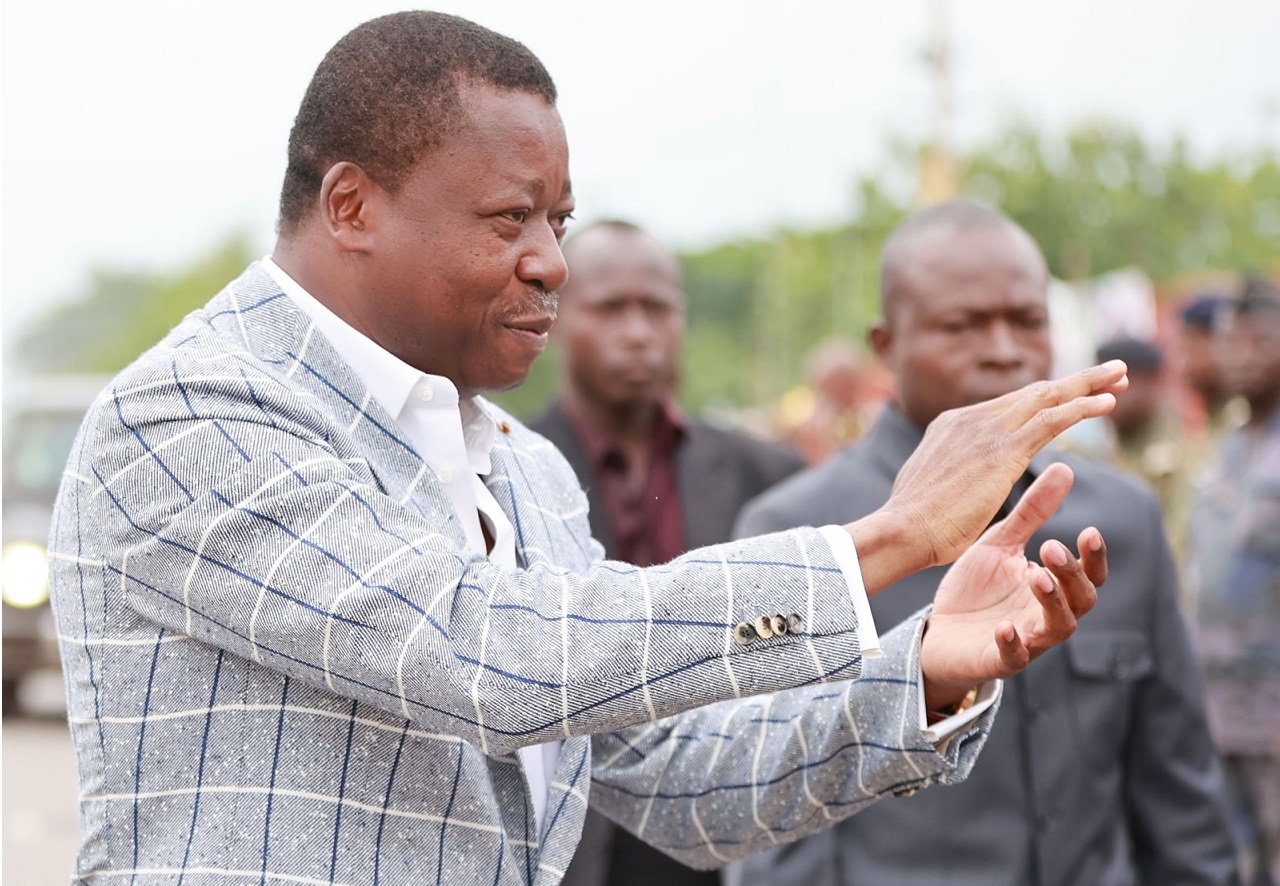
Togo UN: "Correct The Map" Resolution Passes for Map Accuracy
Summary
- The UN General Assembly adopted the "Correct The Map" resolution, championed by Togo on behalf of the African Group.
- African Union Commission President Mahmoud Ali Youssouf praised Togo's leadership, including President Faure Essozimna Gnassingbé, for mobilizing international support.
- The resolution addresses the Mercator projection's inaccuracy, which visually diminishes Africa's true size, advocating for more faithful cartographic representations.
- The AU calls on international institutions, educators, publishers, and digital platforms to progressively adopt maps based on objective, scientifically established realities.
- Both the African Union and Togolese diplomacy are committed to the concrete implementation of the resolution to ensure Africa is depicted in its true dimensions.
UN Adopts 'Correct The Map' Resolution
Africa must be represented as it is: in its true dimensions and in its rightful place in the world.
The United Nations General Assembly has officially adopted the "Correct The Map" resolution, an initiative spearheaded by Togo on behalf of the African Group. This landmark decision aims to promote a more accurate cartographic representation of the African continent and other global regions, addressing long-standing distortions in how the world is visually depicted.
Mahmoud Ali Youssouf, President of the African Union (AU) Commission, issued a communiqué commending this development. He specifically lauded the Republic of Togo's leadership and the dedicated involvement of its Council President, Faure Essozimna Gnassingbé. Under President Gnassingbé's impetus, Togo championed this initiative "on behalf of Africa," successfully mobilizing extensive international support for its passage.
The AU Commission President also extended congratulations to all member states of the African Union and the African Group in New York, acknowledging their collective unity and mobilization around the resolution. This sentiment was echoed by Togolese diplomacy, which had previously hailed the resolution's adoption as a "victory for accuracy," signaling a shift in focus towards its concrete implementation.
Addressing Cartographic Inaccuracies
At the heart of the "Correct The Map" resolution lies the issue of the Mercator projection. Developed in the 16th century primarily for navigational purposes, this projection remains widely used today despite its inherent inaccuracies in depicting relative landmass sizes. According to the AU Commission, the Mercator projection fails to faithfully represent the actual surface areas of different global regions, leading to a significantly reduced visual portrayal of the African continent's true size.
This historical cartographic method, while practical for its original intent, has inadvertently contributed to a skewed perception of global geography. The resolution seeks to rectify these long-standing visual misrepresentations, advocating for maps that more accurately reflect the true dimensions of landmasses, particularly Africa, which is often visually diminished in common cartographic representations.
A Broader Call for Objective Representation
Beyond the technical aspects of cartography, Mahmoud Ali Youssouf emphasized that this initiative addresses a more profound issue of representation. He articulated that the resolution underscores the critical importance of depicting Africa based on objective and scientifically established realities, moving past historical inaccuracies that may perpetuate misconceptions.
In light of this, the AU Commission President issued a direct appeal to various stakeholders: international institutions, educational systems, publishers, and digital actors. He urged them to progressively favor and adopt cartographic representations that more accurately reflect the actual surface areas of continents. The African Union Commission has affirmed its commitment to ongoing collaboration with Togo, its member states, and relevant partners to support the effective implementation of this resolution. The communiqué powerfully concludes with the guiding principle that "Africa must be represented as it is: in its true dimensions and in its rightful place in the world," a sentiment that Togolese diplomacy is now focused on translating into tangible application.
Practical Implications
Lawyers advising clients in publishing, digital media, education, or international development, particularly those operating in or depicting Africa, should note this UN resolution. While not directly creating new legal obligations, it reflects a significant policy push from the African Union and Togo for accurate cartographic representation, which could influence future soft law, corporate social responsibility standards, and public relations considerations for how Africa is visually presented.
Source
How does this affect you?
Get an AI analysis of this article grounded in your jurisdictions, practice areas, and any policy documents you've uploaded to Wansom.
Finish Reading the Full Story and the Expert Analysis.
Wansom is AI and can make mistakes.