
Senegal Justice Minister: Pre-Trial Detention Circular Targets Overcrowding
Summary
- Senegal's Justice Minister, Me Moussa Sarr, issued a circular on July 10, 2026, to prosecutors, urging rationalization of pre-trial detention and better handling of civil/commercial cases.
- The circular, titled "Rationalisation du recours aux mandats de dépôt et traitement pénal des affaires à caractère civil ou commercial," aims to reduce unnecessary detentions and combat prison overcrowding.
- Minister Sarr observed that few prosecutor's offices apply existing guidelines, leading to persistent prison overcrowding and compromising Senegal's international commitments.
- In Togo, the Lomé Civil Prison housed 2,448 detainees on March 1, 2025, representing a 368% overpopulation rate for a facility designed for 600.
- Excessive pre-trial detention is identified as the main cause of severe overcrowding in Togolese prisons, where the average rate is 222%, leading to job loss, family breakdown, psychological trauma, and avoidable deaths.
Senegal's New Directive on Pre-Trial Detention
Minister Sarr explicitly reaffirmed "l’exigence pour les procureurs de rationaliser le recours systématique aux mandats de dépôt afin d’éviter les cas de détention non nécessaire," underscoring the imperative for prosecutors to prevent unwarranted detentions.
Senegal's Justice Minister and Keeper of the Seals, Me Moussa Sarr, issued a significant circular on July 10, 2026, to address the persistent issue of prison overcrowding and the use of pre-trial detention. The directive, titled "Rationalisation du recours aux mandats de dépôt et traitement pénal des affaires à caractère civil ou commercial," was dispatched to Attorneys General, Public Prosecutors, and Prosecutor's Delegates across the country. Its primary objective is to streamline the application of detention orders and refine the judicial handling of civil and commercial disputes.
Minister Sarr explicitly reaffirmed "l’exigence pour les procureurs de rationaliser le recours systématique aux mandats de dépôt afin d’éviter les cas de détention non nécessaire," underscoring the imperative for prosecutors to prevent unwarranted detentions. This circular is not a standalone measure but rather a continuation of established policy, building upon prior guidelines aimed at reducing the issuance of detention orders, combating prison overpopulation, limiting prolonged provisional detentions, and improving the processing of civil and commercial cases, as well as monitoring ongoing investigations. It also extends the principles set forth in the general criminal policy circular n°00246 MJ/DACG/MN, dated January 14, 2019.
Persistent Overcrowding and Its Consequences
Despite previous directives, Minister Sarr's analysis of available statistics revealed that a limited number of prosecutor's offices have effectively implemented the existing guidelines. This lack of adherence has led to a sustained and critical level of overcrowding within Senegal's penitentiary establishments. The Minister highlighted that this situation has a detrimental effect on the management of detainees, the overall prison environment, and the efficient allocation of operational funds for prisons.
Furthermore, Minister Sarr warned that the continued overcrowding compromises Senegal's ability to uphold its international commitments and adhere to established standards for humane detention conditions. He also noted a concerning trend where certain procedures related to debts or financial claims continue to be handled by investigative services, often involving coercive measures that leave individuals with little alternative but to comply with the demanded payment.
Togo's Alarming Prison Crisis
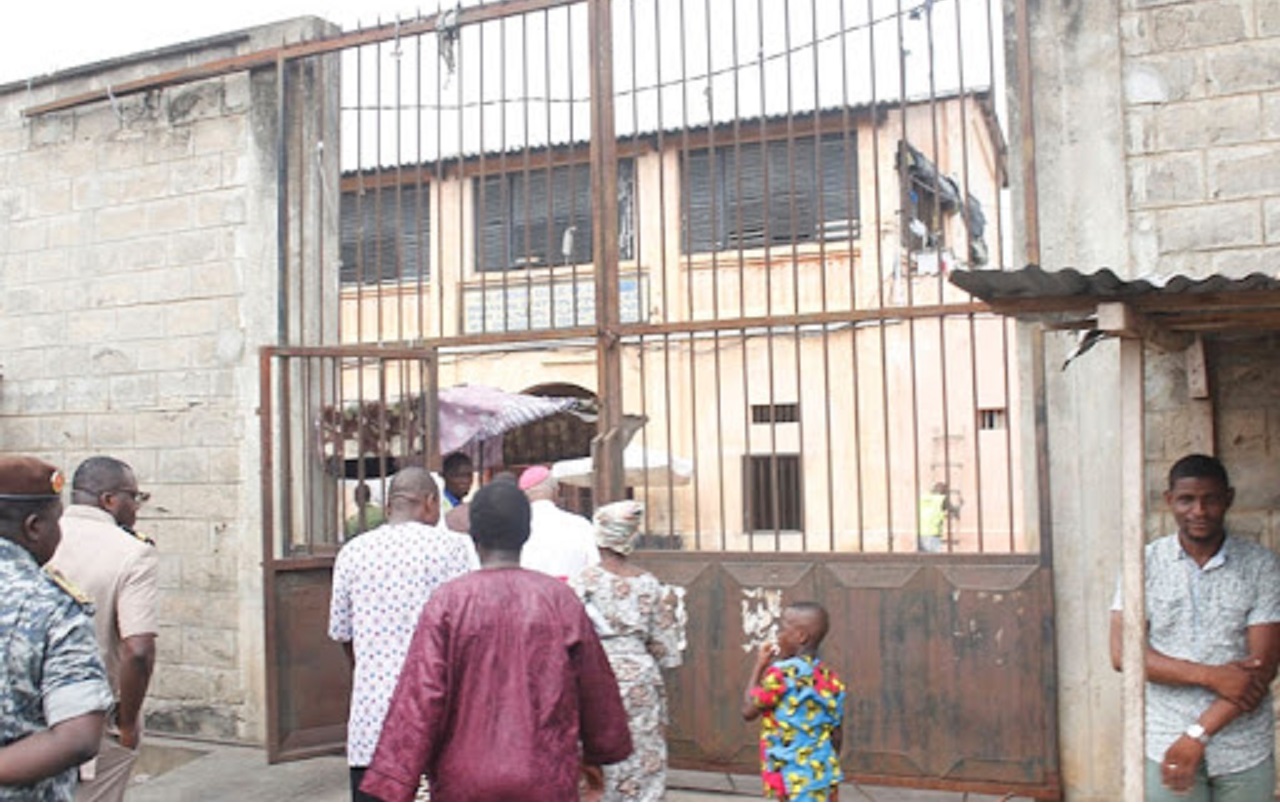
The challenges faced in Senegal mirror, and in some aspects are dwarfed by, the dire conditions prevalent in Togolese prisons, which are described as "exécrable" and "suffocating" due to severe overcrowding. The Lomé Civil Prison, in particular, represents the most critical situation. As of March 1, 2025, this facility, designed to accommodate 600 inmates, housed a staggering 2,448 detainees, indicating an overpopulation rate of 368%, according to the Collective of Associations for the Fight Against Impunity in Togo (CACIT). This means the prison holds more than 2,000 individuals beyond its intended capacity.
Within these facilities, conditions are extreme. A single cell, measuring approximately 6 by 4.5 meters, can house up to 70 detainees. During the designated "night" period, from 5 PM to 6 AM, prisoners are forced to take turns sleeping, with some lying down while others remain standing. The women's section, while less severely affected, still recorded over 100 individuals for 80 available places as of March 2025. The average overpopulation rate across all Togolese prisons stands at 222%, as reported by CACIT, transforming these correctional facilities into what is tragically described as a "mouroir" (death trap).
Addressing the Root Causes and Future Directives
The primary cause of this widespread overcrowding in Togolese prisons is identified as excessive pre-trial detention. This practice often results in severe consequences for individuals, including job loss, family disintegration, and profound psychological trauma, even for those who are ultimately acquitted. The system also contributes to frequent and avoidable deaths within the prison population. Currently, there is no concrete mechanism in place to effectively address this ongoing humanitarian crisis, which has already claimed numerous victims.
In light of these pressing issues, Minister Sarr has instructed prosecutors to adopt a criminal policy that is more closely aligned with the principles reiterated in previous circulars. He has mandated the immediate implementation of several measures designed to improve the management of the incarcerated population. The circular outlines six principal orientations, with a specific emphasis on prioritizing alternative dispute resolution methods for cases involving financial implications, such as fraud or breach of trust, to reduce reliance on punitive detention.
Source
How does this affect you?
Get an AI analysis of this article grounded in your jurisdictions, practice areas, and any policy documents you've uploaded to Wansom.
Wansom is AI and can make mistakes.